First, measure the space where the machine will go, the route to get it there, and the room needed for the door or lid and the connections. Then choose a programme that suits the care label on your dresses. The Consumers’ Association recommends using around half the cotton load capacity for delicate or synthetic washing. A slim top-loader may help if width is your main constraint, while a shallower front-loader may suit a space that is short on depth. With either type, check the full installation space and the load capacity for the programme you plan to use.
Who is this guide for?
Renter with a narrow space for a washing machine
You want to know whether the machine will fit, but also whether you can open the lid or door and still reach the connections. Compare the model’s dimensions with the space available and the route to it.
Wearer of delicate summer dresses
Choose based on the care label and a suitable programme, not just the maximum cotton load capacity. GINETEX explains that a line under the wash symbol indicates a gentler treatment.
Renter looking to reduce the risk of leaks
Compare the water-protection features of the specific model with the connection point and the potential consequences of a leak there. The Consumers’ Association describes different types of water protection.
What should you look for when choosing?
Slim top-loader
Suitable for: a space where width is the main constraint and there is room above the machine to open the lid.
Keep in mind: a narrow width won’t solve a lack of height or depth, and the stated capacity doesn’t automatically apply to delicate washing.
Shallower front-loader
Suitable for: a space with enough width but limited depth, provided the door, hoses and route to the machine also fit.
Keep in mind: the stated cabinet depth alone doesn’t prove that the model will fit in your alcove with its connections.
Standard freestanding front-loader
Suitable for: a space with enough room for the machine, door and connections, for example if you also wash other laundry.
Keep in mind: a higher cotton capacity doesn’t mean you can wash the same quantity of delicate dresses.
| What matters |
What should you check? |
Who should consider this most? |
| Size and access |
Compare the overall dimensions with the alcove and access route; check there’s room for the door or lid, hoses and connections. |
If my laundry space is tight, I want to know whether I can open and connect the machine too. Around 29% of consumers put fitting the machine in their space first when choosing. |
| Caring for dresses |
Read the care label and check which programmes are permitted and the maximum load in the manual. |
I want the programme to suit the fabric treatment shown on the care label, not just the cotton capacity. Around 36% of consumers prioritise caring for delicate dresses. |
| Connections and leaks |
Check the available water supply, drain and earthed socket, as well as the water-protection features of the exact model. |
In a rented home, I want to check in advance that the connection is suitable and find out how to limit potential water damage. Around 21% of consumers prioritise a safe connection. |
| Consumption and running costs |
Compare energy labels on the same test basis and check delivery and installation costs separately. |
Once the machine fits, I also want to take its consumption and ongoing costs into account. Around 14% of consumers prioritise running costs. |
Common mistakes
-
Assuming the cotton load capacity applies to delicate dresses
The stated load capacity is for cotton washing. The Consumers’ Association recommends using around half that weight for delicate or synthetic washing.
Check the maximum load for your chosen programme in the manual and follow the care label.
-
Measuring only the cabinet width or depth
A top-loader needs space above the machine; with a front-loader, the door and connections must remain accessible.
Also measure the route to the space and check there’s room to open the machine and reach the connections before choosing a model.
-
Assuming all water-protection features do the same thing
Water protection varies by model, and the consequences of a leak also depend on where the machine is installed.
Check the protection on the exact model and assess the connection and surroundings where the machine will stand.
Brands to compare
AEG
The LTR6363A is an example of a top-loader for spaces where width is limited.
- AEG lists this model as 397 mm wide, with a nominal capacity of 6 kg.
- The machine is 903 mm high and needs space for the lid to open. The manufacturer’s claim about load adjustment isn’t an independent performance test.
Beko
The BM3WFU3741W is a shallower front-loader with a programme listed by Beko for delicates, wool and hand washing.
- Beko lists a cabinet depth of 49,6 cm, a width of 60 cm and a nominal capacity of 7 kg.
- Beko’s energy-saving claim compares certain programmes with a specific older Beko model; it doesn’t show a general advantage over other brands.
Bosch
The WAN2827GNL is a standard front-loader for anyone with enough space.
- Bosch lists the dimensions of this model as 845 × 598 × 590 mm.
- Bosch doesn’t list AquaStop for this exact model; don’t assume every Bosch model has the same water-protection features.
Inventum
The VWM8010W is a standard front-loader for anyone who also washes other laundry and wants to compare the stated noise information.
- Inventum lists a nominal capacity of 8 kg, 72 dB and a quiet function.
- These model specifications can’t predict how loud the machine will seem in a particular rented home or how it will wash delicate dresses.
Washing machines at Joybuy
This selection includes a foldable mini washing machine and freestanding front-loaders with a range of stated capacities and depths. Check the installation space required for each model and whether its available programmes suit the care labels on your dresses.
 No image available
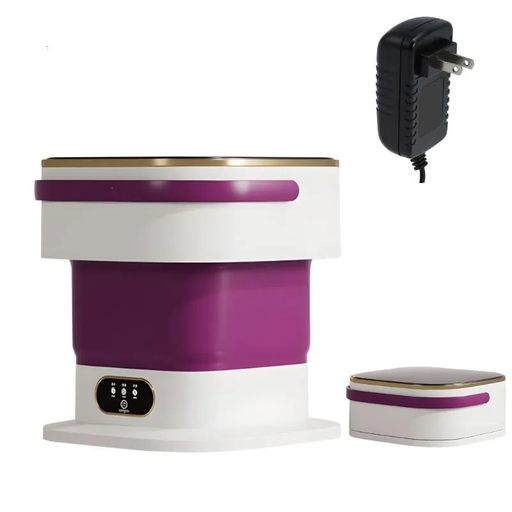
Foldable mini washing machine, 15 litres, purple
The product information lists small, delicate items as its intended use; check whether the maximum load is suitable for your laundry.
Capacity: 15 litres. Maximum load: 1,9 kg.
View at Joybuy
 No image available
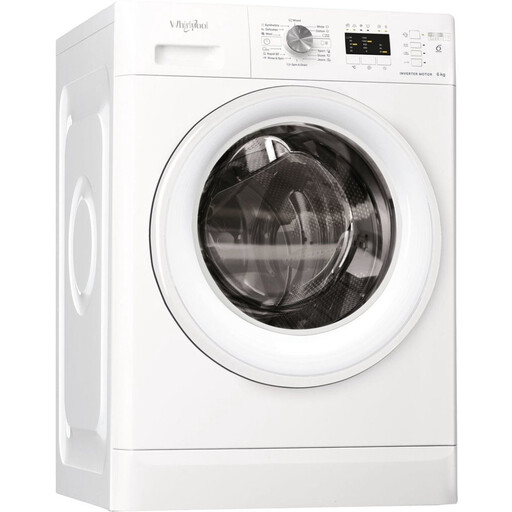
Whirlpool FFL 6238 W EE, 6 kg
The description lists a wool programme; only use it for a dress if the care label allows this treatment.
Front-loader. Capacity: 6 kg. Spin speed: 1200 rpm. Dimensions: 59,5 × 57,5 × 84,5 cm. The description lists 14 programmes.
View at Joybuy
 No image available
Comfee' CFP01EW70W-JD, 7 kg
The stated design depth may be useful if your space is shallow; also measure the room needed for connections and installation.
Freestanding front-loader. Capacity: 7 kg. Design depth: 400 mm. The description lists 16 programmes, including wool.
View at Joybuy
 No image available
TCL FF1006WB0, 6 kg
The stated depth may help you compare models for a shallow space; also check the full space needed for connections.
Capacity: 6 kg. Stated depth: 45 cm. The product name lists a BLDC inverter motor, steam wash and a 15-minute quick wash programme.
View at Joybuy
 No image available
Coocaa Galaxy A3 F702A3AВC0, 7 kg
This front-loader has a stated capacity of 7 kg; check the load limit for your chosen programme before washing delicate dresses.
The product description lists dimensions of 595 × 440 × 850 mm and 15 programmes, including Baby Care.
View at Joybuy
Frequently asked questions
Can you machine-wash every summer dress labelled as washable?
No, follow the care label on each individual dress. According to GINETEX, a line under the wash symbol indicates a gentler treatment; choose a programme and temperature that match the label.
Should you ask your landlord for permission to install a washing machine?
This partly depends on whether you need to make alterations to the property. The Dutch government distinguishes between minor alterations that are easy to reverse and renovation; renovation requires permission. Before arranging a new connection, check which rules apply to your circumstances and tenancy agreement.
What should you check when connecting a washing machine?
Check the model-specific instructions and make sure there’s a suitable water supply, drain and earthed socket. Remove the transit bolts before use and make sure the machine is stable.
Does an A energy rating predict the consumption of your delicate-wash programme?
No. The EU energy label shows consumption on the prescribed labelling basis, including energy per 100 cycles and water per cycle. Use these figures to compare models on the same basis, not as a measure of the consumption of a specific delicate-wash programme.
Is a two-year manufacturer’s guarantee the same as the statutory guarantee?
No. According to the Dutch government, there’s no fixed statutory guarantee period in the Netherlands; a manufacturer’s guarantee is additional. If a product is faulty, contact the seller.


