What should you look for?
Start with the care label and the permitted load for the programme. Then compare the capacity for your everyday laundry and the consumption figures that matter to you.
| What to consider |
What should you check? |
Who does this matter most to? |
| Fabric care and wash settings |
Compare each dress’s care label with the programme settings, permitted load and adjustable spin options. GINETEX recommends a limited load and little or short spinning for certain delicate items. |
If I want to wash my dresses according to their care labels, I focus particularly on how each fabric is treated. Around 36% of consumers put fabric care first. |
| Capacity for both types of laundry |
Compare the maximum load capacity with the lower, separate load limit for the programmes you want to use. The Consumers’ Association warns that special programmes often don’t allow a full drum. |
If you want to wash seasonal items as well as your usual household laundry, the capacity needs to suit both types of load. Around 29% of consumers prioritise a suitable load size. |
| Electricity and water consumption |
Compare the energy class with kWh per 100 cycles and water per cycle on the same label basis. Milieu Centraal and the European Commission describe these figures as useful information for comparing washing machines. |
If ongoing electricity and water consumption are my main concern, I compare the label figures on the same basis. Around 21% of consumers give running costs top priority. |
| Refreshing without a wash cycle |
Check whether the model has a separate refresh programme and whether the manual says it’s suitable for the fabric. A refresh function doesn’t replace a wash cycle for removing dirt. |
If you sometimes want to refresh lightly worn dresses without running a full wash cycle, look for a suitable additional treatment. Around 14% of consumers prioritise the convenience of refreshing clothes. |
Washing machines at Joybuy
These product picks are aimed at a mix of everyday household laundry and, where specified, a separate refresh programme. For machine-washable summer dresses, always check the care label and the permitted programme load.
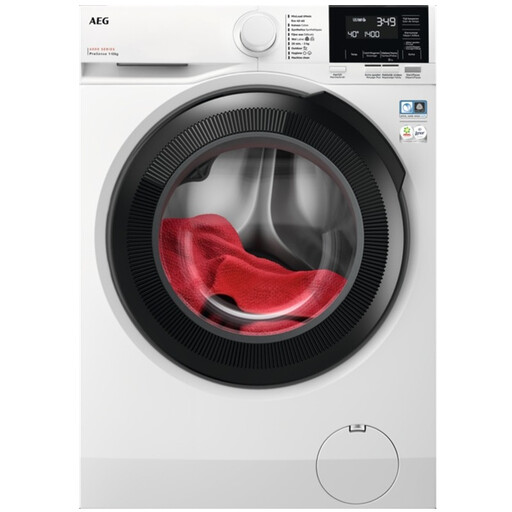 No image available
AEG LR63R144, 6000 Series, 10 kg, 1400 rpm
For washing dresses separately from your everyday household laundry; check the permitted load for the programme you want to use.
Maximum load capacity: 10 kg. Maximum spin speed: 1400 rpm. Energy class A. The product description lists a wool programme; always follow the care label for each dress.
Joybuy
 No image available
AEG LR73R862, 7000 Series, 8 kg, 1600 rpm
An option if you’re looking for a separate refresh programme as well as a wash cycle; this type of programme isn’t a substitute for washing dirty clothes.
Maximum load capacity: 8 kg. Maximum spin speed: 1600 rpm. The product description lists ProSteam and Steam Refresh; check the manual to make sure the treatment is suitable for the fabric.
Joybuy
 No image available
AEG LR73S840, 7000 Series, 8 kg, 1400 rpm
For anyone considering a refresh function alongside everyday laundry; check whether the manual says the treatment is suitable for your dress’s fabric.
Maximum load capacity: 8 kg. Maximum spin speed: 1400 rpm. The product description lists ProSteam and PreciseWash.
Joybuy
 No image available
AEG LF61R840, 6000 Series, 8 kg, 1400 rpm
An everyday washing machine to compare if you want to wash regular loads as well as dresses separately; remember to check the programme load too.
Maximum load capacity: 8 kg. Maximum spin speed: 1400 rpm. Energy class A. The product description lists ProTex and ProSense; the care label determines how your dress should be treated.
Joybuy
No image available
AEG LR73S862, 7000 Series, 8 kg, 1600 rpm
A good option if you’re considering a separate refresh programme as well as a wash cycle; only use it if the manual says it’s suitable for the fabric in question.
Maximum load capacity: 8 kg. Maximum spin speed: 1600 rpm. The product description lists ProSteam, PreciseWash and 42 kWh per 100 cycles on Eco 40–60.
Joybuy
Frequently asked questions
Can every machine-washable summer dress go on the same programme?
No. Follow the care label on each dress and compare its instructions with the programme guidance. As GINETEX explains, a gentle wash may require a smaller load and a low or short spin.
What should you check when installing and maintaining a washing machine?
Follow the manual for installation and connections, remove the transit bolts before use and make sure the appliance is level. Use the amount of detergent stated on the packaging; the Consumers’ Association warns that using too much detergent can contribute to a build-up of dirt in the machine.
Who can help if your washing machine turns out to be faulty after purchase?
In the Netherlands, statutory consumer rights apply: if a product is faulty, the seller must provide a solution, according to the Dutch Government. Any manufacturer’s guarantee or extended warranty you buy doesn’t replace this right.
Where can you take an old washing machine?
According to the Dutch Government, you can take an old household appliance to the shop or online retailer where you buy a new, similar appliance, or to your local council recycling centre. Check in advance whether collection is available when your new machine is delivered.


