
Summer dress wearer
You want to choose a programme that matches your dresses’ care labels and won’t put unnecessary strain on the fabric.


First, choose a washing machine with a programme that matches the care labels on your summer dresses. A gentle cycle and adjustable spin speed matter more than a high maximum spin speed alone. Then match the capacity to the shared loads your housemates do, and check that the machine will fit. Don’t assume a larger drum is automatically better for smaller loads.
You want to choose a programme that matches your dresses’ care labels and won’t put unnecessary strain on the fabric.
You’re looking for a drum that suits the loads your housemates can realistically wash together, without choosing an unnecessarily large machine.
You need to fit in the machine, its door or lid and the connections, while also considering spin noise.
Start with the care labels on your dresses, then consider the load size of a typical shared wash. The Consumentenbond recommends a smaller load for delicate or synthetic laundry than the maximum cotton capacity.
| What to consider | What to look for | Who is this important for? |
|---|---|---|
| Washing according to the dress care label | Check for a delicate, gentle or synthetics programme, the temperature and adjustable spin speed. Also check the maximum load for that programme. | If your main concern is avoiding an unsuitable setting for a dress, choosing the right programme should be your first priority. This is the top priority for around 33% of consumers. |
| Capacity for housemates | Compare a typical shared load with both the cotton capacity and the lower limit for delicate laundry. | If you want to wash everyday clothes with your housemates but sometimes wash dresses separately, look for a capacity that can handle both types of load. Around 27% of consumers prioritise this balance. |
| Space and noise | Measure the access route, installation space, door opening or clearance above a top-loading machine, and connections. Also compare the stated spin noise level. | If the machine will go in a tight space or near a shared room, you’ll want to know in advance whether it can be installed and used practically. Space or noise is the main concern for around 20% of consumers. |
| Running costs and practical arrangements | Compare energy labels on a like-for-like basis; check what delivery and installation include, and agree who will deal with any faults. | If several housemates will use the machine, you’ll want clarity about ongoing costs and who will handle practical matters. Around 20% of consumers prioritise these points. |
Eco 40-60 isn’t a general setting for all machine-washable fabrics. The Consumentenbond describes it as a programme for normally soiled cotton laundry that can be washed at 40 °C or 60 °C according to its care label.
Sort by fabric and care label, and choose the temperature specified for each dress, along with a suitable gentle programme.
The stated capacity applies to cotton; the Consumentenbond recommends a smaller load for delicate or synthetic laundry.
Check the limit for the specific programme and choose a drum size that suits the loads your housemates will actually wash together.
The route to the space, its depth, clearance for the door or lid, and the connections all affect whether the machine can be installed in a practical way.
Measure the full access route and installation space, and check in advance what’s included with delivery and installation.
The BM3WFU38412CW is one model to compare if you’re looking for a programme for delicate laundry.
The Serie 2 WGE0340CNL is an 8 kg front-loading machine to compare for capacity and fit.
According to the product information, the LR73844 combines an 8 kg capacity with ProSteam and a refresh function.
The WW80CGC04AAHEN is a useful comparison if you’re considering smart features.
LG describes AI DD as an approach that adjusts washing motions to suit the load and fabric.
These washing machines are suited to machine-washable clothes and shared loads. Check which programme and load size are right for your care labels for each model.
 No image available
The listed Delicate and Wool programmes make this model worth considering if you wash dresses on a gentle cycle.
Capacity: 8 kg.
16 programmes, including Delicate and Wool.
Stated dimensions: 850 × 595 × 475 mm.
Maximum spin speed listed: 1400 rpm.
 No image available
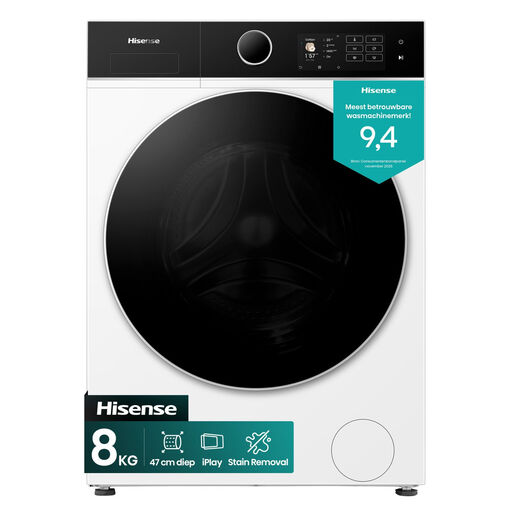
The stated capacity and depth are useful comparison points if you share laundry and have limited installation space.
Capacity: 8 kg.
Stated dimensions: 85 × 60 × 47 cm.
The product information lists a steam function.
Maximum spin speed listed: 1400 rpm.
 No image available
The stated capacity is a useful comparison point for shared laundry; check separately whether the programmes suit the care labels on your dresses.
Capacity: 8 kg.
Stated depth: 601 mm.
The product information lists 16 programmes and a steam function.
Spin speed listed: 1351 rpm.
 No image available
The stated 7 kg capacity is a useful comparison point for shared laundry; check the exact programmes for the clothes you want to wash.
Capacity: 7 kg.
16 wash programmes, including a 15-minute quick wash.
The product name describes a 400 mm ultra-slim design.
 No image available
The listed Delicates, Wool and HandWash programmes are relevant if your dress’s care label calls for gentle treatment.
Capacity: 8 kg.
15 programmes, including Delicates/Wool/HandWash.
Stated dimensions: 84,5 × 60 × 54,6 cm.
Maximum spin speed listed: 1400 rpm.
The product name lists energy class A.
No, check the dress’s care label first. It gives details such as the maximum temperature and how gently the garment needs to be treated. A ‘do not wash’ symbol doesn’t mean you can use a delicate cycle.
Not necessarily. According to the Consumentenbond, eco 40-60 is intended for normally soiled cotton laundry that can be washed at 40 °C or 60 °C according to its care label. Always check a dress’s own care label first and choose a suitable gentle programme if needed.
Choose a capacity that suits a typical shared load as well as the smaller load required for delicate laundry. The maximum stated weight applies to cotton and isn’t automatically the limit for a delicate programme.
Follow the instructions for removing the transit bolts and connecting the water supply and drain. Make sure the machine is stable and level, use an earthed socket, and check in advance what’s included with delivery and installation.
Yes. The Dutch government states that there is no fixed statutory guarantee period in the Netherlands; you’re entitled to a product that meets what you can reasonably expect. If a product is faulty, contact the retailer. Normal wear and tear or damage caused by incorrect use isn’t necessarily covered.