
For those who wear delicate summer dresses
You wash dresses made from different fabrics and want to choose the programme and spin settings to suit each care label. Milieu Centraal recommends checking the care instructions on clothing labels.


First, choose a washing machine with a programme and spin settings that suit the care labels on your summer dresses; the highest spin speed isn’t automatically the right choice. If you can hang your dresses up to dry as directed on their labels, a standard washing machine may be all you need. A washer-dryer is mainly worth considering if your clothes are also suitable for tumble drying and you don’t have room for two appliances. If so, compare the washing and drying capacities, as well as the energy use for the functions you’ll use.
You wash dresses made from different fabrics and want to choose the programme and spin settings to suit each care label. Milieu Centraal recommends checking the care instructions on clothing labels.
You can’t easily hang out a load of washing and want to know whether a drying function suits your clothes, available space and needs.
You often wash only a few items at a time and want to choose a drum capacity that suits your usual loads. Consumentenbond recommends considering a suitable drum capacity, among other things, when choosing a machine.
Choose this if: the care labels say your dresses are machine washable and you have a suitable place to dry them.
Bear in mind: you’ll still need drying space; follow the care label’s instructions rather than opting for a high spin speed.
Choose this if: hanging clothes up is rarely an option, the care labels say the clothes can be tumble dried and you don’t have room for two appliances.
Bear in mind: the drying capacity may be lower than the washing capacity. In Dutch comparison information published on 30 September 2026, Consumentenbond reported that washer-dryers take longer and use more energy than separate appliances.
Choose this if: you have room for two appliances and regularly want to dry clothes that are suitable for tumble drying.
Bear in mind: two appliances need more space; always check the care label before choosing a drying programme.
| What to consider | What should you check? | Who should pay particular attention? |
|---|---|---|
| Dress care instructions | Check that the programme and spin settings suit the care labels on your dresses. | If I wash dresses made from different fabrics, I want to choose the programme and spin settings to suit each care label. Around 29% of consumers make clothing care their top priority when buying. |
| Drying space | Check the drying symbols and, for a washer-dryer, the drying capacity in kilograms. Also think about a suitable place to dry clothes indoors. | If I have little space to hang dresses, I want to know in advance which drying method suits the clothes. Around 29% of consumers make available drying space their top priority. |
| Capacity and dimensions | Compare your usual load with the drum capacity and check the appliance’s external dimensions against the space available. | If I often wash small loads, I want a drum and appliance that suit my needs and available space. Around 24% of consumers make capacity and dimensions their top priority when buying. |
| Energy use in practice | For a washer-dryer, compare the figures for washing alone separately from those for washing and drying. | If I also want to dry clothes, I want to assess energy use for the function I’ll actually use. Around 18% of consumers focus mainly on running costs. |
A higher spin speed can leave laundry drier when it comes out of the machine, but that doesn’t mean it’s suitable for every dress.
Compare the available spin settings and follow the care instructions on each dress’s label.
Bosch lists the WNG24406NL as having a washing capacity of 9 kg and a drying capacity of 6 kg. So a full wash load won’t necessarily fit in one drying cycle.
Compare both capacities separately with the amount of laundry you want to dry, in line with the care labels.
A smaller drying load may take extra time or require an additional cycle.
For a washer-dryer, the information for washing alone may differ from the figures for washing and drying.
Compare the product information for the function you want to use. If you dry clothes regularly, check the figures for washing and drying combined too.
The BM3WFU38412CW is a freestanding washing machine with a programme for delicate fabrics, wool or handwashing.
The Dutch models mentioned include both a standalone washing machine and the WNG24406NL washer-dryer.
The WEC395 WPS is a W1 front-loading washing machine with an 8 kg capacity, a maximum spin speed of 1600 rpm and SteamCare.
This selection features freestanding washing machines for anyone who washes machine-washable dresses according to their care labels and can then hang them up to dry. Check which programme and spin speed are suitable for each dress.
 No image available
A standard washing machine to consider if you wash dresses according to their care labels and then hang them up to dry.
Capacity: 8 kg. Maximum spin speed: 1600 rpm. Energy rating: A.
 No image available
A standard washing machine to consider if you wash dresses according to their care labels and then hang them up to dry.
Capacity: 8 kg. Maximum spin speed: 1400 rpm. Energy rating: A-40%.
No image available
A standard washing machine to consider if you wash dresses according to their care labels and then hang them up to dry.
Capacity: 8 kg. Maximum spin speed: 1600 rpm. Energy rating: A-30%.
 No image available
Consider this machine if you wash small loads as well as dresses; check that the available programmes suit the care labels.
Capacity: 9 kg. Maximum spin speed: 1400 rpm. Energy rating: A. Control panel: NL/FR.
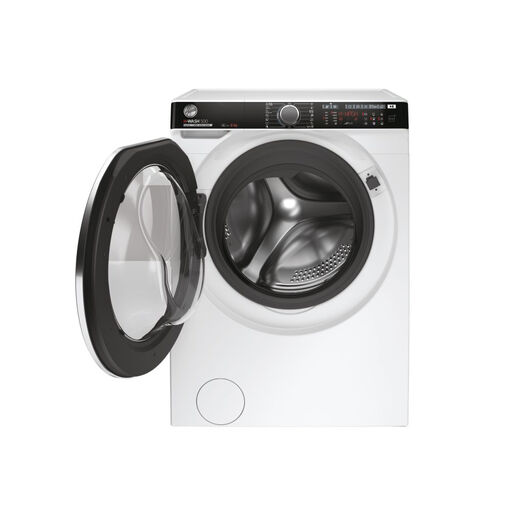 No image available
A freestanding front-loading washing machine to consider if you wash dresses according to their care labels and then hang them up to dry.
Capacity: 8 kg. Maximum spin speed: 1400 RPM. Energy rating: A.
No. Machine washable doesn’t automatically mean suitable for tumble drying. Check the drying instructions on the dress’s care label before choosing a drying programme.
Don’t wash more dresses at once than you can dry safely. If you dry clothes indoors and have mechanical ventilation, Milieu Centraal recommends setting it to its highest setting while they dry. You could also consider a drying option for clothes whose care labels allow tumble drying.
Compare the figures for washing alone separately from those for washing and drying combined. Also check whether the lower drying capacity suits your usual load; a full wash load may not fit in one drying cycle.
When you buy as a consumer, you’re entitled to a product that works properly; the statutory guarantee doesn’t have the same fixed duration for every product. If there’s a fault, contact the retailer. A manufacturer’s guarantee or extra cover is in addition to your statutory rights, according to the Dutch government.
According to the Dutch government, washing machines are among the appliances that must have an energy label. If you buy a new, similar appliance as a private individual, the old-for-new scheme lets you hand in your old appliance free of charge.