What should you look for when buying?
Start with the load you usually wash together, then check the available space, noise level and label information. The Consumers’ Association warns that a large drum that is often only half full isn’t automatically the right choice.
| What to consider |
What to look for when buying |
Who should pay particular attention? |
| Suitable drum capacity |
Weigh a typical cotton load and decide whether your housemates really do combine their washing. |
If my main concern is choosing a drum that suits our shared loads, I look at the actual laundry rather than just the number of people in the house; around 28% of consumers prioritise capacity. |
| Spin noise |
Compare the stated dB(A) rating for spinning and check that the installation surface is stable. |
If the machine is close to bedrooms, I want to know how much noise it makes during the spin cycle; around 22% of consumers prioritise quietness. |
| Purchase and installation |
Check what delivery and installation include, and compare consumption figures on the same basis. |
If we’re sharing the purchase and running costs among housemates, I want to know in advance what those costs include; around 17% of consumers prioritise keeping costs under control. |
| Space and connections |
Measure the space, opening clearance and available connections for the model you’re considering. |
If the laundry area is cramped, I want an appliance that fits without overlooking the space needed for its door or lid; around 17% of consumers prioritise the installation space. |
| Electricity and water consumption |
Compare kWh per 100 cycles and litres per cycle using the same programme basis; check whether eco 40–60 is suitable for the care label. |
If I want to take electricity and water consumption into account, I compare the label figures for a programme that suits our laundry; around 16% of consumers prioritise consumption. |
Washing machines on Joybuy
This Joybuy selection features front-loading machines with different capacities, chosen for comparison when housemates may be washing their cotton laundry together. Match the drum to the load you usually wash.
 No image available
AEG LF61R840 6000 Series, 8 kg
This 8 kg front-loader is an option to compare if you and your housemates combine your cotton laundry. Choose this capacity only if it suits your typical load.
The product information lists 1400 rpm, an A energy rating and 75 dB during spinning.
Joybuy
 No image available
Bosch WGB2440BFG Serie 8, 9 kg
With a capacity of 9 kg, this front-loader is worth comparing if you and your housemates regularly wash larger loads together.
The product name lists 1400 rpm, an A energy rating and an NL/FR control panel.
Joybuy
 No image available
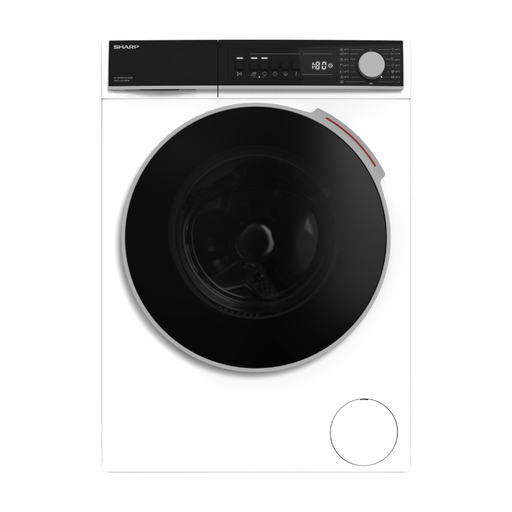
SHARP ESNFB914CWDACB, 9 kg
Its 9 kg capacity makes this an option to compare if your shared cotton loads are usually large enough to fill a drum of this size.
The product name lists 1400 rpm, an A energy rating and AquaStop. The product information also lists a cotton programme and eco 40–60; the stated spin noise is 75 dB.
Joybuy
 No image available
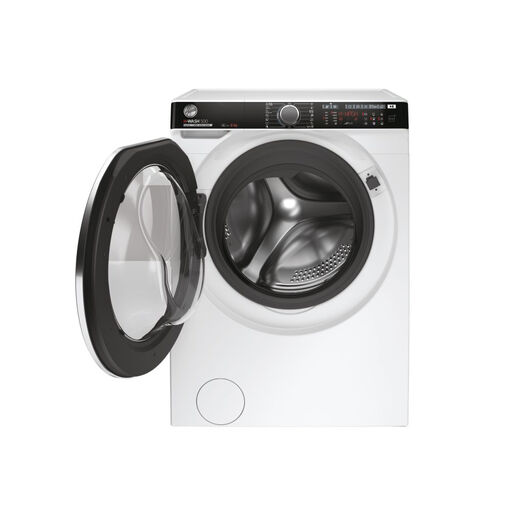
HWP 48AMBC7/1-S, 8 kg
This 8 kg front-loader is an option to compare if you and your housemates want to wash suitable cotton laundry together.
The product name lists 1400 rpm and an A energy rating. The stated dimensions are 600 × 540 × 850 mm, and the spin noise is 76 dB.
Joybuy
 No image available
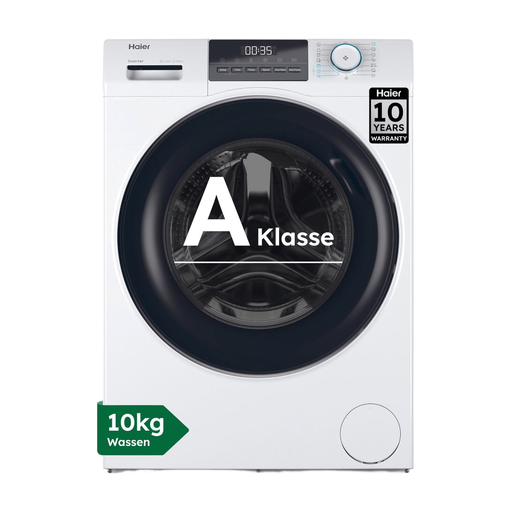
Haier HW100-BP14929A i-Pro 1, 10 kg
Its 10 kg capacity is worth comparing if you and your housemates regularly wash large loads together. The Consumers’ Association advises choosing a large drum only if you can fill it sufficiently.
The product name lists 1400 rpm and 70 dB.
Joybuy
Frequently asked questions
Can I wash any cotton pyjamas on eco 40–60?
No. First check the care label on each pair of pyjamas for the permitted temperature and treatment. According to the European Commission, eco 40–60 is intended for normally soiled cotton that the care label says can be washed at 40 °C or 60 °C.
What should I check before placing the machine in a shared laundry room?
Measure the space for the machine and the clearance needed to open its door or lid, and check that it suits the available connections. The Consumers’ Association recommends a stable surface. The Fire Service advises plugging high-power appliances directly into a wall socket rather than using a cable reel or extension lead.
Does a new washing machine in the Netherlands need an energy label?
Yes. The Dutch government lists washing machines among the appliances that must have an energy label. Compare the energy and water consumption figures on the same programme basis.
Are delivery and installation always included?
No. According to the Consumers’ Association, installation can sometimes cost extra. Before buying, check what the seller offers for delivery and installation, and agree with your housemates how any costs will be shared.
What are my rights if a washing machine I bought in the Netherlands is faulty?
You’re entitled to a product that works as it should. The Dutch government states that there is no fixed statutory guarantee period for all products in the Netherlands; what you can expect depends on the product and the purchase. If you make a valid claim under your statutory guarantee, the seller must provide a solution.


