
Housemates who do laundry together
You’re looking for a drum that suits the laundry you regularly collect together, without overlooking how well it handles smaller, separate loads.


Choose a washing machine based on how much laundry you usually collect together and the space available for the machine and its connections. A larger drum isn’t automatically more convenient for small loads. Then compare energy and water use, spin noise and the programmes with the care label on your shorts.
You’re looking for a drum that suits the laundry you regularly collect together, without overlooking how well it handles smaller, separate loads.
You want to check in advance that the machine will fit in the available space and that the spin noise will be acceptable next to a bedroom or study area.
You’re comparing energy and water use and want to know which programmes suit the laundry you actually do.
Start with the loads you usually wash together and the space available for the machine. Then compare energy and water use, noise and the programmes that suit the care label on your shorts.
| What to consider | What to look for | Who is this most important for? |
|---|---|---|
| Capacity | Compare the cotton load capacity with the loads you usually wash together, and check which load sizes are suitable for the programmes you choose. | When we combine our laundry with housemates’, I want enough room without assuming that a bigger drum is automatically right for separate loads. Around 31% of consumers prioritise suitable capacity for shared or separate loads. |
| Energy and water use | Compare the energy label and the energy and water figures on the same label basis; also check programme durations. | I want to know how much electricity and water the machine and its programmes use, not just how much laundry it holds. Around 25% of consumers focus on energy and water use and the energy label. |
| Noise and positioning | Check the stated spin noise level and measure the space needed for hoses, connections and opening the door. | If the machine is close to a bedroom or study area, I want to take both noise and suitable, safe positioning into account. Around 25% of consumers prioritise noise and positioning. |
| Wash programmes | Read the care label on your shorts and check that the temperature and treatment of a suitable programme are appropriate. | I want to wash my shorts according to their care label and take my laundry schedule into account. Around 19% of consumers prioritise clothing care and a suitable cycle. |
The load capacity shown on the energy label applies to cotton. Milieu Centraal also recommends checking the size, energy label and energy and water use. A full drum and a suitable eco programme may also be factors when choosing. The figures in the table illustrate different buying concerns; they are not measured market shares.
Measure the entire space, including room for hoses and the door to open. Follow the manual for your chosen model when connecting it; Bosch’s installation advice includes using an earthed socket.
The Consumentenbond tested ten large machines with drums filled to around 40%. In that test, adjusted energy and water use didn’t automatically mean the laundry came out clean. The result doesn’t necessarily apply to every model.
Choose a load capacity based on the laundry you actually wash together, not just the number of housemates.
A short programme doesn’t, by itself, tell you how much energy a cycle uses. The Consumentenbond warns that a shortened programme can actually use more energy.
Compare programme duration and energy use separately, and choose a cycle that suits the care label.
The machine may seem to fit based on its dimensions, but hoses, connections or the door could get in the way where you plan to put it.
Measure the entire space and check the connections and installation instructions for the model in advance.
These models give you examples of specifications and features to compare. A brand mention doesn’t indicate availability or suitability for every home.
The BM3WFU3741W is a 7kg front-loading machine for anyone considering a smaller drum.
The LR6KOLN from the 6000 series is an example of an 8kg front-loading machine that adjusts to the load.
The WAN28278NL from the Serie 4 range is an 8kg model to compare for its programmes and product features.
The WFGE801439VMQ from the Essential series is an 8kg model with a range of programmes.
The FP0944WA0NL is an example of a front-loading machine with a capacity of 9 kg.
This selection of Joybuy products focuses on freestanding front-loading machines with a capacity of 7 or 8 kg, suitable for shared laundry in a student house.
 No image available
The stated capacity may suit laundry collected by housemates; match the load to the wash cycle.
8 kg; 1400 rpm; 16 wash programmes.
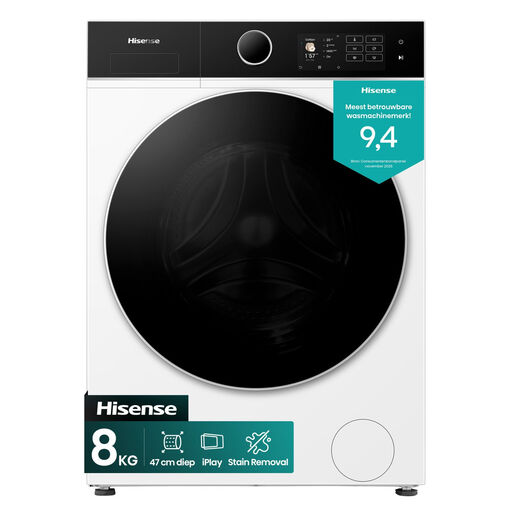 No image available
Capacity is worth considering if you regularly combine your laundry; check that the size suits the loads you usually wash.
8 kg; 1400 rpm; inverter motor.
 No image available
An 8 kg capacity may be useful for shared loads; compare it with the amount you usually wash together.
8 kg; 1351 rpm; A energy rating; steam function.
 No image available
A 7 kg capacity may suit a more modest shared load; compare it with the loads you usually wash.
7 kg; 400 mm-deep design; quick wash function.
 No image available
The stated capacity may suit laundry combined by housemates; check that the machine and its connections fit in the space you’ve chosen.
8 kg; 1400 rpm; A energy rating; EnergySpin; ProSmart inverter motor.
No. Check the care label on the specific pair of shorts: the temperature shown in the wash tub symbol is a maximum, while a line under the tub means you should use a gentler cycle. Then choose a suitable machine programme.
Follow the manual for your chosen model. Bosch’s installation advice includes a stable surface, a suitable water supply and drainage, and an earthed socket. Remove the transit bolts before use.
No. According to the Dutch government, statutory guarantees in the Netherlands don’t have a fixed time limit; what you can reasonably expect in terms of a product’s lifespan depends on factors including the product itself. If something goes wrong, contact the seller. Check the terms of any additional manufacturer’s warranty separately.
Yes. The Dutch government lists washing machines among the appliances that must have an energy label. Use it to compare energy and water figures, and check the label for the exact model.