
Housemates who wash together
You collect T-shirts for a shared load and want the drum capacity to match what actually goes in.


Choose a drum capacity that suits the amount of T-shirt washing you usually do together or separately. A larger drum is not automatically more efficient if it is often only partly full. Then compare the spin noise and energy label details, and check the available space, connections and care labels before buying. The Consumers’ Association of the Netherlands recommends matching capacity to your usual load; the energy label gives consumption figures for Eco 40-60, not for every other programme.
You collect T-shirts for a shared load and want the drum capacity to match what actually goes in.
You mainly wash your own cotton clothes and are looking for a suitable drum capacity and a programme that matches the care labels.
You share a small home where the space available for the machine and the noise during the spin cycle both matter.
Start with the amount of washing you usually do: a smaller drum may suit separate loads, while a larger drum is most practical if you regularly combine your washing.
A good fit if: housemates usually wash separately and a large shared load is uncommon.
Trade-off: less combined washing will fit in one cycle; weigh a typical load and compare it with the drum capacity.
A good fit if: you regularly collect T-shirts and other washing for a larger load.
Trade-off: a larger drum may often be only partly full for separate loads, so it will not necessarily be more efficient per kilogram.
| What to consider | What to look for | Who it matters most to |
|---|---|---|
| Suitable capacity | Weigh a typical load and discuss whether you will combine loads; then compare it with the drum capacity. | If I want to avoid choosing a capacity I rarely use, I look at the usual amount of washing. Around 31% of consumers are most concerned about having a suitable capacity. |
| Cotton programme | Check the care label and programme guide. Eco 40-60 is designed for normally soiled cotton labelled as suitable for washing at 40 or 60 °C. | If I want to wash cotton T-shirts according to their care labels, I first check which programmes are suitable. Around 25% of consumers are most concerned about choosing the right T-shirt programme. |
| Noise and positioning | Compare the spin-noise figure on the energy label and measure the space; also check the water inlet, drain and electrical connection. | If the machine is near a living or sleeping area, I want to take spin noise and the available installation space into account. Around 19% of consumers are most concerned about noise and positioning. |
| Ongoing costs | Compare energy use per 100 Eco 40-60 cycles and water use per cycle; take your usage and individual tariffs into account. | If we share the machine with housemates, I want to consider both consumption and how we will handle payments and maintenance. Around 25% of consumers focus most on the purchase price and ongoing costs. |
The number of people in the house does not tell you how much washing goes into the drum each cycle. A larger machine may often be only partly full if you wash separately.
Weigh a typical load and discuss how often you will combine your washing before comparing drum capacities.
The programme name does not mean you choose between those two fixed wash temperatures. It is designed for normally soiled cotton that the care label says can be washed at 40 or 60 °C.
Check the T-shirts’ care labels and the programme guide for the exact model.
A general claim about the motor or quiet operation does not give the model-specific noise figure during the spin cycle.
Compare the noise figures on the energy label and consider where the machine will be placed.
A commercial warranty and your statutory rights are not the same. According to ACM ConsuWijzer, if a product breaks too soon under normal use, the retailer must help resolve the issue free of charge under the applicable legal rules.
Read exactly what an extended warranty covers, and agree who will keep the proof of purchase and contact the retailer.
The Dutch manufacturer’s website describes the freestanding BM3WFU3741S as a washing machine with a 7 kg capacity and a 1400 rpm spin speed.
The Dutch manufacturer’s website describes the Serie 4 WAN2809XNL as a freestanding front-loader with an 8 kg capacity and a maximum spin speed of 1400 rpm.
The Dutch manufacturer’s website lists the F4X1008NWH as a model with an 8 kg capacity and smart features.
AEG describes the 7000 ProSteam LR73844 as a front-loader with an 8 kg capacity.
These Joybuy products include models for smaller, separate loads and models with larger drums for combined loads from housemates.
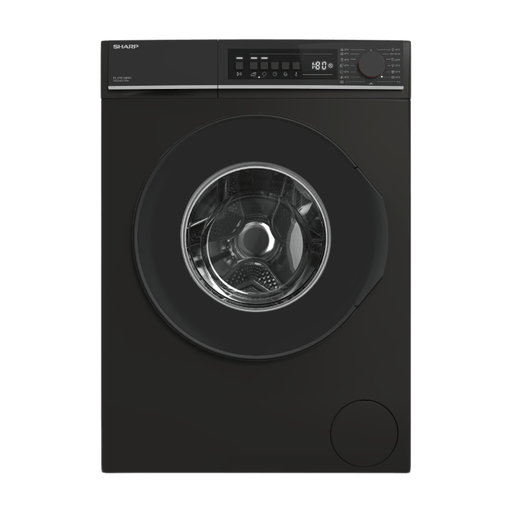 No image available
The 7kg version is worth comparing if you usually wash smaller, separate loads.
7 kg capacity; 1400 rpm; 15 programmes; energy class A; inverter motor; black.
 No image available
The 8kg version is worth comparing if you regularly combine your washing.
8 kg capacity; 1400 rpm; 16 wash programmes.
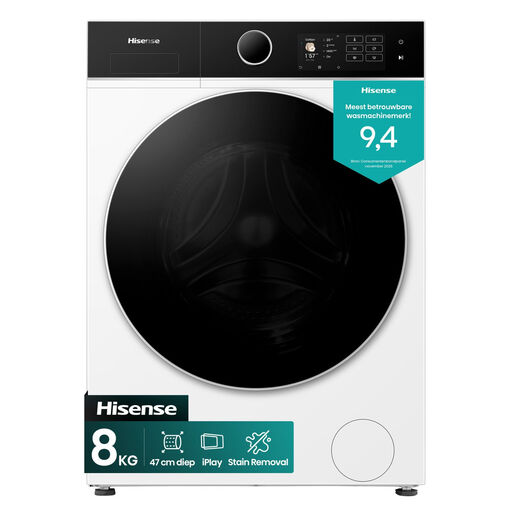 No image available
The 8kg version is worth comparing if you regularly wash larger shared loads.
8 kg capacity; 1400 rpm; inverter motor; white.
 No image available
The 8kg version is worth comparing with other models if you wash together.
8 kg capacity; 1351 rpm; energy class A; steam function.
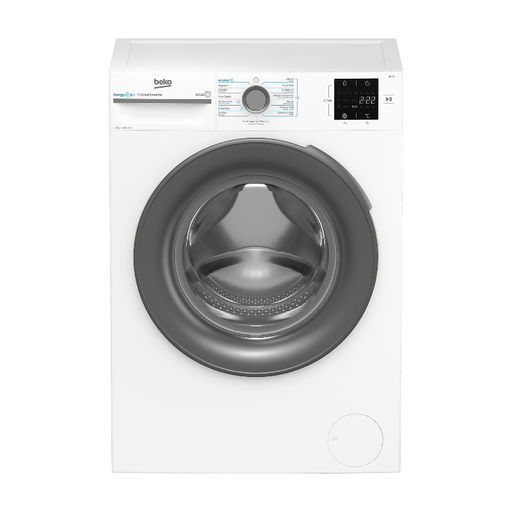 No image available
The 7kg version is worth comparing if housemates usually wash separately.
7 kg capacity; 1400 rpm; 15 wash programmes; energy rating C; silver.
No, only if the care label allows normally soiled cotton to be washed at 40 or 60 °C. Check the garment’s care label; Eco 40-60 is not a choice between two fixed wash temperatures.
Compare the energy class, energy use per 100 cycles, water use per cycle, drum capacity and spin noise. The consumption figures are based on Eco 40-60 and do not automatically predict the consumption of another programme.
Measure the available space and follow the instructions for your chosen model when connecting the water inlet, drain and power supply. Bosch recommends removing the transit bolts before use and keeping them for a move.
According to the Dutch government, permission is not needed for a change that can be undone without much expense; renovation work does require permission. Whether a planned pipe or other alteration falls into this category depends on the work involved. Check before making changes to the property.
If a product breaks too soon under normal use, the retailer must resolve the problem free of charge under Dutch statutory guarantee rules, subject to the applicable conditions. A commercial manufacturer’s warranty does not replace those statutory rights; agree who will keep the proof of purchase and get in touch.