What should you look for when buying?
First decide whether your housemates often wash together or usually do separate loads. Then compare the suitable capacity, the permitted wash temperature, and the space and connections available where you plan to put the machine.
| What to consider |
What should you check? |
Who should pay particular attention? |
| Load capacity and washing habits |
Agree which laundry you’ll wash together and compare the stated load capacity with the size of that load. A larger drum isn’t automatically the right choice if it’s often underfilled, as Milieu Centraal points out. |
If I regularly combine my housemates’ laundry, I want the drum to suit the size of our shared load; around 33% of consumers would focus mainly on the combined load size. |
| Temperature and programme |
Read the care label on your pillowcase and check whether the exact model has a suitable programme. Thuisarts mentions 60 °C as one measure for tackling dust mites; it isn’t a general washing rule for every pillowcase. |
If I want to wash pillowcases at a specific temperature for a particular reason, the fabric must be able to withstand it; around 27% of consumers would consider the temperature and choice of programmes especially important. |
| Space, connections and noise |
Measure the space and access route, and check the water supply, drain and earthed socket. Also compare the stated spin noise; according to the Consumers’ Association’s installation tips, it’s important to position the machine securely and level. |
If the machine is going near a shared living or sleeping area, I want to know whether it will fit and how its stated spin noise compares; around 20% of consumers would focus mainly on positioning and noise. |
| Energy label and consumption |
Compare label values on the same basis, including kWh per 100 washes and water consumption. The energy figures are based on measurements using the eco 40-60 programme and don’t directly predict the consumption of every other programme. |
If I want to factor in ongoing running costs, I compare the label with our washing habits and the programmes we actually use; around 20% of consumers would focus mainly on consumption. |
Washing machines on Joybuy
This selection includes washing machines with stated capacities of 6, 8 and 10 kg. Compare the capacity with your washing habits, and check the programmes, dimensions and connections for the exact version.
 No image available
AEG LF61R840 6000 Series, 8 kg
An option to compare if your housemates regularly wash larger loads.
The product information lists an 8 kg capacity, a maximum spin speed of 1400 rpm and an A energy rating.
Stated consumption: 47 kWh per 100 eco 40-60 cycles. The depth is 57,7 cm and the stated spin noise is 75 dB.
The description mentions an Anti Allergy Vapour cycle at 60 °C; check that the temperature is suitable for your pillowcase and the situation.
Joybuy
 No image available
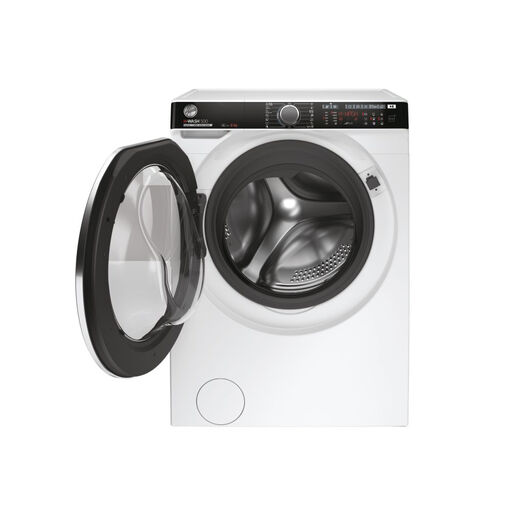
HWP 48AMBC7/1-S, 8 kg
An option to consider if your housemates regularly combine bedding with other suitable laundry.
The product name lists a freestanding 8 kg front-loading washing machine, 1400 rpm and an A energy rating.
The description mentions a Hygiene programme that maintains 60 °C for more than 20 minutes. Check that this temperature is suitable for the fabric and care instructions.
Stated dimensions: 600 × 540 × 850 mm; spin noise: 76 dB.
Joybuy
 No image available
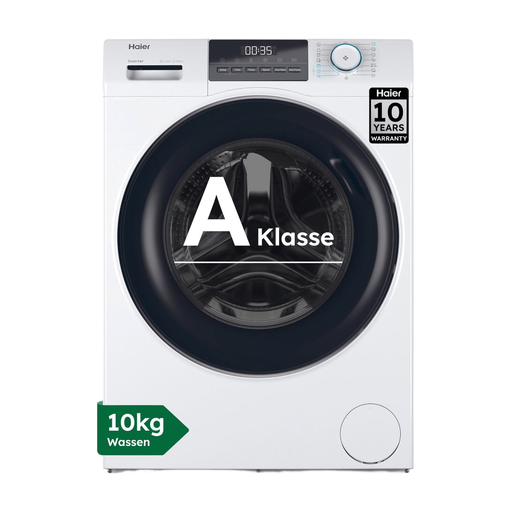
Haier HW100-BP14929A i-Pro 1, 10 kg
Its stated capacity makes this model worth comparing if your housemates often wash large loads together.
The product information lists a 10 kg capacity, 1400 rpm and an A energy rating; the stated spin noise is 70 dB.
The description mentions a digital weighing scale that adjusts water consumption and cycle time to the weight of the load.
Joybuy
 No image available
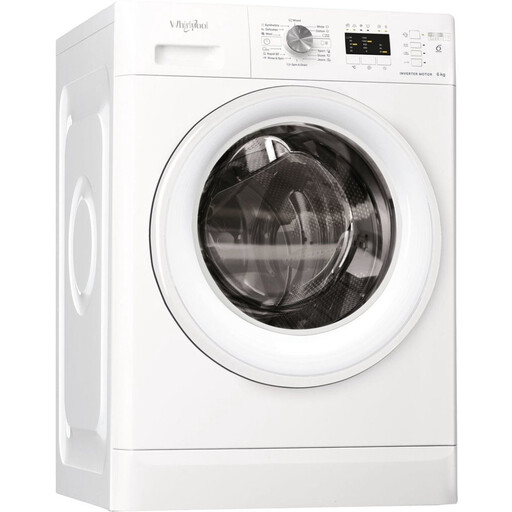
Whirlpool FFL 6238 W EE, 6 kg
The stated capacity is a useful point of comparison if your housemates usually wash smaller, separate loads.
The product name lists a 6 kg capacity and 1200 rpm. The description mentions 14 programmes, including cotton, eco, wool and a quick programme.
Stated dimensions: 59,5 × 57,5 × 84,5 cm. The stated noise level of 51 dB applies to washing, not spinning.
Joybuy
 No image available
Beko BM3WFU38412CW, 8 kg
An option to compare if your housemates regularly wash shared loads.
The product information lists an 8 kg capacity, 1400 rpm and an A energy rating. Stated consumption: 47 kWh per 100 cycles and 47 litres of water per cycle.
Stated dimensions: 84,5 × 60 × 54,6 cm; spin noise: 76 dB(A). The description mentions 15 programmes, including Hygiene+.
Joybuy
Frequently asked questions
Do pillowcases always need to be washed at 60 °C?
No, 60 °C isn’t a general requirement for every pillowcase. Thuisarts mentions this temperature as one measure for tackling dust mites; Milieu Centraal describes situations where washing at a higher temperature may be advisable. Also check whether the care label on your pillowcase allows washing at 60 °C.
How do I choose the right load capacity for a shared student house?
Choose based on the loads your housemates actually wash together, not just the number of people living there. Compare the drum capacity with your washing habits and bear in mind Milieu Centraal’s advice to fill the machine sufficiently.
What should you check before using a washing machine in a student house?
Check that the machine can stand securely and that there’s a water supply, drain and earthed socket. Remove the transit bolts and level the machine according to the instructions for the exact model.
Which energy label details can I compare?
As well as the energy rating, compare details such as consumption in kWh per 100 washes, water consumption, drum capacity and spin noise. The energy figures are based on eco 40-60 measurements and aren’t a measure of consumption for every other programme.
How can you keep a shared washing machine fresh?
Milieu Centraal recommends washing at 60 °C once a month to remove soap and dirt residue. Follow the manual when cleaning your specific model, and agree on how to use the machine with your housemates.
Can you have a new washing machine connection installed in a rented home?
It depends on the work involved in the property. According to the Dutch government, you don’t need permission for a change that can be undone without significant cost, while renovations do require permission. Before installing or changing a connection, ask your landlord how the specific work will be assessed.
What does the legal guarantee mean if a washing machine breaks down too soon?
If there’s a fault covered by the legal guarantee, contact the retailer, who must provide a suitable solution. According to ACM ConsuWijzer and the Dutch government, there isn’t a fixed legal guarantee period of just two years for every washing machine in the Netherlands.


