What should you consider when buying?
Start with your typical sorted cotton load: around 7–8 kg is more likely to suit mostly separate washes, while 9–10 kg only makes sense if you regularly combine larger loads. If space is the deciding factor, also measure the room needed to open a door or top lid.
| What to consider |
What should you check? |
Who should give this more weight? |
| Capacity for cotton washes |
Weigh a typical sorted load and compare it with the stated cotton capacity; don’t automatically count all your housemates together. |
If we usually do our washing separately, I want to match the drum capacity to a typical cotton wash rather than the number of people in the house. Around 29% of consumers put suitable capacity first for this reason. |
| Shared running costs |
Compare the EU energy label and consumption per 100 eco 40-60 cycles. Also agree how you’ll share the machine and maintain it. |
If we share the machine, I want to take running costs into account and agree in advance how we’ll manage shared expenses. Around 24% of consumers give cost the highest priority. |
| Noise during the spin cycle |
Compare noise levels on the same label basis and check that the machine can stand securely and level. |
If my room is next to the laundry room, I mainly want to know how noisy the spin cycle is and whether the machine will stand securely. Around 18% of consumers put peace and quiet near living rooms or bedrooms first. |
| Space and installation |
Measure the access route, width, depth and height, as well as the space needed for the door or lid. Also check the water supply, drainage and power supply. The Consumers’ Association gives approximate widths of 40 cm for top-loaders and 60 cm for standard front-loaders. |
If the laundry room is cramped, I want to be sure the machine will fit through the doorway and that its opening won’t be obstructed. Around 12% of consumers give ease of installation the highest priority. |
| Wet layers and garment care |
Follow the care label and compare suitable cotton, delicate and spin settings. Think about where the clothes can dry afterwards. |
If we come home in the rain, I want to be able to wash wet cotton layers easily without treating specialist outerwear incorrectly. Around 17% of consumers put garment care and drying first. |
Joybuy washing machines for different loads
This Joybuy selection includes freestanding washing machines with capacities of 7–10 kg, suitable for separate cotton washes and larger combined loads.
 Image unavailable
Bosch WGB2440BFG Serie 8 (9 kg)
For housemates who regularly combine larger cotton loads. Match the capacity to a typical wash.
- Capacity: 9 kg
- Spin speed: 1400 rpm
- Energy rating A
- 69 dB during spin
- Mini Load programme
- Control panel: NL/FR
View at Joybuy
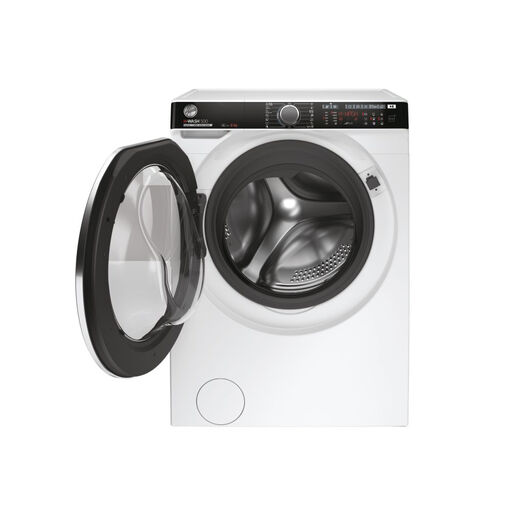 Image unavailable
HWP 48AMBC7/1-S (8 kg)
For separate or shared cotton washes when 8 kg suits your typical load.
- Freestanding front-loader
- Capacity: 8 kg
- Spin speed: 1400 RPM
- Energy rating A
- 72 dB during spin
- 0,344 kWh per Eco 40-60 cycle
View at Joybuy
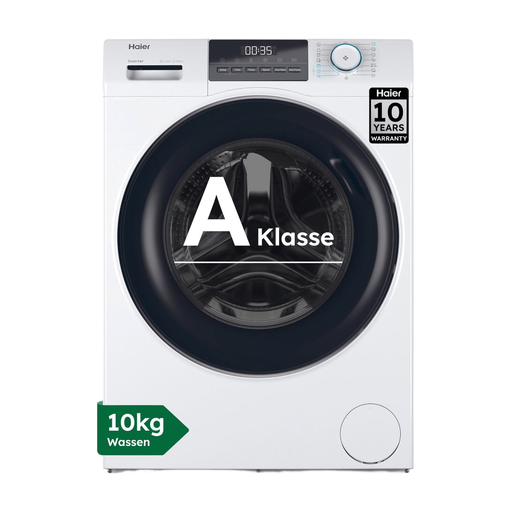 Image unavailable
Haier HW100-BP14929A i-Pro 1 (10 kg)
For larger loads that housemates regularly wash together. A full capacity won’t necessarily suit separate washes.
- Capacity: 10 kg
- Spin speed: 1400 rpm
- 70 dB
- Steam function
- Automatically adjusts water consumption and cycle time to the weighed load
View at Joybuy
 Image unavailable
Candy GD 48B9-S (8 kg)
For separate cotton washes when the capacity suits the load your household typically does.
- Capacity: 8 kg
- Spin speed: 1351 rpm
- Energy rating A
- 69 dB(A) during spin
- 33 kWh per 100 Eco 40-60 cycles
- Steam function; programmes from 14 to 59 minutes
View at Joybuy
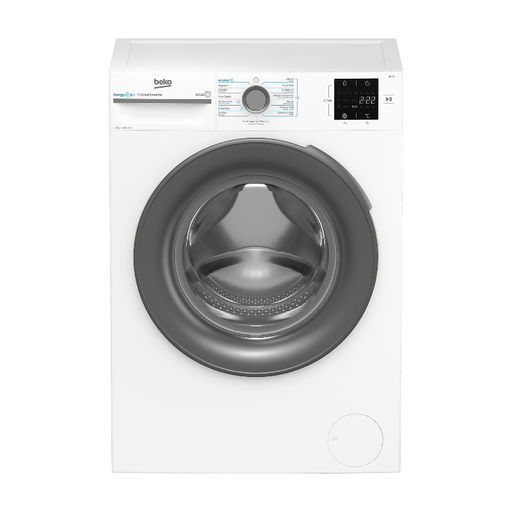 Image unavailable
Beko BM3WFU3741S (7 kg)
For typical separate cotton washes that fit within the stated capacity.
- Capacity: 7 kg
- Spin speed: 1400 rpm
- Energy rating C
- 76 dB(A) during spin
- Half-load function
- Cotton and Eco 40-60 programmes
View at Joybuy
Frequently asked questions
Can all waterproof clothing go in with a regular cotton wash?
No. Check the care label on each item. The EU eco 40-60 programme is designed for normally soiled cotton that the care label says can be washed at 40 °C or 60 °C. Patagonia recommends different care for its waterproof jackets and says waxed cotton must not be machine-washed. Even so, check the advice for each garment and don’t automatically apply it to every raincoat.
What should we check before installing the machine in our student house?
Measure the machine, access routes and the space needed for the door or top lid, and check that water, drainage and an electrical connection are available. Follow the installation instructions and place the machine on a firm, level surface to reduce extra noise caused by an unstable position. If a connection isn’t compatible, have it checked before using the machine.
How can several people keep the washing machine fresh?
Agree that users will leave the door and detergent drawer open to dry after each wash, and that someone will regularly check and clean the drawer, door seal and filter as instructed in the manual. The Consumers’ Association also recommends running a hot wash programme periodically. This is maintenance advice, not a legal requirement.
Are we always entitled to exactly two years’ statutory guarantee in the Netherlands?
No. According to the Dutch government, there is no fixed statutory guarantee period in the Netherlands: you’re entitled to a product that meets what you could reasonably expect. If there’s a fault, contact the retailer. The circumstances and the cause of the problem determine what solution is appropriate.
Does the retailer have to take away our old washing machine?
When you buy a new, similar appliance for personal use, the Dutch take-back scheme applies: the retailer must accept the old appliance free of charge, including for online purchases. Agree in advance how you’ll hand over the old appliance; in some cases, it can be collected or sent back free of charge later.


