
The housemate in charge of kitchen laundry
You want to wash used tea towels regularly. So, check the care label and whether the exact machine model has a suitable programme with a temperature setting of 60 °C.


First, check whether the exact model has a programme that can actually wash used tea towels at 60 °C, and whether that temperature is suitable for the care label. The Netherlands Nutrition Centre recommends washing used tea towels at 60 °C. Then match the drum capacity to the loads you share, and compare where the machine will go, its energy use and the total cost of buying or renting. A programme called ‘eco 40-60’ does not, by itself, prove that the cycle runs at 60 °C.
You want to wash used tea towels regularly. So, check the care label and whether the exact machine model has a suitable programme with a temperature setting of 60 °C.
You’re looking for a drum that suits the loads you actually wash together, so you can make the most of its capacity rather than mostly running small, half-empty loads.
You need to weigh up the dimensions and positioning against noise, the shared cost and arrangements for ownership, maintenance or renting.
A good fit if: you’ll be doing laundry together for a longer period and the space and connections are suitable.
Consider: you’ll need to agree how to handle the upfront cost, ownership and what to do if something goes wrong.
A good fit if: residents change regularly or a large shared purchase is difficult, and the rental model has the programme you need.
Consider: compare the rental cost over the expected period of use with buying, and check the contract, installation and cancellation terms.
A good fit if: keeping the upfront cost down is important and you can check the specific appliance and the seller’s terms.
Consider: check its condition, operation and programmes; if something goes wrong, you may have extra arrangements to make.
The Netherlands Nutrition Centre recommends washing used tea towels at 60 °C. The percentages below show which buying concerns may be most important to consumers in this student-house scenario.
| Buying concern | What should you check? | Who is this important for? |
|---|---|---|
| Suitable programme for tea towels | Check the care label, the manual for the exact model and whether you can set the programme temperature separately to 60 °C. | If your main concern is whether used tea towels can be washed appropriately according to their care label, this is the deciding check. Around 33% of consumers in this scenario see it as their main buying concern. |
| Capacity for shared loads | Compare the load capacity with the amount of laundry you actually combine and how often the machine runs. | If you want to combine laundry from several housemates, it’s important to choose a drum that suits those loads. Around 27% of consumers put shared capacity first. |
| Positioning and noise | Measure the machine and access route, allow space for connections, and check the floor surface and noise rating. | If the laundry area is cramped or close to living or sleeping areas, you’ll want to know whether the machine will fit and stand securely. Positioning and noise are the main concern for around 20% of consumers. |
| Total cost and responsibility | Compare the costs over the expected time you’ll live there, and agree who owns the machine and who will contact someone if it breaks down. | If you’re sharing the costs and maintenance, you’ll want to know in advance how those arrangements work if you buy, rent or purchase second-hand. Around 20% of consumers put cost and responsibility first. |
Milieu Centraal recommends choosing a drum capacity that suits your household. Only compare energy-use figures on the same labelling basis: a figure on the energy label does not automatically show how much energy every 60 °C wash uses.
The programme name doesn’t confirm that the cycle actually runs at 60 °C for your laundry. The Netherlands Nutrition Centre recommends washing used tea towels at 60 °C, and the care label matters too.
Check the manual for the exact model to see which temperature you can set for a suitable programme.
A larger capacity only helps if you regularly combine loads. If you mostly do small, separate washes, some of the drum will go unused.
Compare the load capacity with how you’ll use the machine, and check energy-use figures on the same labelling basis.
Renting spreads out the payments and may include a repair service, depending on the rental provider; buying requires a larger upfront payment. Which option costs less over the whole time you live there depends on the rental period and agreement.
Compare the total cost over the expected period of use, and agree who owns the machine and deals with breakdowns if you buy it.
According to Beko, the BM3WFT3841W is a freestanding front-loading washing machine with an 8 kg capacity and a maximum spin speed of 1400 rpm.
The Dutch Bosch WUU28T20NL is a freestanding front-loading washing machine with an 8 kg capacity. Bosch lists its dimensions as 845 × 598 × 590 mm.
According to Siemens, the Dutch iQ300 WM14N27TNL is a front-loading washing machine with an 8 kg capacity and a maximum spin speed of 1400 rpm.
Samsung’s EcoBubble 5000C range includes a model with an 8 kg capacity and an A energy rating. The exact model code matters.
This selection includes washing machines that may suit shared loads or a smaller space. For the exact model, check what temperature the relevant programme actually reaches and whether it’s suitable for the tea towels’ care label.
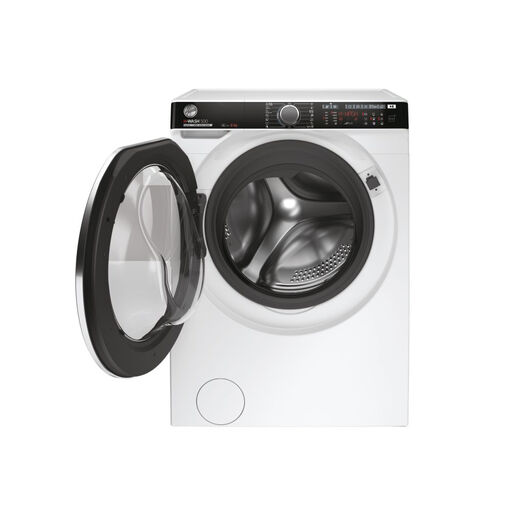 No image available
The product description lists a Hygiene programme that maintains 60 °C for more than 20 minutes; check the manual and care label to make sure it’s right for you.
Capacity: 8 kg. Maximum spin speed: 1400 rpm. Energy rating: A.
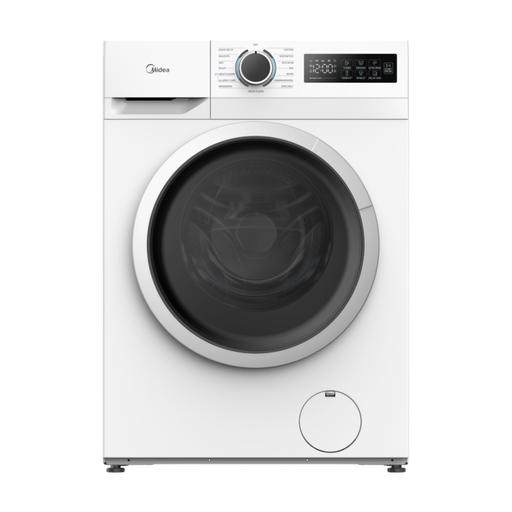 No image available
The capacity may suit loads shared between housemates; check separately whether the tea towel programme meets your temperature requirements.
Capacity: 8 kg. Maximum spin speed: 1400 rpm. Energy rating: B. Listed spin-cycle noise: 72 dB. End-time delay: 0–24 hours.
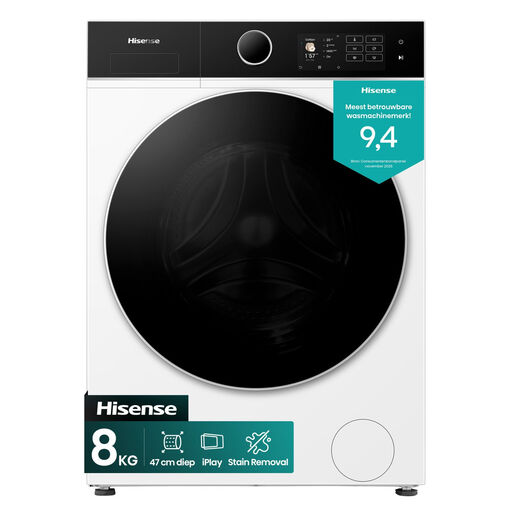 No image available
The listed depth may help if you have a small laundry area; also measure the access route and allow enough room for the connections.
Capacity: 8 kg. Maximum spin speed: 1400 rpm. Listed depth: 47 cm. Energy rating: A(-30%).
 No image available
With a 7 kg capacity, this model may suit the loads you actually wash together; check the available programmes and temperature settings.
Maximum spin speed: 1400 rpm. Energy rating: C. The product description lists 15 programmes, including cotton and Hygiene+.
 No image available
The capacity may suit laundry loads combined between housemates. Check the manual to see which programme is suitable for tea towels and whether you can set the temperature you want.
Maximum spin speed: 1400 rpm. Energy rating: A. The product description lists cotton, mixed and Hygiene+ programmes, among others.
No. The programme name doesn’t confirm that the cycle actually runs at 60 °C. The Netherlands Nutrition Centre recommends washing used tea towels at 60 °C; also check the care label and the temperature setting in the manual for the exact model.
Follow the installation instructions for the model you’ve bought. Bosch recommends placing it on a stable surface near the water supply and drain, using an earthed socket, and removing the transit bolts before use.
For a consumer purchase, ACM ConsuWijzer says the seller must offer a solution for a fault covered by the statutory guarantee. A manufacturer’s guarantee doesn’t replace your statutory rights.
According to the Dutch government, when a private customer buys a new appliance, the shop must take back an old, similar appliance free of charge. This also applies to online purchases; agree in advance how the handover will work when your new appliance is delivered.