
Housemates with washable bath mats
You want to know whether your mat can go in the washing machine according to its care label, and which programme to use. A label saying it’s washable doesn’t automatically mean every temperature is suitable.


Start by checking the bath mat’s care label to make sure the temperature, programme and permitted load are suitable. Choose the drum capacity based on how everyone does their washing together, not just on the basis of one mat. Compare spin-cycle noise and energy use too; a quick or steam programme doesn’t override the mat’s care instructions.
You want to know whether your mat can go in the washing machine according to its care label, and which programme to use. A label saying it’s washable doesn’t automatically mean every temperature is suitable.
You’re looking for a drum that suits the loads you typically wash together. Consumentenbond and Milieu Centraal highlight capacity and household size as factors to consider when choosing.
You want to take the stated spin-cycle noise into account and check that the machine can sit securely in the available space.
Start with the mat’s washing instructions, then consider the loads you share and where the machine will go. Compare energy use if you’ll be using the machine regularly.
| What to consider | What should you check? | Who should pay particular attention? |
|---|---|---|
| Programme for the bath mat | Compare your mat’s care label with the temperature, programme and permitted load in the manual. | If I want to wash a bath mat without going against its care instructions, I’ll pay particular attention to the programme settings. Around 33% of consumers put choosing a suitable programme for the mat first. |
| Drum capacity for shared laundry | Check the drum capacity and the load limits for the programmes you plan to use. Consumentenbond points out that some special programmes don’t allow a full drum. | When we share washing, I want the drum to suit our usual loads, not just one mat. Around 27% of consumers say shared load capacity is their main consideration. |
| Noise and positioning | Compare the spin-cycle noise rating and check the available space and installation instructions. | If the machine is close to my room, I’ll consider both the stated noise level and whether it can be positioned securely. Around 20% of consumers give noise and positioning top priority. |
| Purchase price and energy use | Compare the energy use shown on the label per 100 cycles on a like-for-like basis, using your expected usage and tariffs to work out the cost. | If we’re sharing the costs, I’ll weigh up the purchase price alongside ongoing energy use. Around 20% of consumers put shared costs first. |
The care instructions apply to that specific mat. A higher-temperature programme may not be suitable.
Check the mat’s care label before choosing a programme and temperature.
Load limits can vary by programme; some special programmes aren’t designed for a full drum.
Check the programme load limits in the manual for the exact model.
A noise rating on its own won’t tell you how a machine will sound on your floor or in the place you’ve chosen. If it isn’t level or the transit bolts haven’t been removed, the machine may vibrate or move.
Measure the space and follow the installation instructions for the flooring, transit bolts and levelling.
Renting and buying together can differ in terms of ownership, arrangements when someone moves out and how breakdowns are handled.
Compare the terms and payments over the same period of use. If you buy together, agree who owns the machine and how you’ll report a fault.
The VWM8030B is an 8kg front-loader worth comparing if a favourite setting and drum cleaning matter for regular use.
The LF628600 is an 8kg front-loader worth considering if the size of your shared loads varies.
The Serie 4 WAN2827DNL is an 8kg front-loader to compare with a standard shared laundry set-up.
This Joybuy selection features AEG front-loaders with different drum capacities and load-sensing functions. Always check the bath mat’s own care label; the product information for these models specifies a flat, stable floor and an earthed socket.
 No image available
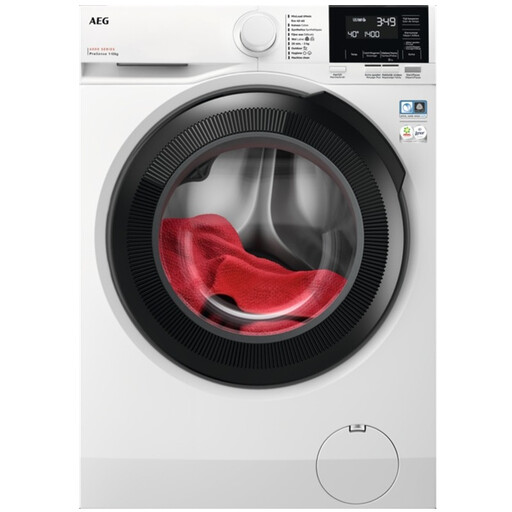
The product information mentions ProSense load sensing for varying shared loads.
Specifications: 10 kg; up to 1400 rpm; 51 kWh per 100 cycles for Eco 40-60.
 No image available
The product information mentions PreciseWash, which adjusts water, energy use and programme duration to suit the load.
Specifications: 8 kg; up to 1600 rpm; 42 kWh per 100 cycles for Eco 40-60.
 No image available
The product information mentions PreciseWash load sensing, which adjusts water and energy use.
Specifications: 8 kg; up to 1400 rpm; 42 kWh per 100 cycles for Eco 40-60.
 No image available
The product information mentions ProSense load sensing, which adjusts the settings to suit the load.
Specifications: 8 kg; up to 1400 rpm; an Anti Allergy Vapour programme at 60 °C; 47 kWh per 100 cycles for Eco 40-60.
No image available
The product information mentions PreciseWash load sensing, which adjusts water, energy use and programme duration.
Specifications: 8 kg; up to 1600 rpm; 42 kWh per 100 cycles for Eco 40-60.
No. Follow the care label for that specific mat. Also check that the programme you choose stays within the stated temperature and load limits.
Check the available space and follow the manual for the exact model. Positioning the machine on a flat, stable surface and removing the transit bolts as instructed can help prevent vibration or movement.
According to the Dutch government, the seller must provide a solution if a product is faulty. As housemates, you should also agree who bought the machine, how you’ll report a fault and how you’ll divide the costs.
Not necessarily. Compare the payments and terms for the period you expect to use the machine, and factor in arrangements for ownership and breakdowns.