What should you look for when choosing?
Start with the care label and the maximum load for the programme you want to use. Then weigh up the drum capacity, available space and consumption against your household’s needs.
| What to consider |
What should you check? |
Who should give this more weight? |
| Suitable programme |
Check the care label, the synthetics or sports programme, its settings and maximum load. |
If I often wash small sportswear loads, I want a programme that suits the clothes and the amount of washing. Around 28% of consumers in this buying context put washing at the right time, using a suitable programme, at the top of their list. |
| Drum capacity |
Estimate the size of your usual shared load and check the capacity for the programme you use. |
When sharing a washing machine, I want enough space for loads we actually combine, rather than basing my choice only on the number of housemates. Around 22% of consumers give top priority to a capacity that suits shared loads. |
| Space and noise |
Measure the space and access route; check the water inlet and drain, socket, stable positioning and stated spin noise. |
If the machine will be in a cramped space or close to a living room or bedroom, I want to make sure it will fit and take noise into account. For around 22% of consumers, fitting the machine in and minimising disruption to housemates come first. |
| Consumption |
Compare the EU label, kWh per 100 eco cycles and water consumption per eco cycle; also consider the programmes you actually use. |
If I wash clothes frequently, I want to take ongoing energy and water consumption into account, without assuming that eco figures apply to a sports programme. Around 17% of consumers put running costs at the top of their list. |
| Purchase and aftercare |
Check who the seller is, what delivery and installation include, and who to contact if something goes wrong. |
If several housemates are sharing the purchase and use of the machine, I want to know in advance who to contact if there’s a problem. For around 11% of consumers, clear purchase arrangements and aftercare matter most. |
Washing machines on Joybuy
These Joybuy product picks are freestanding front-loading machines for anyone looking to match sportswear and shared laundry needs with capacity, available space and programme information. Always check that the programme’s load limit and conditions suit the care label on your clothes.
 No image available
AEG LR73S840 7000 Series, 8 kg
The stated capacity may suit separate or combined loads; compare it with the loads you actually wash.
Stated capacity: 8 kg. Spin speed: 1400 rpm. Dimensions: 84,7 × 59,6 × 57,2 cm. Stated spin noise: 74 dB.
According to the product description, PreciseWash adjusts water and energy consumption to the weight of the load.
View on Joybuy
 No image available
Comfee' CFP01EW70W-JD, 7 kg
The stated capacity and design depth may be useful for smaller laundry areas and separate loads; measure the space and access route in advance.
Stated capacity: 7 kg. The product title gives a design depth of 400 mm.
The product description lists a 15-minute programme for small, lightly soiled loads. This doesn’t automatically make it suitable for every sportswear load.
View on Joybuy
 No image available
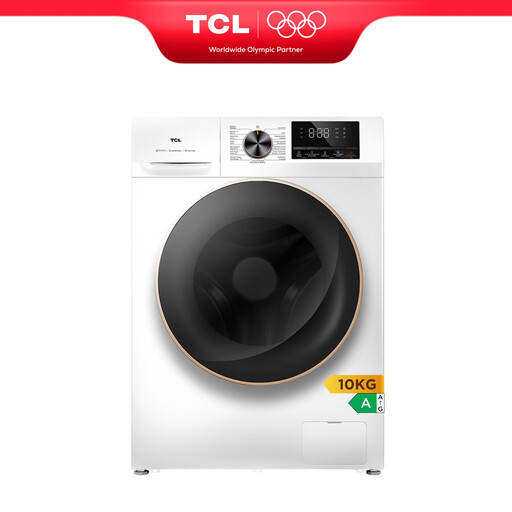
TCL FP1210WA0, 10 kg
The capacity may suit larger shared loads, if your housemates regularly combine their washing.
Stated capacity: 10 kg. Stated energy consumption: 51 kWh per 100 cycles.
The product description lists a 15-minute programme for lightly soiled everyday laundry; check that it’s suitable for the clothes and load.
View on Joybuy
 No image available
TCL FF1006WB0, 6 kg
The stated capacity and design depth are useful details if you mainly wash separate loads and have limited space; measure the area yourself.
Stated capacity: 6 kg. Design depth: 45 cm. Energy rating: B. Stated spin noise: 72 dB.
The product description lists a 15-minute programme for lightly soiled everyday laundry. Check the conditions before using it for sportswear.
View on Joybuy
 No image available
Coocaa Galaxy A3 Series F702A3AВC0, 7 kg
The stated capacity may suit smaller or combined loads; compare it with the amount of washing you actually do.
Stated capacity: 7 kg. Stated consumption: 40 kWh per 100 cycles. Stated spin noise: 76 dB. The product information lists 15 programmes and adjustable temperatures from cold to 90 °C.
The product description lists a short programme for lightly soiled clothes; check that it’s suitable for the care label.
View on Joybuy
Frequently asked questions
Is a sports programme essential for washable sportswear?
Not necessarily. Check the care label first. For machine-washable synthetic fabrics, a suitable synthetics programme may be an option. Compare the maximum load and settings for the specific programme, rather than relying on its name alone. Consumentenbond describes synthetics programmes as suitable for fabrics such as polyester.
What should I check before installing a washing machine in a student house?
Measure the space and access route, and check that there’s a stable surface, water supply, drain and earthed socket. Remove the transit bolts according to the installation instructions. If necessary, discuss use of the laundry area with your housemates or landlord.
Is a larger drum better when several housemates share a machine?
Only if you regularly use the extra capacity. Estimate the size of your usual combined load and also check whether the synthetics or sports programme has a lower maximum load. Milieu Centraal and Consumentenbond advise against buying a larger machine than you need.
What does the energy label tell you about sportswear washing?
The energy label provides standardised information based on the eco programme, but it doesn’t automatically predict the consumption of a sports programme. The European Commission describes the EU scale from A to G and explains that requirements apply to eco 40-60. Also compare the programmes you actually use.
Am I always entitled to just two years’ guarantee on a washing machine in the Netherlands?
No. According to ACM ConsuWijzer, your statutory guarantee depends on what you could reasonably expect from the product under normal use. The seller is your point of contact if a product is faulty; a manufacturer’s or extended guarantee doesn’t replace your statutory rights.


