
Sportspeople with a narrow laundry area
You’re mainly looking for a machine that fits the available width and want to know whether there’s enough room above it to open a top-loader.


If space is limited widthways, a top-loader may fit; if depth is the issue, a slimline front-loader is worth considering. A standard front-loader is best if your laundry area and doorway have enough room. Choose a capacity you’ll usually make use of: the Dutch Consumers’ Association recommends a large drum only if you can fill it. For muddy clothes, follow the care label and the programme’s load limit; Bosch recommends using cold water and detergent for mud.
You’re mainly looking for a machine that fits the available width and want to know whether there’s enough room above it to open a top-loader.
You have room for the width of a front-loader, but need to measure the depth, connections and clearance for the door carefully.
You regularly wash several kits and want to weigh up drum capacity and suitable programmes without relying on a programme name alone.
Choose this option if: the width of the alcove is your main constraint and you can open the lid above the machine. AEG lists the LTR7573A as 397 mm wide; Whirlpool lists the TW 622S FRESHCARE BE as 40 cm wide.
Bear in mind: you’ll need clear space above the lid. Whirlpool lists a 6 kg capacity in its specification table, while the product title says 6.5 kg; check the capacity of the exact version.
Choose this option if: there’s enough room for the width of a front-loader, but space is tight depthways. Beko lists the BM3WFU3741W with a cabinet depth of 49.6 cm, a width of 60 cm and a 7 kg capacity.
Bear in mind: you’ll need room for hoses, connections and the door to open; cabinet depth alone won’t tell you whether the machine will fit.
Choose this option if: the floor space and doorway are large enough, and you usually wash bigger loads. Bosch lists the WGN246A7NL with a 9 kg capacity and dimensions of 845 × 598 × 590 mm.
Bear in mind: a larger drum is less suitable if you usually do small washes; the Dutch Consumers’ Association recommends a large washing machine only if you can fill it.
Choose this option if: you also want to dry clothes but can’t fit a separate tumble dryer. The Dutch Consumers’ Association explains that a washer-dryer takes up less space than a separate washing machine and tumble dryer.
Bear in mind: Milieu Centraal recommends separate appliances if you have room, as they use less energy overall.
The main considerations when buying are the space available, removing mud, caring for fabrics and choosing the right capacity.
| What to consider | What to look for | Who is this most relevant to? |
|---|---|---|
| Will the machine fit? | Measure the width, depth and height; also check the space needed for connections and the loading door. | If my laundry area is small, I want to know first whether the machine will fit. Around 31% of consumers make fit the main priority. |
| Removing mud | Follow the care label and check the permitted load for the programme. Bosch recommends using cold water and detergent for mud. | If mud stains are my main challenge, I look at the washing instructions and suitable programmes. Around 31% of consumers put cleaning first. |
| Fabric care | Compare the care label with the temperature and maximum load for the programme you choose. | When I wash sportswear made from different fabrics, I want to follow the care label. Around 23% of consumers put fabric care first. |
| Capacity and consumption | Compare the rated capacity with a typical laundry load. The European Commission links the relevant consumption requirements to eco 40-60. | If I regularly wash several kits, I want a drum that suits my loads and lets me compare consumption information. Around 15% of consumers put capacity and consumption first. |
A machine may fit in the alcove but still be difficult to connect or load in practice.
Measure the full installation and access space, and check the installation diagram for the exact model.
A programme name alone doesn’t tell you how it will deal with mud or a particular fabric. Pre-treating may also take extra time and resources.
Follow the care label and the instructions for the fabric and load you’re washing. Bosch recommends using cold water and detergent for mud.
The benefit of extra capacity depends on the loads you actually wash.
Weigh a typical laundry load and compare it with the stated capacity before choosing.
A washer-dryer can save space, but your choice also affects overall energy consumption.
Consider this option if it’s important to dry clothes in the same room. Milieu Centraal recommends separate appliances if you have room, as they use less energy overall.
The AEG LTR7573A we looked at is a 7 kg top-loader for anyone looking to save space widthways.
The TW 622S FRESHCARE BE we looked at is a top-loader designed for a narrow space.
The BM3WFU3741W we looked at is a front-loader to consider if depth is your main constraint.
The WGN246A7NL we looked at is a standard front-loader for anyone with enough installation space who washes larger loads.
These washing machines offer a range of capacities and programmes to consider when choosing a machine for muddy sportswear and a small laundry area.
 No image available
An option if you’re looking for a washing machine with an 8 kg capacity.
8 kg capacity; 1600 rpm. The product information also mentions MixLoad 69 and a steam programme to freshen clothes.
 No image available
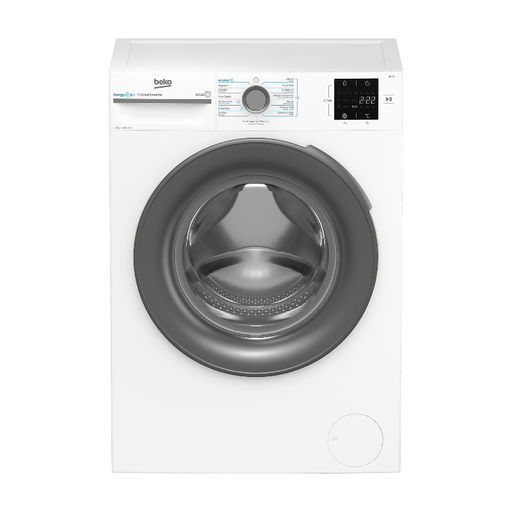
A good fit if you’re looking for a 7 kg capacity and prewash and stain programmes.
7 kg; 1400 rpm; C energy rating; 15 programmes. These include cotton with prewash, Stain and Delicates/Wool/HandWash.
 No image available
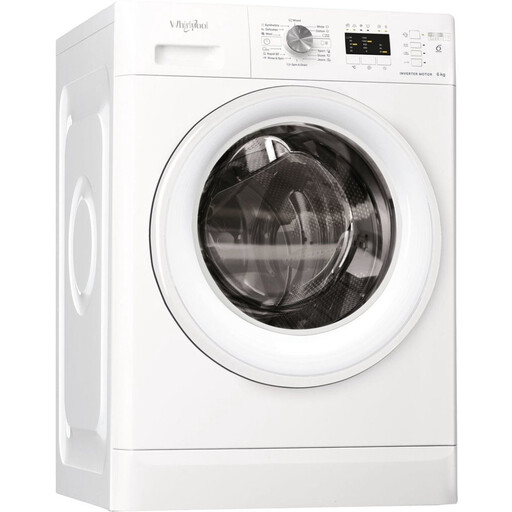
An option if you’re looking for a washing machine with a 6 kg capacity.
6 kg; 1200 rpm. The product information lists programmes including wool, jeans and quick wash.
 No image available
A good fit if you’re looking for an 8 kg capacity and prewash or stain programmes.
8 kg; 1400 rpm; A energy rating. The product information lists StainExpert, cotton with prewash and programmes for delicate fabrics. Dimensions: 84.5 × 60 × 54.6 cm.
 No image available
An option to consider if the stated depth of 45 cm works for your laundry area.
6 kg; 45 cm deep; B energy rating. The product title also mentions a steam wash, a 15-minute quick wash, automatic weight adjustment and the option to add clothes during a wash.
Choose a programme that suits the care label and fabric, and check its permitted load. Bosch recommends using cold water and detergent for mud; a programme name alone doesn’t guarantee a particular cleaning result.
Check the external dimensions of the exact model and the space needed for connections and loading. A top-loader needs clear space above the lid; a front-loader needs room for the door to open. Use the model’s installation diagram to confirm it will fit.
Follow the manufacturer’s care instructions. The Dutch Consumers’ Association recommends running a wash at 60 °C once or twice a month, among other things. This advice is for machine maintenance; it doesn’t mean every sports kit should be washed at that temperature.
The energy label gives standardised information about energy and water use, but not the exact consumption of every programme. The European Commission links the relevant washing machine requirements to eco 40-60; don’t use this to infer the consumption of a specific sports programme.
You’re entitled to a product that meets legal requirements; if there’s a fault, contact the seller. There is no fixed statutory warranty period in the Netherlands. According to the Dutch government, as a private consumer you can return your old appliance under the old-for-new scheme when buying a similar new appliance, including online.