
Sporty household with a narrow laundry space
Wants to check first whether the machine will fit, including the clearance needed to open the door or lid.


Measure not only the space for the machine, but also the clearance needed for the door or lid to open and for the connections. A top-loader can be a good fit when width or space in front of the machine is limited, provided there is enough clearance above it. A slim front-loader is an alternative if you have room for the door to open. Match the capacity and programmes to the care labels and the loads you actually wash.
Wants to check first whether the machine will fit, including the clearance needed to open the door or lid.
Wants to match the programme and load size to garments whose care labels call for gentle treatment.
Wants to be able to wash sportswear and everyday laundry without simply opting for the largest possible drum.
A good fit when: width or space in front of the machine is particularly limited, and the lid can open freely above it. The Dutch Consumers’ Association (Consumentenbond) describes top-loaders as often narrower than front-loaders.
Bear in mind: the top cannot be used as a work surface, and you’ll need enough clearance to open the lid.
A good fit when: you have enough width and room for the door to open, but limited depth. Beko lists a cabinet depth of 49,6 cm for the BM3WFU3741S.
Bear in mind: cabinet depth alone won’t tell you whether the complete installation will fit. Measure the hoses, any protruding parts and the access route too.
A good fit when: your measured space can accommodate the stated depth and you prefer a front-loader. Bosch Netherlands lists a width of 598 mm and a depth of 588 mm for the WGE02406NL.
Bear in mind: its stated cabinet depth requires more space than the shallow Beko front-loader mentioned above.
| Consideration | What should you check? | Who is this important for? |
|---|---|---|
| Will it fit? | Measure the width, depth and height, space for connections, the access route and the clearance needed for the door or lid to open fully. | If my laundry space is narrow, I want to know whether the complete setup will fit, not just the machine cabinet. Around 36% of consumers say fitting the machine is their top priority. |
| Programme for sportswear | Read the care labels and check the programmes and permitted load for the exact model. | I want to wash clothes according to their care labels, rather than relying on a programme name alone. Around 29% of consumers say suitable fabric care is their top priority. |
| Capacity for your load | Compare a typical, sorted load with both the machine’s capacity and the limit for your chosen programme. For delicate or synthetic laundry, the Consumentenbond recommends using no more than half the cotton capacity. | If I wash sportswear with everyday laundry, I want a capacity that suits my usual load. Around 21% of consumers put a suitable load size first. |
| Energy use and additional services | Compare energy label figures on a like-for-like basis: they apply to eco 40–60, not automatically to a sportswear or synthetic programme. Also check whether installation or removal is offered separately. | I want to take energy use and potential services into account without treating the energy label as a figure for every programme. Around 14% of consumers say energy use and additional costs are their top priority. |
A top-loader needs clearance above it; a front-loader needs room for the door to open at the front. Cabinet measurements don’t show the full space required for installation.
Before choosing a loading type, measure the space, connections, access route and clearance for the open door or lid.
The stated capacity is for cotton. For delicate or synthetic laundry, the Consumentenbond recommends a smaller load.
Check the maximum load for the programme that suits the care label.
The label figures apply to eco 40–60 and don’t directly tell you how much energy another programme uses.
Compare energy labels on a like-for-like basis and check programme information separately.
In the Joybuy listing checked for the Beko BM3WFU3741S, the colour and energy rating differed from Beko’s information; the listing also stated both class C and A.
Check the version and the product information sheet for the offer. Don’t treat conflicting listing details as confirmation that it’s an identical version.
The LTR6363A is a top-loader listed in the Netherlands with a capacity of 6 kg.
According to Whirlpool, the TW 6521S SENSE WASH BE is a top-loader with a capacity of 6,5 kg.
According to Beko, the BM3WFU3741S is a front-loader with a capacity of 7 kg and a cabinet depth of 49,6 cm.
Bosch Netherlands lists a capacity of 7 kg for the WGE02406NL.
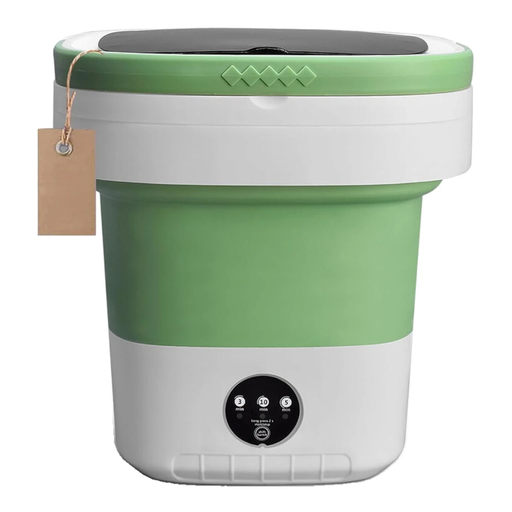
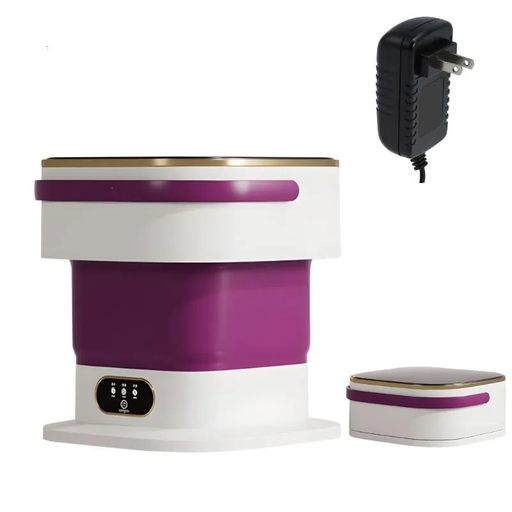
This selection includes compact mini washing machines for small loads and shallow front-loaders. Compare the stated capacity and programmes with your sorted sportswear, and measure the full installation space before choosing.
 No image available
Designed for smaller loads when storage space is limited.
The product title lists 12 L, 50 dB and a separate spin-dryer basket.
 No image available
Made for small laundry loads; compare the maximum load with what you want to wash.
The product information lists a maximum load of 1,9 kg. The title mentions 15 litres, 50 dB and a spin-dryer basket.
 No image available
A front-loader for anyone short on depth who wants a standard washing machine. Remember to measure the space for the door and connections too.
The product information lists a design depth of 400 mm, a capacity of 7 kg and 16 programmes.
 No image available
A front-loader with a stated depth of 45 cm, for laundry spaces where depth is a key consideration.
The product title lists 6 kg, a steam wash and a 15-minute quick wash programme. The product description says it automatically adjusts water use and cycle time to the load.
Not necessarily. Start by checking the care label, then look at the programmes and permitted load for the exact model. If a label calls for gentle treatment, a suitable synthetic or delicate programme may be appropriate; the programme name alone doesn’t prove it.
Follow the installation instructions for your chosen model. AEG Support warns that the transit bolts must be removed before use; running the machine with them in place can cause damage.
Milieu Centraal recommends running a 60 °C wash about once a month as part of routine maintenance, to help prevent detergent and dirt residue and unpleasant smells. Don’t use this temperature on sportswear unless its care label allows it.
If a product is faulty, the retailer is responsible under the statutory guarantee. ACM ConsuWijzer says the retailer must, depending on the circumstances, repair or replace the product free of charge, or refund your money. A fixed two-year guarantee period is not a general limit for statutory consumer rights in the Netherlands.
Household washing machines must carry an energy label. If a private customer buys a new washing machine, the Dutch government says the retailer must be able to take back an old, similar appliance free of charge. This also applies to online purchases and deliveries.