
Living with limited laundry space
You need to work out whether the available width and depth, the doorway and the connections will accommodate a top-loader or a front-loader.


Start by measuring the available width and depth, the doorway and the connections. Then choose a model with settings that suit the care labels on your sportswear. A top-loader can be a good option if width is limited, a shallow front-loader if depth is limited, and a standard front-loader if you have room for the full installation space. Also compare spin noise and drum capacity with the loads you usually wash. Energy-label figures are based on the eco 40-60 programme and don’t automatically predict how much a sportswear programme will use.
You need to work out whether the available width and depth, the doorway and the connections will accommodate a top-loader or a front-loader.
You want to choose a programme and settings that suit the care labels, without assuming that a sportswear programme alone guarantees a particular result.
If you live, work or sleep near the machine, spin noise and a stable installation surface may be important considerations.
First measure the space and check the connections. Then compare the wash settings, noise levels and capacity that suit your everyday needs.
| Consideration | What to look for when buying | Who is it most important for? |
|---|---|---|
| Space and installation | Measure the installation space, access route and room needed to open the door or lid. Also check the connections and installation instructions for the exact model. | If space is limited, I want to know in advance whether the machine will fit and can be connected safely. Around 29% of consumers prioritise installation. |
| Washing sportswear | Compare the programmes and settings with the temperature and wash intensity shown on the care labels. | If I wash sportswear often, I want to be able to choose a programme that suits the care labels. Around 29% of consumers give this type of fabric care top priority. |
| Spin noise | Compare the noise in dB(A) using the same label basis, and check that the machine can stand on a firm, level surface. | If the machine is close to where I live or sleep, I mainly want to know how loud it is during the spin cycle. Around 24% of consumers put noise first. |
| Capacity and energy use | Choose a drum capacity that suits your usual load. Treat energy-use figures as applying to eco 40-60, not as fixed figures for every programme. | If I want to plan my regular washes efficiently, I look for a capacity that suits how I use the machine. Around 18% of consumers prioritise capacity and ongoing energy use. |
The access route, space above a top-loader, room for the door to open, and space for the water and drain connections can all affect whether installation is possible.
Measure the route to the installation space and the area around it. Then check the installation diagram for the exact model and make sure the surface is stable.
The presence of a programme doesn’t automatically mean it’s suitable for every garment or that it will deliver a particular result.
Follow the care label and compare the programme settings with the recommended temperature and wash intensity.
Consumentenbond explains that the energy-use figures on the energy label apply to eco 40-60; other programmes may use different amounts.
Use the label to compare models on a like-for-like basis, not as an exact estimate of energy use for sportswear washes.
According to the Rijksoverheid, consumers already have statutory rights if a product is faulty. The Netherlands does not have a fixed statutory warranty period.
Check whether the terms of any extra cover genuinely give you more rights than you already have.
The examples below show how dimensions, capacity and programmes can vary between specific models; they are not a judgement on a brand’s entire range.
The AEG LTR6162K is a top-loader that may suit you if width is a key constraint.
The Haier HW70-BP14357TU1 is an example of a front-loader for anyone looking to limit the depth required.
The Bosch WGE02406NL is a freestanding 7 kg front-loader for a space with enough depth.
The Frilec KOBLENZ8314WA-342 is an example of an 8 kg front-loader for anyone whose usual load suits that drum capacity.
These Joybuy products are freestanding front-loaders. Compare their capacity and listed programmes with your laundry loads, garment care labels and available installation space.
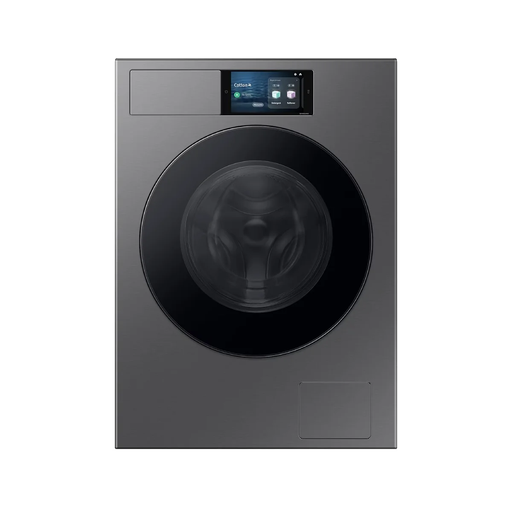 No image available
The stated capacity may suit you if you regularly wash larger loads; check that the machine fits in the space available.
The product information lists programmes for different fabrics.
 No image available
This model may be worth considering if you want to compare programmes for synthetics and delicates with the garment care labels.
The product information lists Synthetics and Delicate/Silk programmes, a Quick 15-minute programme, a 9 kg capacity and 1400 rpm. The stated depth is 55 cm.
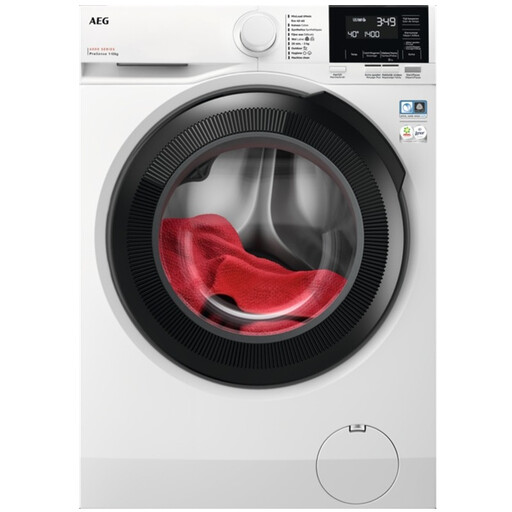 No image available
The drum capacity may suit you if you usually wash larger loads; base your choice on the loads you normally do.
The product information lists a wool programme and dimensions of 847 × 597 × 660 mm.
 No image available
The listed MixLoad setting may be useful if you want to compare mixed-load programmes with the garment care labels.
The product information lists MixLoad 69 at 30 °C and 42 kWh per 100 eco 40-60 cycles. This energy-use figure applies to eco 40-60 and not automatically to other programmes.
 No image available
The stated depth can help you compare the model with a limited installation space; also measure the room needed for the door and connections.
The product information lists dimensions of 847 × 596 × 577 mm and 47 kWh per 100 eco 40-60 cycles. This energy-use figure applies to eco 40-60 and not automatically to other programmes.
No. Don’t choose a programme based on its name alone. Follow the care label on each garment and set the temperature and other settings accordingly. Consumentenbond describes eco 40-60 as suitable for normally soiled cotton laundry.
For your chosen model, check the space required, that the floor is stable, and that you have a water supply, drain and socket. Bosch’s installation instructions recommend, among other things, an earthed socket and removing the transit bolts before use.
Not to have statutory rights: these already apply when consumers buy a faulty product. According to the Rijksoverheid, the Netherlands has no fixed statutory warranty period. Extra cover is mainly worth considering if its terms give you more rights than you already have.
No, consumers aren’t generally required to buy an energy rating A appliance. The European Commission states that, since 1 March 2021, the EU energy label for washing machines has ranged from A to G. Use the label figures to compare models, bearing in mind that the energy-use figures are based on eco 40-60.