
Host managing quick guest changeovers
You do laundry between bookings and want to know whether a quick programme is suitable for the load you actually wash. The programme duration alone doesn’t tell you what load is permitted.


If you usually wash just a small load of cotton socks, choose a drum capacity that suits your typical wash rather than automatically going for the largest drum. If you also wash bedding or need a cycle to fit between guest changeovers, compare the permitted load and duration of the specific programme, as well as the spin noise and the figures on the energy label. A quick programme is not automatically suitable for a full cotton load.
You do laundry between bookings and want to know whether a quick programme is suitable for the load you actually wash. The programme duration alone doesn’t tell you what load is permitted.
You usually wash small amounts of cotton laundry and want a drum capacity suited to these regular loads. Milieu Centraal recommends choosing a drum size that suits your usual wash.
You need to consider the space available, as well as noise and vibration in or near guest areas. The energy label includes information such as spin noise and drum capacity.
Start with the largest load you wash regularly, then check whether the programme you want will fit into the time between guest changeovers. If you mostly wash small loads of socks, it’s important to choose a machine and programmes that suit smaller loads.
| Factor | What to look for when buying | Who is this most relevant to? |
|---|---|---|
| Washing time between guest changeovers | Compare the programme duration with the permitted load and the amount of laundry you want to wash at once. | If the time between changeovers is tight, I want to know whether my usual wash will fit into one suitable cycle. Around 29% of consumers prioritise the time available between bookings. |
| Capacity for small loads | Compare your usual load of socks with the drum capacity and check which programmes allow smaller loads. | If you usually wash just socks, you’ll want a drum that suits this regular amount. Around 29% of consumers give small loads top priority. |
| Noise and installation space | Check the spin noise on the energy label and measure the space; follow the installation instructions for connection and positioning. | If the machine is close to guests or neighbours, you’ll want to take the available space and potential noise disturbance into account. Around 21% of consumers start by looking for a suitable, quiet place to install it. |
| Energy and water consumption | Compare label figures on a like-for-like basis, such as energy per 100 cycles and water per cycle; bear in mind that figures vary between programmes. | If you wash repeatedly, you’ll want to know what the stated consumption figures show, without assuming they apply directly to a quick wash of socks. Around 21% of consumers prioritise energy and water use. |
A larger drum isn’t automatically better value if you usually wash small loads. Choose a capacity based on both your usual wash of socks and the largest textile load you wash regularly.
A drum that is often underused for your usual small loads may be less suited to your day-to-day needs.
A programme duration applies to the settings and load for that specific programme; figures for eco 40-60 don’t automatically describe a quick cycle. Check the manual to see which amounts and types of fabric are allowed.
If a programme isn’t suited to the load, you may need to split the laundry across more than one cycle.
ACM ConsuWijzer distinguishes between different types of contract use: consumer protection does not apply when the contract is used mainly or exclusively for business purposes. Before buying, check which purchase, service and warranty terms apply to your situation.
AEG’s front-loading machines in the Netherlands with an 8 kg capacity include models with load-adjustment features or quick programmes. The LR86CB86 is one example to compare against your own washing habits in terms of programme requirements and capacity.
The Serie 6 front-loading range includes the WGG244ZONL, a model with a 9 kg capacity. It may be worth considering if you regularly wash larger loads as well as socks.
Miele W1 front-loading machines come with a range of features. The WWR760WPS is one 9 kg example, with TwinDos and QuickPowerWash for anyone who expects to use these features in practice.
This selection includes compact mini washing machines for separate loads of socks, as well as freestanding washing machines for anyone considering larger loads or quick programmes too.
 No image available
Worth comparing if you wash larger loads as well as socks and want to consider a quick programme.
9 kg capacity; 1400 rpm. The programme information lists Quick 15 minutes and Super Speed for 5 kg; check the requirements and load capacity for the programme you want to use.
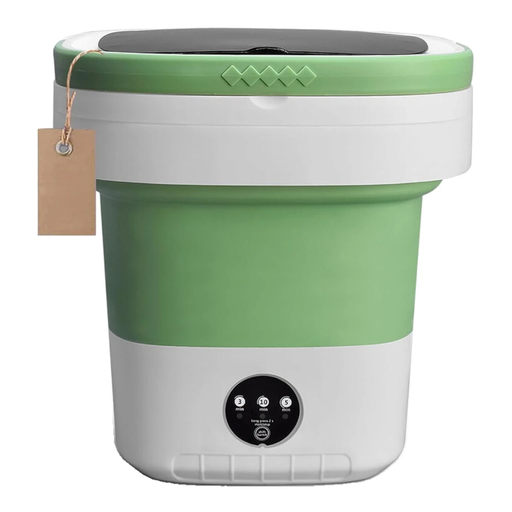 No image available
A compact option to consider for separate, small loads of socks.
Maximum wash load 1.5 kg; includes a separate spin basket. Bear the maximum load in mind when deciding whether one cycle will be enough.
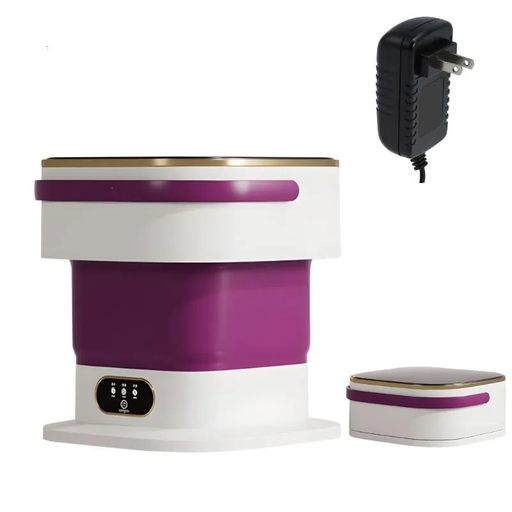 No image available
Worth considering if you want to wash separate loads of socks and store the machine away compactly.
Maximum wash load 1.9 kg; includes a separate spin basket. Check whether this maximum load suits the amount of laundry you want to wash at once.
 No image available
Worth including in your comparison if you’re looking for a freestanding machine for larger loads and are also considering a quick cycle.
8 kg capacity, 1400 rpm and 16 wash programmes. The product information lists a 15-minute Quick programme for lightly soiled everyday laundry; check which load is permitted.
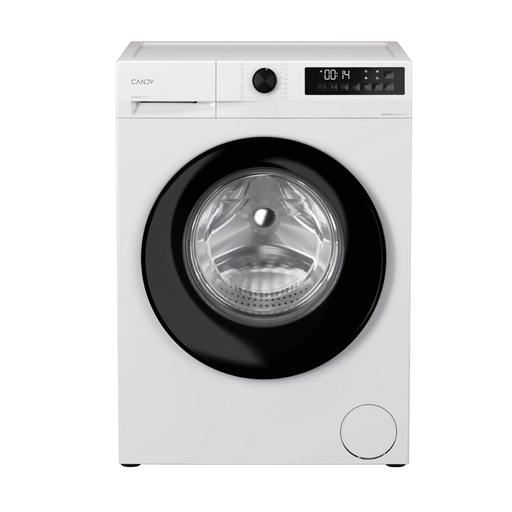 No image available
A model to compare if you wash larger loads as well as socks and want to assess quick cycles.
9 kg capacity, 1351 rpm and 16 wash programmes. The product information lists quick cycles from 14 minutes; check the requirements and permitted load for each cycle.
No, the available washing advice doesn’t set this as a general requirement. Milieu Centraal recommends the eco programme for normally soiled laundry and mentions 60 °C for specific hygiene situations. Follow the care label and deal with unusual contamination separately; eco 40-60 doesn’t mean the laundry is guaranteed to be washed at exactly 60 °C.
Follow the installation instructions to ensure the machine has a stable base, accessible water supply and drainage, and an earthed socket. Remove the transit bolts before use and also consult the manual for your chosen model.
Compare the energy label figures for energy per 100 cycles and water consumption per cycle on a like-for-like basis. These figures aren’t a direct calculation of the consumption for your quick socks programme.
That depends on the capacity in which you’re buying and how the contract is used. ACM ConsuWijzer states that consumer protection doesn’t apply when a contract is used mainly or exclusively for business purposes; the assessment may be different if it’s used mainly for private purposes or in certain situations involving small businesses. Before ordering, ask for confirmation of the terms that apply to your purchase.
Yes. According to the Dutch Government, washing machines are among the appliances that must carry an energy label. Compare the label for the exact model you plan to buy.