Choose a machine that fits in your utility room and whose drum you can usually fill well for your regular cotton washes. Don’t be swayed by a large capacity just for a few pairs of shorts. According to the Consumers’ Association, eco 40-60 is designed for normally soiled cotton that can be washed at 40 or 60 °C according to the care label. Then compare the EU energy label and spin noise level, and check the access route, connections and installation instructions before buying.
Who is this buying guide for?
If you wash small cotton loads
Do you wash just a few pairs of shorts at a time, or add them to other cotton items? Look for a capacity that suits your usual wash load. The Consumers’ Association advises choosing a large machine only if you can usually fill the drum well.
If you have a small utility room
Start by checking the space, access route and connections. Measure not only the space for the appliance, but also make sure the floor is stable and that the water supply, drain and earthed socket are within reach. Bosch Netherlands explains these installation requirements.
If you’re comparing energy use and noise
To compare models fairly, check the energy and water figures on the EU label, as well as the spin noise level. The European Commission explains the EU label scale, and the Consumers’ Association points out that the spin noise level is shown on the label.
What should you look for?
Start with the care label and your usual cotton wash. Then check that the machine fits in your utility room and compare energy use and spin noise.
| What to consider |
What to look for |
Who should pay particular attention? |
| Wash programme |
Check that the cotton and eco 40-60 programmes are suitable for the care label and how soiled the items are. The Consumers’ Association explains which cotton washes eco 40-60 is designed for. |
Do you want to wash your shorts according to their care instructions and how soiled they are, without choosing an unsuitable programme? Around 29% of consumers put the right cotton and programme settings first. |
| Load capacity |
Weigh a typical sorted wash load and compare it with the stated cotton capacity. The Consumers’ Association warns that load detection does not fully compensate for a drum that is too large. |
Do you often wash just a small load of shorts with other cotton items and want a drum that suits your usual wash? Around 29% of consumers give the right load capacity top priority. |
| Positioning and connections |
Measure the appliance and the entire access route; check that the floor is stable and that the water supply, drain and earthed socket are accessible. Also follow the installation manual for your model. |
Does the machine need to fit in a small utility room, including the route to it and the connections? Around 21% of consumers start by checking the available space and installation requirements. |
| Energy and water use |
Compare the energy class, kWh per 100 cycles and water use per cycle on the same EU label basis. The European Commission explains the scale used for EU energy labels on washing machines. |
Do you want to compare the stated energy and water use of machines with a suitable capacity, without treating label figures as your personal bill? Around 14% of consumers prioritise energy and water use. |
| Spin noise |
Compare the stated noise level in dB(A) and check that the floor is level and stable. The Consumers’ Association notes that washing machines are particularly noisy during the spin cycle. |
Is your utility room next to a living room or bedroom, and do you want to take noise into account when choosing? Around 7% of consumers give spin noise top priority. |
Common buying mistakes
-
Looking only at the largest load capacity
The stated load capacity applies to cotton. A large drum isn’t automatically the best choice for regular small loads: according to the Consumers’ Association, load detection does not fully compensate for a drum that is consistently too large.
Weigh a typical sorted wash load and compare it with the cotton capacity.
Small cotton loads on a regular basis may not get as clean and can make energy use per kilo less efficient.
-
Assuming eco 40-60 is an adjustable temperature setting
The name doesn’t mean you can choose a temperature between 40 and 60 °C, or that the programme is suitable for every pair of shorts. The Consumers’ Association describes eco 40-60 as being designed for normally soiled cotton that can be washed at 40 or 60 °C according to the care label.
Check the garment label and, if the instructions or level of soiling differ, choose a suitable programme.
-
Measuring only the width of the machine
Depth, access, stable positioning and the reach of the water supply, drain and power supply also determine whether you can install the machine. Bosch Netherlands stresses that the machine must stand securely and be connected to the correct services.
Measure the entire route and check the installation instructions for your chosen model before ordering.
If the space or connections aren’t suitable, you may need to make adjustments or pay for extra installation work.
-
Confusing the manufacturer’s guarantee with your statutory rights
A manufacturer’s guarantee does not replace your statutory right to a product that is fit for purpose. According to the Government of the Netherlands, there is no fixed statutory guarantee period in the Netherlands; if there’s a fault, contact the retailer.
Check any additional guarantee terms separately, and contact the retailer if there’s a fault.
Brands to compare
Beko
The freestanding BM3WFU38412CW is an 8kg model with a cotton programme and a stated depth of 54,6 cm.
- Beko lists energy class A and a spin noise level of 76 dBA for this model.
- These figures apply to the BM3WFU38412CW; they don’t tell you how other models from the brand perform.
AEG
The 6000 ProSense LR6ALPHEN is a front-loading model with a stated capacity of 8 kg.
- AEG says the model adjusts the wash time and energy and water use to the load.
- The Consumers’ Association warns that load detection isn’t always accurate. Also check the stated depth of 602 mm.
Samsung
The WW80CGC04AAHEN is a front-loading model listed in the Netherlands, with a stated capacity of 8 kg and a depth of 550 mm.
- Samsung lists the eco 40-60 programme and additional smart features for this model.
- Assess energy-saving claims only under the stated settings and conditions. Also measure the entire delivery route.
Bosch
According to Bosch, the Serie 4 WAN28270NL has a reload function and a Speed Perfect option.
- The reload function may be useful if you want to add an item of clothing during a wash.
- Bosch qualifies claims about faster washing and water savings for this model; compare the capacity, dimensions and suitable programmes first.
Washing machines at Joybuy
These models have different stated capacities and dimensions for you to compare. For each model, check that the listed programmes, measurements and connection options suit your shorts and utility room.
 No image available
Comfee CFP01EW70W-JD, 7 kg
The listed cotton programme makes this model worth comparing. Check the care label on your shorts and match the capacity to your usual wash load.
Stated capacity: 7 kg. The product listing specifies a cotton programme and a design depth of 400 mm.
View at Joybuy
 No image available
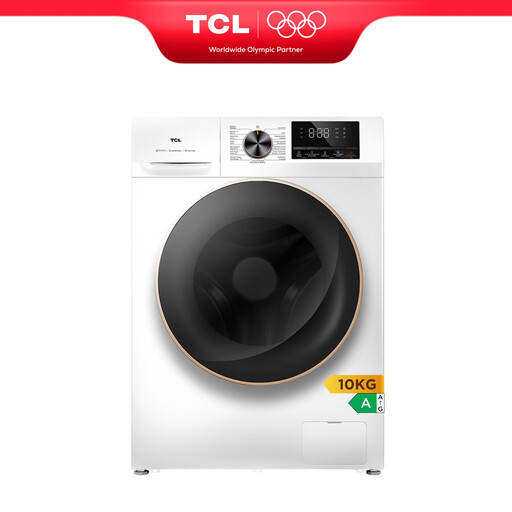
TCL FP1210WA0, 10 kg
Compare the stated capacity with your usual wash load. A machine designed for larger loads won’t necessarily suit frequent small cotton washes.
The product listing specifies 15 programmes, 51 kWh per 100 cycles, 72 dB during spinning and dimensions of 595 × 628 × 850 mm.
View at Joybuy
 No image available
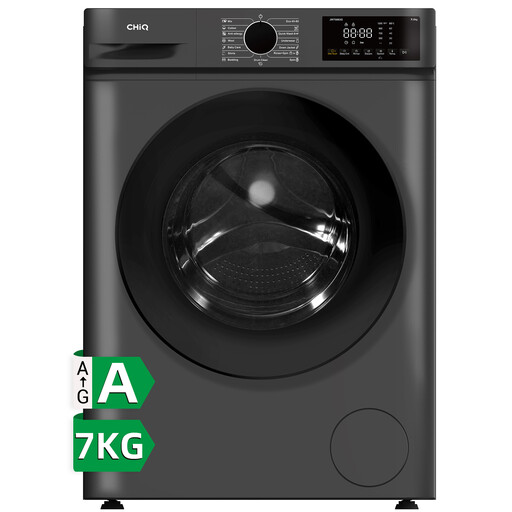
CHiQ JW75883G, front-loading, 7 kg
The stated capacity and depth give you a useful starting point for comparing this model with your usual wash load and the space available.
The product listing specifies 7 kg, 16 programmes, a depth of 47 cm and a spin speed of 1200 rpm.
View at Joybuy
 No image available
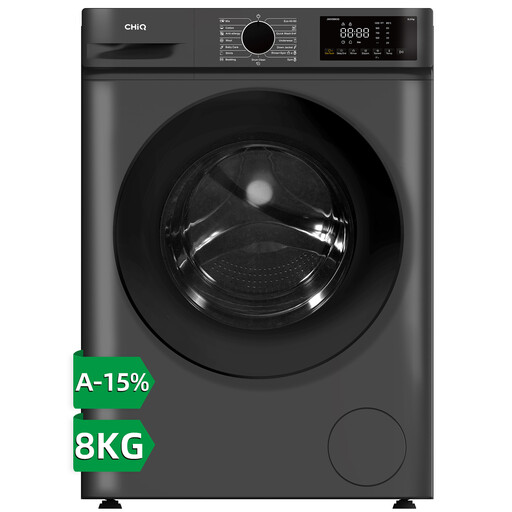
CHiQ JW85883G, front-loading, 8 kg
Compare the stated capacity with the loads you usually wash and check that the stated depth will fit in your utility room.
The product listing specifies 8 kg, 16 programmes and a cabinet depth of 52 cm.
View at Joybuy
 No image available
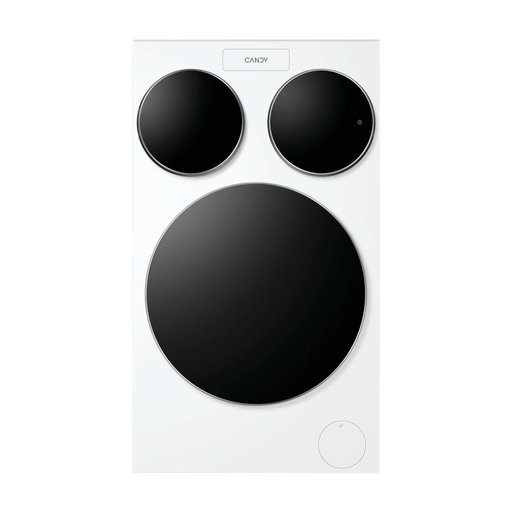
Candy MQD 410CBL9-S, 10+1+1 kg, three drums
The separate drums are a distinctive feature to consider when comparing models. Check whether the stated layout suits the way you sort your washing.
The product listing specifies three drums with capacities of 10+1+1 kg, a spin speed of 1330 rpm, energy class A, 33 kWh per 100 cycles and 68 dB during spinning. Stated dimensions: 600 × 595 × 1070 mm.
View at Joybuy
Frequently asked questions
Can I always wash cotton shorts on eco 40-60?
No. Eco 40-60 is designed for normally soiled cotton that can be washed at 40 or 60 °C according to the care label. Check the label and, if the instructions or level of soiling differ, choose a suitable programme, as the Consumers’ Association advises.
What should I check before connecting a washing machine in the utility room?
Measure the appliance and the access route, make sure the floor is stable, and check the position of the tap, drain and earthed socket. Follow the model-specific instructions; Bosch Netherlands recommends, among other things, removing the transit bolts and checking for leaks.
What do the energy label figures tell me about my own washing costs?
The EU label includes figures such as energy use in kWh per 100 cycles and water use per cycle, based on a prescribed comparison method. Your own costs also depend on the programmes you use, how often you wash and your tariffs. The European Commission explains the EU label scale, but a label figure isn’t a personal cost estimate.
Does the retailer have to take away my old washing machine when I buy a new one?
In the Netherlands, the old-for-new scheme applies when you buy a similar new household appliance for private use. According to the Government of the Netherlands, the retailer must take away the old appliance free of charge. The scheme also applies to online purchases and allows for collection on delivery or at a later date.
Is a manufacturer’s guarantee the same as my statutory protection?
No. According to the Government of the Netherlands, there is no fixed statutory guarantee period in the Netherlands: you’re entitled to a product that is fit for purpose, and a manufacturer’s guarantee is an extra benefit. If there’s a fault, contact the retailer.


