
People with a narrow alcove
The key is to make sure the width and the clearance needed to open the machine work together. Compare a top-loader with your measured alcove; the Consumentenbond describes top-loaders as narrower than front-loaders.


Start by measuring the available width, depth and clearance for opening the machine. If width is limited, a top-loader may be suitable; if depth is restricted but there’s enough width, it’s worth comparing a shallow front-loader. Measure the space needed for connections too, and check that the door or lid can open. The Consumentenbond recommends measuring the space at several points. Next, choose a programme that suits the care label and check its load limit. An energy label helps you compare models, but it doesn’t show how much energy every delicate wash will use.
The key is to make sure the width and the clearance needed to open the machine work together. Compare a top-loader with your measured alcove; the Consumentenbond describes top-loaders as narrower than front-loaders.
You’ll want to follow the care labels and check which settings and load limits are suitable for each garment. The Consumentenbond explains that wash programmes vary in factors such as temperature, spin speed and drum movements.
You’re looking for a capacity that suits your other laundry too, without taking up extra space just to get a larger drum. Milieu Centraal recommends choosing a washing machine that’s no bigger than you need.
Measure the space first, then check the care labels and programme load limits. Only then compare the energy and water use, and the practical terms, of models that meet those initial requirements.
| Consideration | What to look for | Who it matters most to |
|---|---|---|
| Fitting the available space | Measure the alcove at several points and check the exact model’s external dimensions, connection clearance and door-opening direction. | If my alcove is tight, I want to make sure the machine fits and that I can open the door or lid. Around 28% of consumers put the available space first. |
| Looking after your dresses | Read the care labels and check which programme, temperature, spin speed and programme load are suitable. | For dresses with different care labels, I want to be able to choose a suitable programme. Around 28% of consumers give garment care the highest priority. |
| A suitable load capacity | Compare your usual laundry load with the maximum load for the programme you’ll use, not just the machine’s stated capacity. | I want the drum to suit my dresses and other laundry without taking up unnecessary space. Around 17% of consumers put a suitable load capacity first. |
| Energy and water use | Compare energy label figures on the same basis. The Dutch government and the European Commission describe label information for the eco programme; those figures don’t automatically show the energy or water use of a delicate wash. | Once the machine meets my space and laundry requirements, I want to compare the energy and water use of suitable models. Around 16% of consumers give consumption the highest priority. |
| Delivery and aftercare | Check the delivery and any installation terms, and find out what service the seller offers. | I want to know in advance what delivery and aftercare involve, and who to contact if I have questions. Around 11% of consumers put these practical considerations first. |
A machine may look as though it will fit on paper, but there might not be enough room for connections or to open the door. The Consumentenbond recommends measuring the space at several points.
Measure the entire space and check the clearance for connections and opening the door before choosing a model.
The European Commission describes eco 40-60 as being for cotton that can be washed at 40 °C or 60 °C. That doesn’t automatically make it suitable for other fabrics or care labels.
Let the dress’s care label guide your choice of programme and temperature.
The lid needs to open freely, so a top-loader isn’t suitable if you need to use its top as a permanent work surface or storage area.
Choose a top-loader only if there’s enough clearance above the machine to open the lid.
The permitted load can vary from one programme to another. The maximum capacity for cotton doesn’t automatically apply to a delicate wash programme.
Check the manual for the exact model to find the maximum load for the programme that suits your dresses.
The LTR7573A is an example of a top-loader for spaces where width is the main constraint.
The BM3WFU3741W is an example of a front-loader with a relatively shallow stated cabinet depth.
The X5 HW80-BP14357TU1 is a model to consider when depth is a key limitation.
The Serie 2 WGE02404NL is a model to consider if there’s enough room for a front-loader.
This selection includes foldable mini washing machines for small loads and shallow front-loaders for spaces with limited depth. Check each dress’s care label, and check the programme options and permitted load for each model.
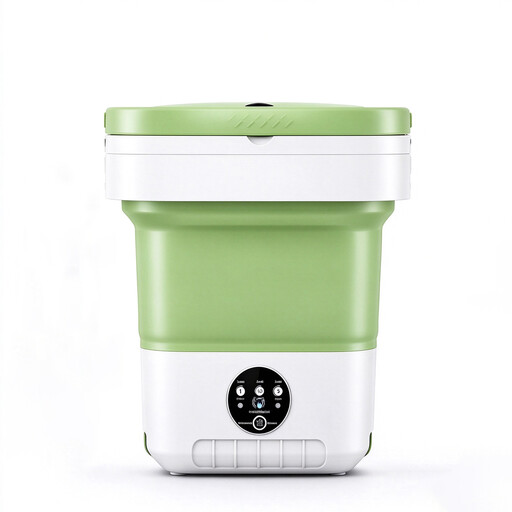 No image available
The foldable design is intended for anyone who wants to put away a small washing machine. Check that its limited capacity suits your laundry load.
The product name lists a capacity of 12 litres and a spin-drying basket. The stated maximum load is 1,5 kg.
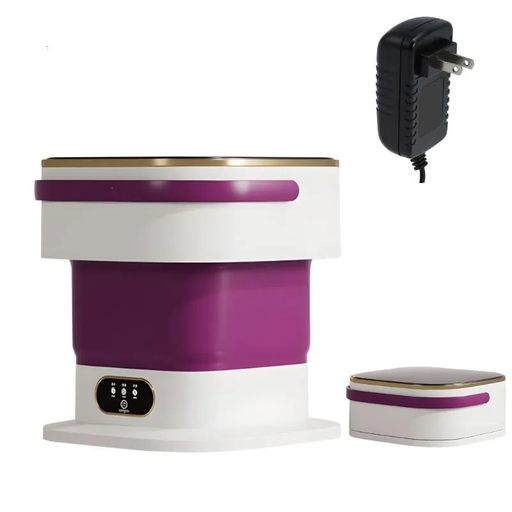 No image available
The foldable design may suit you if storage space is limited and you want to wash small loads. Check that its capacity is enough for your needs.
The product name lists a capacity of 15 litres and a spin-drying basket. The stated maximum load is 1,9 kg.
 No image available
The stated depth may be useful if your alcove is limited. Remember to measure the connections and the space needed to open the door too.
The product information lists a depth of 400 mm, a capacity of 7 kg and 16 programmes. Check which programmes and load limits suit your dresses’ care labels.
 No image available
The stated depth and capacity can help you compare the machine with your available space and usual laundry load. Check the full installation dimensions too.
The product name lists a depth of 45 cm, a capacity of 6 kg, energy label B and a BLDC inverter motor. It also mentions a steam wash programme and a 15-minute wash cycle; check whether a programme is suitable for your dresses.
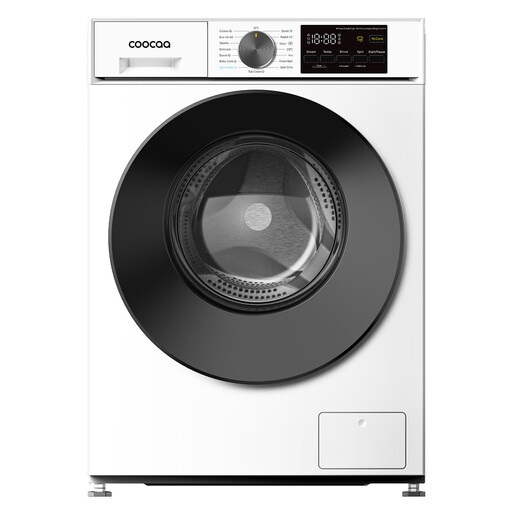 No image available
This front-loader may be worth comparing if depth is limited. Check that the door can open in the available space too.
The product name lists a capacity of 7 kg, 15 programmes and energy label A. The product information mentions special fabric care; check the manual to see which programme suits your care labels.
No. Follow the dress’s care label for the maximum temperature and how gently it needs to be washed. The European Commission describes eco 40-60 as being for cotton that can be washed at 40 °C or 60 °C. For other care labels, choose a suitable programme.
Measure the width, height and depth at several points, allowing for connections and the space needed to open the door or top lid. Follow the installation instructions for your chosen model too.
The energy label gives information about energy and water use on the stated label basis. The Dutch government explains the information shown on the label. Use those figures to compare models on the same basis, not to predict consumption for every other programme.
Your statutory rights mean you’re entitled to a product that meets reasonable standards; there’s no fixed two-year statutory guarantee period in the Netherlands. The Dutch government says that the seller is your point of contact if a product is faulty. Also check what additional service the seller offers.
Milieu Centraal recommends running a 60 °C wash about once a month to help remove soap and dirt residues. This maintenance advice for the machine doesn’t change the care label on a dress: don’t wash it at a higher temperature than the label allows.