
For a narrow laundry space
If width is limited, a top-loader is worth considering. Just make sure there’s enough space above the machine to open the lid. The Consumentenbond describes top-loaders as narrower than standard front-loaders.


If width is your main constraint, compare top-loaders. If depth is the issue and you have around 60 cm of width, look at shallower front-loaders. Also measure the space needed for the lid or door to open, as well as hoses and connections, and choose a load capacity that suits your usual sorted laundry. A compact exterior alone doesn’t guarantee that a machine will fit in your space.
If width is limited, a top-loader is worth considering. Just make sure there’s enough space above the machine to open the lid. The Consumentenbond describes top-loaders as narrower than standard front-loaders.
If there’s enough width but depth is tight, compare the appliance’s depth with the space needed for hoses and the open door. The Consumentenbond also recommends measuring the clearance needed for installation.
If you regularly wash small, sorted loads of tea towels and other laundry, choose a load capacity that suits your usual wash. The Consumentenbond notes that the stated capacity applies to cotton.
Choose this if: width is limited, but there’s room to open the lid above the machine.
Bear in mind: a top-loader won’t fit under a worktop that prevents the lid from opening. The Consumentenbond also recommends checking the full installation space.
Choose this if: there’s enough width and room for the door to open, but depth is the limiting factor.
Bear in mind: a smaller stated depth doesn’t make the machine narrower. Measure the space needed for hoses and the door separately.
Choose this if: your available space can accommodate both the width and depth of a standard model.
Bear in mind: a standard front-loader won’t solve a lack of width. Bosch lists the WGE02404NL as 598 mm wide and 588 mm deep.
| Consideration | What should you check? | Who is this important for? |
|---|---|---|
| Space and installation | Measure the width, depth and height. Also check connections, hoses and the space needed to open the lid or door. The Consumentenbond stresses that the stated appliance dimensions don’t include all the space needed for installation. | If I have very little width, I want to know whether both the machine and its lid will fit in my space. Around 33% of consumers put available installation space first. |
| Wash programme for tea towels | Read the care labels and check which temperatures and programmes are permitted in the machine manual. Milieu Centraal recommends washing dishcloths at 60 °C; this doesn’t automatically apply to every tea towel. | I want to be able to choose a wash programme for my used tea towels that’s suitable for their care labels. Around 27% of consumers prioritise their tea towel washing routine. |
| Load capacity | Compare the stated cotton capacity with the size of your usual sorted load, and check the load limit for each programme. The Consumentenbond warns that automatic load detection doesn’t always accurately adjust for a small load. | For small, sorted loads, I want a drum that suits my usual washes. Around 20% of consumers focus on the relationship between load size and capacity. |
| Energy use and additional costs | Compare the EU energy label and product information sheet for the same model and programme. Ask separately about installation costs if necessary. The European Commission sets out the requirements for the eco 40-60 programme. | If I want to understand running costs and additional costs, I compare information for the same model and programme. Around 20% of consumers prioritise energy use and costs. |
A top-loader and a shallower front-loader solve different space problems. Don’t look at just one measurement: the door opening, connections and hoses also determine whether the machine can be installed.
Measure your space and compare it with the installation details for the exact model before choosing a type.
The stated maximum load capacity applies to cotton and doesn’t tell you how much laundry you can put in for every programme. According to the Consumentenbond, automatic load detection doesn’t always accurately adjust for a small load.
Weigh a typical sorted load and check the permitted load for each programme.
For the Beko BM3WFU3741S, the model details and energy class in a product listing differ from the information provided by Beko. Choosing based only on the title or an individual specification could therefore lead you to the wrong version.
Check the model code, exact version and EU product information sheet before taking colour or energy class into account.
The TW 622S FRESHCARE BE we reviewed is a top-loader for spaces where width is limited.
The LTR7STEAM is a top-loader for a narrow space where the lid can open freely.
The BM3WFU3741S is a front-loader to consider when depth, rather than width, is the main constraint.
The WGE02404NL is a standard front-loader for spaces with enough room for a conventional model.
This selection includes front-loaders for spaces that can accommodate their stated dimensions, as well as a foldable mini washing machine for small, separate loads. Check the available space, load capacity and programme information for each model.
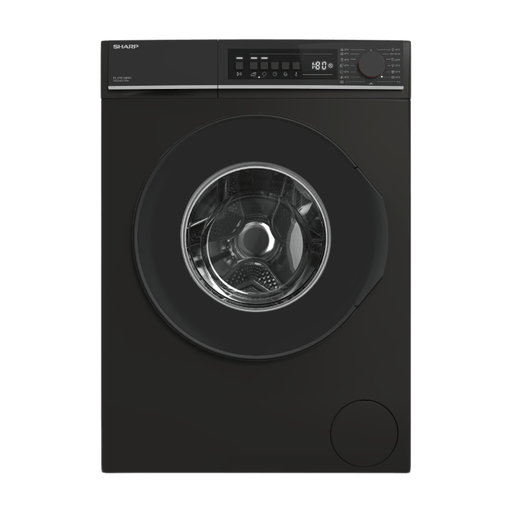 No image available
Worth considering if your space can accommodate a front-loader with the stated dimensions.
The description lists dimensions of 597 × 600 mm, a 7 kg capacity, 15 programmes and an adjustable temperature setting. The product title lists 1400 rpm, energy class A and an inverter motor.
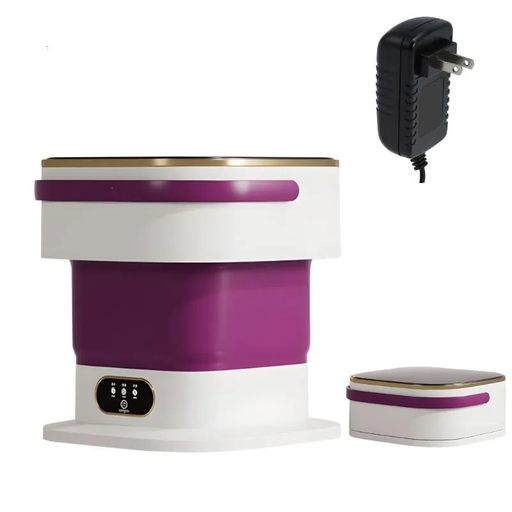 No image available
Worth considering for small, separate loads rather than a typical full wash.
The description lists a maximum wash load of 1,9 kg and includes a spin-drying basket.
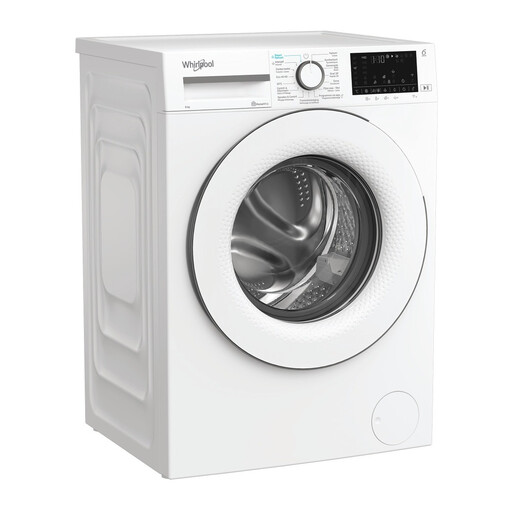 No image available
Worth considering for a typical laundry load if your available space can accommodate a freestanding front-loader.
The product title lists a 7 kg capacity and 1200 rpm. The description mentions SenseWash sensors that adjust the settings and programme duration to suit the load.
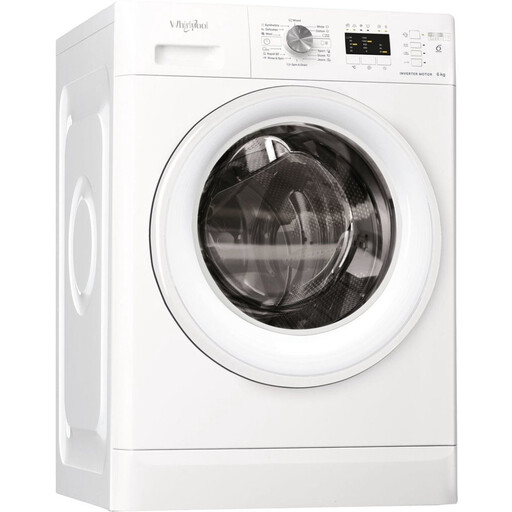 No image available
Worth considering if your measured space can accommodate a freestanding front-loader and 6 kg suits your usual load.
The product title lists 1200 rpm. The description gives dimensions of 59,5 × 57,5 × 84,5 cm and 14 programmes, including cotton and eco programmes.
 No image available
Worth considering if your available space is deep enough for the stated dimensions and can accommodate a front-loader.
The product title lists a design depth of 400 mm and a 7 kg capacity. The description mentions 16 wash programmes. Remember to allow for the door and hoses when planning where to install it.
No. The available guidance doesn’t say that every tea towel should routinely be washed at 60 °C. Milieu Centraal recommends this temperature for dishcloths and in certain situations involving contamination; washing at a lower temperature uses less energy for everyday laundry. Check the care labels on your tea towels.
No. The European Commission describes eco 40-60 as a cycle for normally soiled cotton that can be washed at 40 °C or 60 °C according to its care label. The name doesn’t mean every wash runs at 60 °C.
Not if the worktop stops the lid from opening. The Consumentenbond points out that a top-loader can’t be installed under a kitchen worktop. Remember to measure the height and allow room for connections too.
Also measure the space needed for hoses, connections and the door or lid to open. The Consumentenbond recommends levelling the machine to reduce vibration. Follow the chosen model’s manual for maintenance. Milieu Centraal recommends running a 60 °C wash once a month to help remove soap and dirt residue.
No. The Dutch government states that there’s no fixed statutory guarantee period in the Netherlands. You’re entitled to a product that works as it should, depending on what you can reasonably expect from it. If there’s a problem, contact the retailer. An additional guarantee doesn’t replace your statutory rights.