
Anyone with a narrow laundry space
If width is your main constraint, check whether a top-loader will fit and whether there’s enough room to open the lid. The Dutch Consumers’ Association describes top-loaders as narrower than standard front-loaders.


First, measure the available width and depth, including space for the door and hoses. Then choose a drum capacity that suits the sorted loads you usually wash. A top-loader is worth considering if width is limited but there’s room above the machine. A slimline front-loader is more suitable if you have enough width but limited depth. Choose a washer-dryer only if you also want to dry clothes electrically and don’t have space for a separate tumble dryer: drying capacity and usage differ from those of the wash cycle.
If width is your main constraint, check whether a top-loader will fit and whether there’s enough room to open the lid. The Dutch Consumers’ Association describes top-loaders as narrower than standard front-loaders.
If you have room for a front-loader but limited depth, remember to allow for the door, hoses and connections too. The Dutch Consumers’ Association recommends measuring for these.
If you wash pillowcases with other sorted laundry, choose a drum capacity that suits a typical load. The Dutch Consumers’ Association points out that maximum capacity applies to cotton; delicate or synthetic fabrics may have a lower load limit.
A narrow top-loader, a shallow front-loader and a washer-dryer each solve a different space problem. The right choice depends on the space available, your usual laundry load and whether you also want to dry clothes in a machine.
Best suited when: width is limited and there’s room above the machine to open the lid.
Bear in mind: you can’t use the top as a work surface. The Dutch Consumers’ Association gives approximate widths of 40 cm for top-loaders and around 60 cm for standard front-loaders.
Best suited when: there’s enough width, but the alcove is shallow and the door can open in front of the machine.
Bear in mind: the stated cabinet depth isn’t the full installation space you’ll need. Check the door, hoses and connections too.
Best suited when: you want to dry clothes electrically as well as wash them, but don’t have room for a separate tumble dryer.
Bear in mind: compare the wash and drying capacities separately. The Dutch Consumers’ Association also highlights relatively high energy use during drying and long programmes.
| Buying concern | What should you check? | Who is it for? |
|---|---|---|
| Fit in the available space | Measure the width and depth, allowing room for the door, hoses and connections. | If floor space is tight, I want to be sure the machine will still be practical to use once connected. Around 36% of consumers prioritise getting the right fit. |
| Drum capacity | Compare your usual sorted load with the capacity for cotton and the programme you’ve chosen. | If you usually wash small loads of pillowcases, you don’t want a drum that isn’t suited to your regular laundry. Around 29% of consumers prioritise choosing the right capacity. |
| Running costs | Compare energy and water figures on the same label basis, and consider which programmes you use. | If I use the machine regularly, I want to take its electricity and water consumption into account when choosing. Around 21% of consumers focus mainly on running costs. |
| Machine drying | Check the drying capacity separately and whether the fabric can go in the tumble dryer according to its care label. | If you don’t have space for a second appliance but want to dry clothes electrically, the drying function is a priority. Around 14% of consumers prioritise this feature. |
A machine may look as if it will fit on paper, but connected hoses or an open door could make it awkward to use.
Measure the available space and the access route. Compare these with the installation dimensions of the exact model.
Maximum capacity applies to a cotton wash and doesn’t necessarily mean the machine is right for small, sorted loads.
Weigh a typical load and check the programme’s permitted load for the cycle that suits the care label.
A washer-dryer saves space compared with two separate appliances, but drying has its own capacity and can take more time and energy.
Choose this option only if you want to dry clothes electrically. Compare the wash and drying figures separately.
A commercial manufacturer’s guarantee is not the same as your statutory rights if a product is faulty. The Dutch Government states that there is no fixed statutory guarantee period in the Netherlands.
Keep your proof of purchase and report any fault to the retailer. If you’re considering an extended warranty, check what additional rights it actually provides.
The AEG LTR6363A is a top-loader for spaces where width is limited but there’s room above the machine.
The Haier HW70-BP14357TU1 is a front-loader to consider if you have around 60 cm of width but limited depth.
The Beko BM3WFU3741S is a front-loader to consider if limited depth is a bigger concern than limited width.
The Whirlpool TW 622S FRESHCARE BE is a top-loader for a narrow space.
The Bosch WGE02404NL is a conventional front-loader to compare if depth is less of a constraint.
This selection includes a foldable mini washing machine and freestanding front-loaders with different capacities and depths. Check whether each model’s capacity and installation space suit your usual laundry load and the space available.
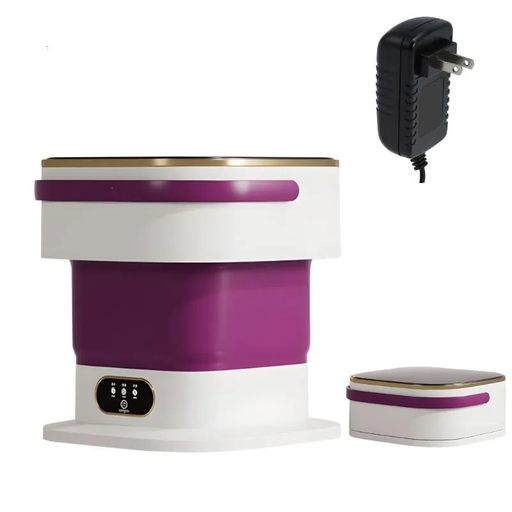 No image available
This foldable model is designed for small items of laundry and may be useful if you have little space to store an appliance.
The product information lists a 15-litre capacity, a maximum load of 1,9 kg and a separate spin-dryer basket.
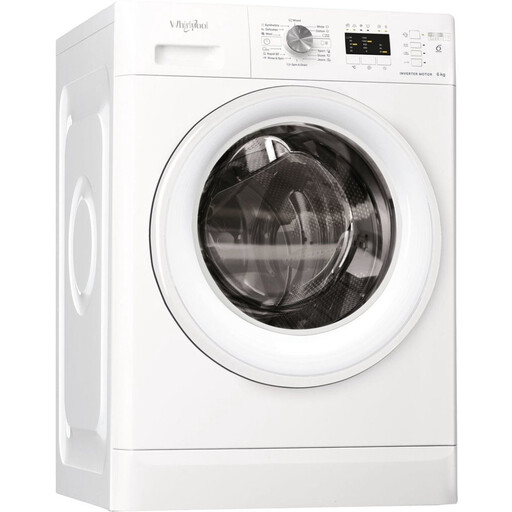 No image available
This front-loader may suit a small regular laundry load, provided its stated dimensions fit the space once you’ve allowed for the door and connections.
The product information lists a 6 kg capacity and dimensions of 59,5 × 57,5 × 84,5 cm.
 No image available
The stated depth may help you assess whether the machine will fit in a shallow alcove; be sure to check the full installation space too.
The title lists a 7 kg capacity and a design depth of 400 mm. The product description mentions 16 wash programmes and a 15-minute quick wash for small loads.
 No image available
The stated depth of 45 cm may be useful if your alcove is shallow; also measure the space needed for the door, hoses and connections.
The product title lists a 6 kg capacity, a depth of 45 cm, a steam wash programme, a 15-minute quick wash and a B energy rating.
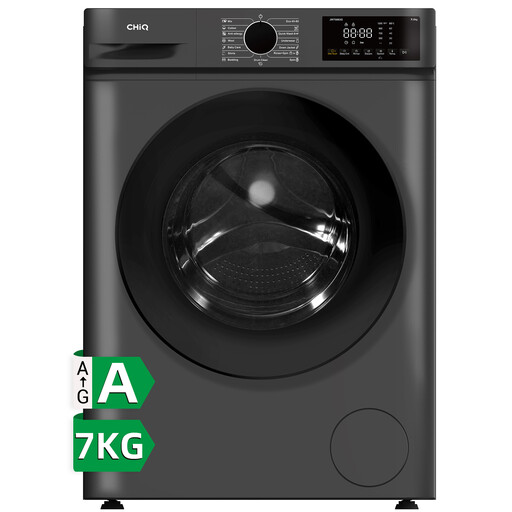 No image available
This front-loader may suit a smaller space if its stated depth and full installation requirements fit your alcove.
The product information lists a 7 kg capacity, a depth of 47 cm and 16 programmes, including steam wash and quick wash.
Only if the care label and fabric allow it. Eco 40-60 is designed for normally soiled cotton that can be washed at 40 °C or 60 °C according to its care label. For other fabrics, choose a suitable programme and check the permitted load.
Check the available space, water supply, drainage and a suitable electrical connection. Remove the transit bolts before use and make sure the machine is stable and level. Follow the instruction manual for the connection details of your chosen model.
No. Don’t assume installation is included; ask in advance what delivery, installation and removal of your old appliance cover. If a product is faulty, the retailer must honour your statutory rights. The Dutch Government states that the Netherlands has no fixed statutory guarantee period.
Yes. According to the Dutch Government, washing machines must have an energy label. It provides information including energy and water consumption; compare the figures using the programme basis shown on the label.