
For a buyer with a shallow alcove
You have room for a front-loader, but depth is limited. Remember to measure the space needed for the door and connections too. The Dutch Consumers’ Association says front-loaders are generally around 60 cm wide.


If depth is your main constraint, a slimline front-loader may fit; if width is the issue, a top-loader is worth considering. The Dutch Consumers’ Association points out that top-loaders need clearance above the lid, while front-loaders generally need more width. If you don’t have room for a separate tumble dryer, compare a washer-dryer’s washing and drying capacities separately: Bosch lists a maximum of 8 kg for washing and 5 kg for washing and drying on the WNA13400NL.
You have room for a front-loader, but depth is limited. Remember to measure the space needed for the door and connections too. The Dutch Consumers’ Association says front-loaders are generally around 60 cm wide.
Width is your main constraint, and you can use a top-loader if there’s enough room to open the lid fully. According to the Dutch Consumers’ Association, you can’t use the top as storage or fit the machine under a worktop.
You want to tumble-dry cotton laundry without a second appliance. So compare the drying capacity and energy consumption for the complete wash-and-dry cycle; the Dutch Consumers’ Association highlights the trade-off between energy use and drying time.
First, work out whether width, depth or the space available for drying is the main constraint. Then compare the cotton load capacity and energy use with your usual washes.
| What to consider | What to look for | Who this matters to |
|---|---|---|
| Depth and door clearance | Compare the exact model’s external dimensions with the alcove, the space needed for the door and the connections. | If my alcove is shallow, I also want to leave enough room to open the door and connect the machine. Around 31% of consumers prioritise depth. |
| Width and clearance above | Measure the available width as well as the clearance needed to open the lid, if applicable. | If width is the main constraint, I can keep the space above clear so a top-loader can be opened. Around 25% of consumers prioritise width. |
| Cotton load capacity | Compare the cotton load capacity with a typical sorted wash, and follow the pyjamas’ care label. | I want to wash pyjamas with my usual cotton laundry without having to guess how much to load. Around 19% of consumers prioritise a suitable cotton load capacity. |
| Drying without a second appliance | Check the washing and drying capacities separately, and look at the energy use for the complete combined cycle. | If I don’t have room for a separate tumble dryer, I want to know how much laundry can be washed and dried in one go. Around 13% of consumers prioritise drying without a second appliance. |
| Energy use and running costs | Compare exact models using the same labelling basis; for a washer-dryer, also check the complete wash-and-dry cycle. | I want to take energy use into account and choose a drum capacity that suits my usual washes. Around 12% of consumers prioritise running costs. |
Candy says its shallow front-loader is still 600 mm wide. Whirlpool lists its top-loader as 60 cm deep, so a compact measurement in one direction doesn’t automatically mean it’s compact in another.
First, measure which dimension is restricted in your space, then compare all the external dimensions of the exact model, including the clearance needed for the door or lid and the connections.
The product description for the Joybuy model reviewed, with a capacity of 1.9 kg, is aimed at small items such as socks and underwear. Its suitability for a complete set of pyjamas isn’t confirmed.
Check which garments and load sizes are allowed in the instructions before choosing this type as your main solution.
If the pyjamas don’t fit within the permitted load, you may need to wash them by hand or find a conventional washing solution after all.
Bosch lists a maximum of 8 kg for washing only on the WNA13400NL, compared with 5 kg for washing and drying.
Compare both capacities and check the energy use for the combined cycle separately.
A larger wash load may need to be split into smaller loads for drying.
The CO4474TWM6/1-S is a front-loader worth considering if depth is limited but you have around 60 cm of width available.
The TW 6521S SENSE WASH BE is a top-loader for a space where width is the main constraint and there’s clearance above the machine.
The BM3WFU3741S is another front-loader worth considering when depth is limited.
The WNA13400NL is a washer-dryer to consider if there’s no room for a separate tumble dryer.
Joybuy product picks for cotton pyjamas, with a focus on the listed capacity and available depth measurements. Before buying, check the full external dimensions, connection clearance and load capacity to make sure they suit your needs.
 No image available
The listed depth of 400 mm makes this model relevant if depth is limited in your available space; remember to check the clearance needed for connections too.
7 kg; 400 mm deep.
 No image available
The listed capacity may suit a cotton wash that stays within the maximum load; compare it with the amount of laundry you usually wash.
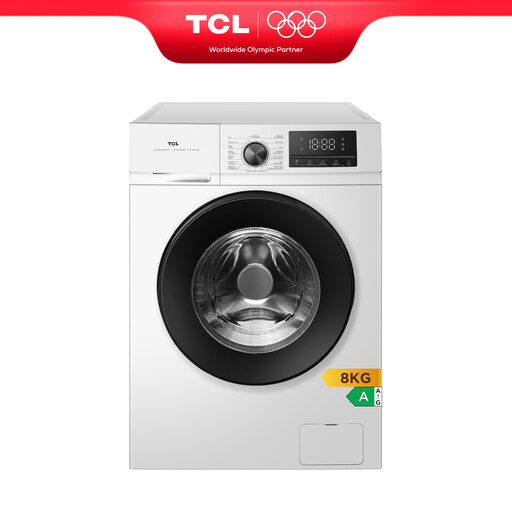
8 kg; 1400 rpm; A energy rating; Quick Wash 15 min.
 No image available
The listed capacity may suit you if your usual cotton wash fits within the maximum load; also check that the dimensions work for the space available.
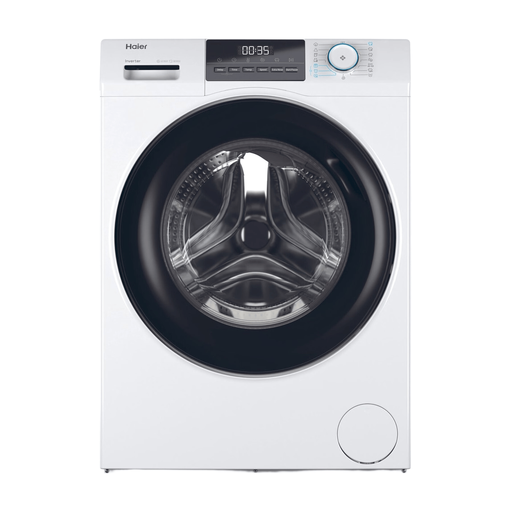
9 kg; 1400 rpm; A energy rating.
 No image available
The listed depth of 45 cm may be useful if space is limited from front to back; measure the other external dimensions too, and check that the capacity suits your usual cotton wash.
6 kg; 45 cm deep; B energy rating.
No. Always check the pyjamas’ care label first. The European Commission describes Eco 40-60 as intended for normally soiled cotton laundry that can be washed at 40 °C or 60 °C according to its care label; the programme doesn’t replace the garment’s care instructions.
Check that the machine can stand securely and that the water supply and drainage are accessible. Follow the installation instructions for your chosen model regarding clearance, hoses, the socket and removing the transit bolts; Bosch highlights a stable surface and accessible water supply and drainage as key considerations.
Compare the EU label information for the exact models on the same basis, including the energy rating and consumption per cycle. For a washer-dryer, also check the energy use for the complete wash-and-dry cycle: information for washing alone doesn’t cover drying.
No. According to the Dutch government, the Netherlands has no fixed statutory guarantee period; a product must meet what you can reasonably expect from it. If there’s a fault, contact the retailer. A manufacturer’s guarantee is separate from these statutory rights.
Yes. According to the Dutch government, the one-for-one take-back scheme applies when a private individual buys a new appliance of the same type, including online purchases. The shop can’t charge you for taking the old appliance; agree how it will be handed over when the new one is delivered.