
If you have limited width
If your laundry space is narrow, compare a top-loader with a front-loader and allow for the space needed to open the lid. The Dutch Consumers' Association describes top-loaders as narrower than front-loaders.


First, measure the available width, depth and height, allowing extra room for hoses and for the door or lid to open. A top-loader may fit when width is especially limited and there’s enough space above the machine. If depth is the issue, a slimline front-loader may be worth considering. Then choose a capacity that suits your usual cotton wash, and follow the care label on your shorts.
If your laundry space is narrow, compare a top-loader with a front-loader and allow for the space needed to open the lid. The Dutch Consumers' Association describes top-loaders as narrower than front-loaders.
In a shallow space, the appliance dimensions aren’t the only thing to consider: hoses and the open door also take up room. Compare the installation dimensions for the specific model, as recommended by the Dutch Consumers' Association.
Choose a capacity based on your usual cotton wash, not just a pair of shorts. Milieu Centraal recommends choosing a drum size to suit your household.
A good fit when: width is limited and there’s enough space above the machine to open the lid.
Keep in mind: leave enough clearance above the machine and compare the maximum drum capacity with your usual cotton wash.
A good fit when: depth is the limiting factor, while there’s enough width and space to open the door.
Keep in mind: the stated appliance dimensions don’t include all the space needed for hoses and everyday use.
A good fit when: your laundry space is large enough and the drum capacity suits your usual load.
Keep in mind: depth varies by model, and a larger drum won’t necessarily suit smaller loads.
A good fit when: you also want to dry clothes electrically in the same space and don’t have a suitable place for a separate tumble dryer.
Keep in mind: the maximum load for washing may differ from the maximum load for washing and drying.
| What to consider | What should you check? | Who is this important to? |
|---|---|---|
| Width and access | Measure the space and check there’s enough clearance for hoses and for the door or lid to open. | I want to be able to position and open the machine without it getting in the way in my laundry space. Around 36% of consumers prioritise width and access. |
| Available depth | Compare the installation dimensions for the specific model and allow space for connections and the door. | If my alcove is shallow, I want to know whether a front-loader will still be usable with the hoses connected and the door open. Around 29% of consumers prioritise depth. |
| Capacity for cotton | Weigh a typical sorted load and compare it with the stated cotton capacity. | I usually wash my shorts with other cotton clothes and want the drum capacity to suit that usual load. Around 21% of consumers prioritise choosing the right capacity. |
| Running costs and services | Compare energy labels on a like-for-like basis and check what delivery and installation include. | I want to compare energy-use information for different models and know in advance which services are included with delivery. Around 14% of consumers prioritise running costs. |
Hoses and an open door need extra room that won’t be included in a single appliance measurement.
Check the installation dimensions for the exact model and measure the space needed to use the machine as well.
The maximum cotton capacity doesn’t tell you whether the drum is right for the load you usually wash.
Weigh a typical sorted cotton load before choosing the capacity.
For the Bosch WNA13401NL, Bosch states a maximum of 8 kg for washing only and 5 kg for washing and drying. So the combined load may be smaller.
Compare both capacities and choose a washer-dryer only if you need the drying function.
If the load is larger than the combined capacity, you may need an extra drying cycle.
The Dutch Consumers' Association points out that installation is sometimes included and sometimes a paid service.
Before ordering, ask what’s included in delivery, positioning, connection and any removal of your old appliance.
The LTR8ULM is a top-loader worth comparing if your laundry space is limited in width.
The CO4474TWM6/1-S is a front-loader worth comparing if depth is the main constraint.
The X5 HW80-BP14357TU1 is another front-loader size to compare with your available depth.
The BM3WFU3741W is a 7 kg front-loader to compare with other models for size and load capacity.
The WNA13401NL is a washer-dryer to consider if you also want to dry clothes in the same space.
This selection includes standard and slimline front-loaders to compare for a cotton wash in a small laundry space.
 No image available
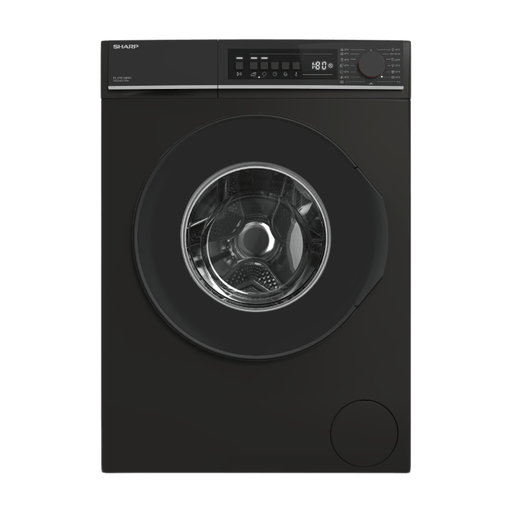
A freestanding front-loader to compare if your laundry space can accommodate this type of machine.
The product specifications list a capacity of 7 kg, 1400 rpm, energy class A and an inverter motor.
Stated dimensions: 597 × 845 × 600 mm. Check the installation dimensions and the space needed for hoses and the door.
 No image available
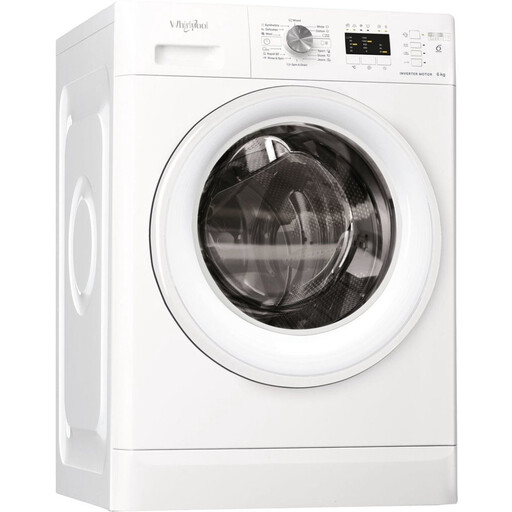
This freestanding front-loader is an option to compare for a typical cotton wash.
The description lists a capacity of 7 kg, 1400 rpm, 15 programmes, a cotton programme and a half-load option; the title gives energy rating C.
Check the model dimensions and the space needed for installation.
 No image available
This freestanding front-loader is worth comparing if its capacity suits your usual laundry load.
The description lists a cotton programme, a capacity of 6 kg and dimensions of 59.5 × 57.5 × 84.5 cm; the title gives a spin speed of 1200 rpm.
Measure your laundry space and allow for connections and the room needed to open the door.
 No image available
This front-loader is an option to compare if you have limited depth available.
The product specifications list a capacity of 7 kg, a stated depth of 400 mm and 16 programmes, including a cotton programme.
Compare the stated depth with the space needed for installation, including hoses and the door.
 No image available
This washing machine is worth comparing if its dimensions and capacity suit your limited-depth space and the loads you want to wash.
The title lists a capacity of 6 kg, a depth of 45 cm and energy rating B; the description mentions a quick-wash programme.
Check that the appliance will fit with its connections in place and the door open, and see which programme suits the care labels on your clothes.
Not just because they’re made of cotton. Follow the care label for the permitted treatment and temperature. According to the European Commission, the eco 40-60 programme is designed for normally soiled cotton that can be washed at 40 °C or 60 °C, as stated on the care label.
Measure the width, height and depth of the space, and allow room for hoses and for the door or lid to open. Check the installation instructions for the exact model and ask the retailer what delivery and connection include.
Choose a capacity to suit the cotton clothes you usually wash together, not just the shorts. Weigh a typical sorted load and compare it with the stated maximum cotton capacity.
Compare the maximum capacity for washing only with the capacity for washing and drying; they may differ. Bosch lists a maximum of 8 kg for washing only and 5 kg for washing and drying for the WNA13401NL.
No. According to the Government of the Netherlands, there’s no fixed legal guarantee period in the Netherlands: you’re entitled to a product that meets what you could reasonably expect. If there’s a fault, the retailer is your point of contact; a manufacturer’s guarantee or an extra guarantee you’ve bought doesn’t replace that right.