
If you have limited width
If your available space is narrow, a top-loading machine could be a good option, as long as there’s enough clearance above it to open the lid. AEG and Whirlpool list models that are around 40 cm wide.


First, measure whether width, depth or clearance above the machine is the main constraint. Then choose a drum that suits the amount of cotton washing you usually do. The Consumentenbond recommends choosing a machine that you can fill with your usual cotton load. A washer-dryer is worth considering if you also want to tumble-dry your clothes and don’t have room for two appliances, but check its separate drying capacity.
If your available space is narrow, a top-loading machine could be a good option, as long as there’s enough clearance above it to open the lid. AEG and Whirlpool list models that are around 40 cm wide.
If you mainly wash T-shirts, you can choose a drum capacity that suits your usual load. The Consumentenbond recommends choosing a machine whose drum you can fill with your usual cotton washing.
A washer-dryer could be a good fit if you also want to dry your clothes using electricity but don’t have room for two appliances. Check the difference between its washing capacity and its capacity for washing and drying.
Suitable if: width is your main constraint and you have room above the machine to open the lid.
Things to consider: AEG lists the LTR6363A as measuring 903 × 397 × 599 mm; a narrow machine isn’t necessarily shallow or low.
Suitable if: you have around 60 cm of width available but less depth.
Things to consider: Beko lists the B1W764W BE as 60 cm wide and 52 cm deep. Allow extra space for the open door and hoses, too.
Suitable if: you want to tumble-dry your clothes as well as wash them, but don’t have room for a separate dryer.
Things to consider: Bosch lists the WNA13401NL with an 8 kg washing capacity and a 5 kg capacity for washing and drying. The Consumentenbond points out that combined cotton programmes can take a long time and use more energy and sometimes extra water when drying.
Measure the space and the route to it: check the width, depth and height, the clearance needed to open the door or lid, and the connections. For cotton, compare the drum capacity with your usual load; the maximum capacity doesn’t necessarily apply to every programme.
| What to consider | What should you check? | Who should pay particular attention? |
|---|---|---|
| Space and access | Measure the width, depth and height. Also check the clearance needed to open the door or lid, and space for hoses and connections. | If the machine needs to fit into a tight alcove, I want to know whether the lid or door can open and the connections will still be accessible. Around 36% of consumers put fit first. |
| Cotton load | Compare the drum capacity with a typical load and check the limit for your chosen programme. | I want a drum that suits my usual load of cotton T-shirts, not just a high maximum capacity. Around 29% of consumers prioritise a suitable cotton load. |
| Programme consumption | Compare the EU energy label on a like-for-like basis and check the manual for the programmes you use regularly. | If I do laundry often, I want to know how much electricity and water the programmes I use require. Around 21% of consumers put running consumption first. |
| Installation and aftercare | Ask whether installation is included and check the service terms for the exact model. | I want to know in advance what installation involves and who to contact for maintenance or repairs. Around 14% of consumers prioritise the total cost and aftercare. |
A top-loader can save space mainly in terms of width, while a shallow front-loader solves a different space constraint. The listed dimensions don’t tell you whether you’ll be able to open and connect the machine.
Measure the dimension that’s most restricted, and separately check the lid or door, the route for bringing the machine in, and the connections.
If the machine won’t fit or can’t be connected, you may face extra installation work.
According to Bosch, the Bosch WNA13401NL has an 8 kg washing capacity, but a capacity of 5 kg for washing and drying.
Compare both capacities if you plan to use the drying function.
A larger load may mean you need to run a separate drying cycle or use another drying solution.
The label is based on the eco 40-60 programme; it doesn’t directly predict the consumption of other programmes.
Compare labels on a like-for-like basis and consult the manual for the programmes you use regularly.
According to the Dutch government, the Netherlands has no fixed statutory guarantee period. An extended warranty doesn’t replace your statutory rights.
Before choosing a paid warranty service, check exactly what additional rights it offers.
The LTR6363A is a top-loader worth considering if width is your main constraint.
The TW 6521S SENSE WASH BE is a top-loader to compare if you have around 40 cm of width available.
The B1W764W BE is a front-loader worth considering if depth is your main constraint.
The WNA13401NL is a washer-dryer for anyone who wants to tumble-dry clothes without needing a second appliance.
These Joybuy product options include foldable models for small textile loads and washing machines described as compact or shallow. Check that each model’s capacity, dimensions and required clearance suit your cotton T-shirts and available space.
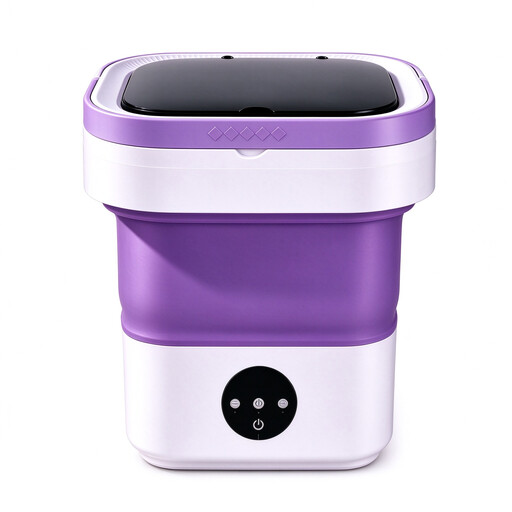 No image available
The product description lists a 12 L capacity and says it’s suitable for small textile loads; check that the stated load capacity suits your cotton T-shirts.
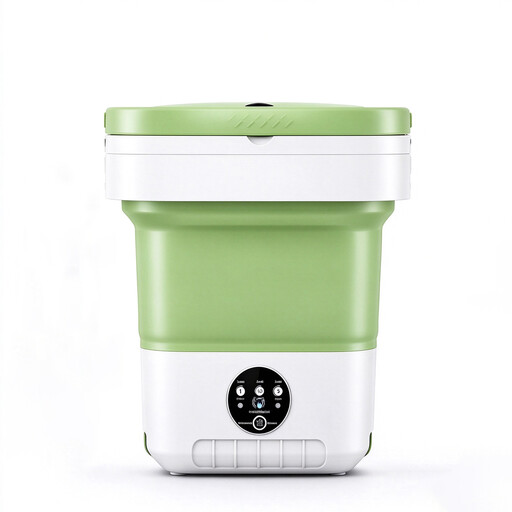 No image available
This foldable model is described as suitable for small loads; the description lists a maximum load of 1.5 kg and a spin basket.
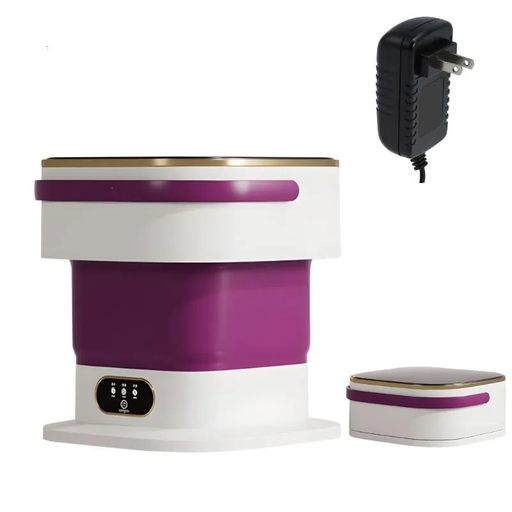 No image available
This foldable model is described as suitable for small loads; the description lists a maximum load of 1.9 kg and a spin basket.
 No image available
The description lists a 7 kg capacity, a cotton programme and a 400 mm design; check the exact external dimensions on the product listing.
 No image available
The product name lists a depth of 45 cm and a 6 kg capacity. Also allow space for the door, hoses and connections.
No. The top-loaders mentioned are around 40 cm wide, but about 60 cm deep and 90 cm high. If depth is your main constraint, a shallow front-loader may fit your space better; remember to measure the doorway and room for connections, too.
Always check the care label first. The European Commission describes eco 40-60 as a programme for normally soiled cotton garments that can be washed at 40 °C or 60 °C according to their care labels. Don’t use the name of the programme as a reason to ignore the label.
Make sure the machine is stable and that the water supply, drainage and electrical connections are accessible. Remove the transit bolts before using the machine, following the instructions in the manual. Milieu Centraal also recommends washing at 60 °C regularly to help prevent detergent and dirt residue building up inside the machine.
Before buying, check whether installation is included with the offer you’ve chosen; according to the Consumentenbond, it may be a separate service. When you buy a new, similar machine, the seller must take your old appliance away free of charge under the Dutch old-for-new scheme, including for online purchases.
No. According to the Dutch government, the Netherlands has no fixed statutory guarantee period. What you can expect from a product depends, among other things, on the product and the sales information. The seller is your point of contact if a product is faulty. A manufacturer’s guarantee or paid extended warranty is in addition to your statutory rights.