
For a narrow space
If width is your main constraint, a top-loader could be an option. The Consumentenbond says top-loaders are narrower than front-loaders; also check that there’s enough room to open the lid above the machine.


First, measure the available width and depth, and check how much room you need to open the door or lid. A top-loader may suit a narrow space, while a front-loader is an option if the doorway and dimensions allow for it. A washer-dryer is worth considering if you don’t have room for a separate tumble dryer. Choose a drum size that suits your usual cotton wash, and remember that washer-dryers may have different washing and drying capacities.
If width is your main constraint, a top-loader could be an option. The Consumentenbond says top-loaders are narrower than front-loaders; also check that there’s enough room to open the lid above the machine.
If you mainly wash small loads of pyjamas and other cotton items, weigh a typical load before choosing a drum size. The Consumentenbond recommends weighing a standard wash, while Milieu Centraal advises choosing a machine to suit your household.
If you also want to use a machine to dry your clothes but don’t have room for a separate tumble dryer, a washer-dryer could meet your needs. Bear in mind that washing and drying capacities may differ.
Choose this when: width or the space in front of a door is limited, and there’s enough room above the machine to open the lid.
Things to consider: the Consumentenbond gives approximate widths of 40 cm for top-loaders and 60 cm for standard front-loaders. It also reports that the top-loaders it tested washed less effectively than a standard front-loader; this doesn’t tell you how every individual model performs.
Choose this when: it fits the available width and there’s enough room to open the front door. A shallower machine won’t solve a lack of width.
Things to consider: measure the entire space and weigh a typical cotton wash. A larger drum won’t necessarily suit small, regular loads.
Choose this when: you want to wash and dry clothes but don’t have room for two appliances.
Things to consider: drying capacity may be lower than washing capacity. The Consumentenbond points out that combined cotton programmes can take a long time and drying may use extra energy.
| What to consider | What to look for | Who is this important for? |
|---|---|---|
| Space and opening | Measure the width, depth and height, and check how much room the door or lid needs to open. | If space is limited, I want to make sure the machine not only fits, but can also be opened. Around 36% of consumers make space for installation their top priority. |
| Capacity for cotton | Weigh a typical cotton wash and follow the care labels on your pyjamas for the temperature and programme. | If I mainly wash smaller cotton loads, I want to choose a drum size that suits what I usually put in it. Around 29% of consumers prioritise a suitable cotton load size. |
| Drying in the same appliance | Compare washing and drying capacities separately, along with programme times and consumption figures for combined use. | If I don’t have room for a separate tumble dryer, drying capacity determines how much laundry I can dry in one go. Around 21% of consumers make machine drying without a second appliance their top priority. |
| Consumption and aftercare | Compare energy figures on the same label basis. Energielabel.nl bases washing machine labels on the eco 40-60 programme; check service terms separately. | If I mainly want to consider running costs and service, I compare consumption figures on the same basis and look at aftercare. Around 14% of consumers prioritise these points. |
A top-loader has a lid on top, while a shallow front-loader may still be wide and needs space for its front door to open.
Compare the exact model’s external dimensions with your measurements, and check how the door or lid opens.
LG lists a washing capacity of 8 kg and a drying capacity of 5 kg for the LG W4X1085NWB.
Compare both capacities if you want to wash and dry a load without stopping in between.
With a lower drying capacity, you may need to remove some laundry part-way through or run an extra drying cycle.
Looking only at the pyjamas won’t give you a picture of your usual cotton wash. A larger drum isn’t automatically better for small loads.
Weigh a typical cotton wash and base your choice on that, rather than on an occasional larger load.
The washing machine label is based on eco 40-60 and doesn’t necessarily show the consumption of other washing or drying programmes.
Compare figures for the same programme, and if you’re considering a washer-dryer, check the information about drying too.
AEG offers top-loaders for situations where the available width is the main consideration.
Whirlpool’s TW 6521S SENSE WASH BE is a top-loader you can compare by size and capacity.
Bosch offers front-loaders to compare if there’s enough room for the front door and the machine’s width.
LG offers washer-dryers for anyone without room for a separate tumble dryer alongside the washing machine.
This selection of Joybuy products mainly includes front-loaders to compare with your available space and cotton wash, as well as a small portable washing machine for smaller items.
 Image unavailable
A front-loader to compare with a space where you’ve measured the width and depth in advance.
8 kg capacity, 1400 rpm and energy class A.
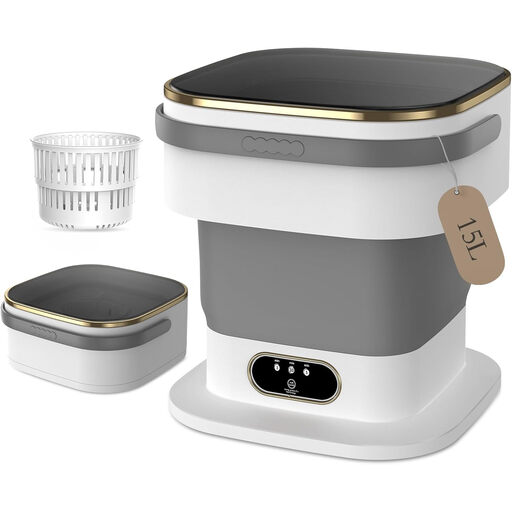 Image unavailable
A compact option for smaller items; check that the size is suitable for the pyjamas you want to wash.
The stated maximum load is 1.5 kg.
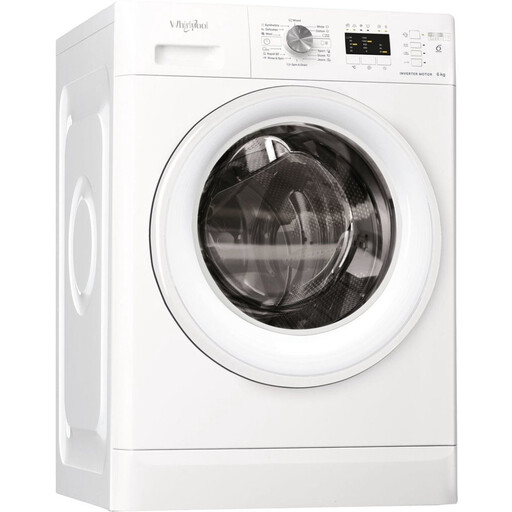 Image unavailable
A front-loader for anyone wanting to compare the stated dimensions with their available space.
6 kg capacity and 1200 rpm.
 Image unavailable
A front-loader to assess based on the available depth and the size of your usual cotton wash.
7 kg capacity; the product name specifies a 400 mm-deep design.
 Image unavailable
A front-loader to compare if the available depth is your main constraint.
6 kg capacity, 45 cm deep and energy class B.
Check the care label first. Energielabel.nl says eco 40-60 is intended for laundry whose care labels allow washing at 40 or 60 degrees; the label figures don’t show the consumption of other programmes.
Check the installation dimensions and connections for your chosen model, and make sure the door or lid can open freely. Follow the model-specific installation instructions for the transit bolts; AEG Support warns against using a washing machine with the transit bolts still in place.
Milieu Centraal recommends running a 60-degree wash once a month to remove soap and dirt residue. Also follow your chosen model’s care instructions; this advice doesn’t mean that every pair of pyjamas can be washed at 60 degrees.
No. According to the Dutch government, there is no fixed statutory guarantee period in the Netherlands: you’re entitled to expect a product to do what you could reasonably expect of it, and the retailer is your point of contact if there’s a problem. A manufacturer’s guarantee may offer additional cover.