
If you have a narrow space for your washing machine
You have limited width or space in front of the machine. With a top-loader, also measure the clearance above it; the Consumers’ Association notes that top-loaders are narrower than front-loaders.


Choose based on the space you’ve measured: a top-loading machine can be a good option if width is the main constraint, while a shallow front-loader may suit a space where depth is limited. The Consumers’ Association also recommends allowing room for hoses and for opening the machine. If you want to wash heavily soiled dishcloths with your tea towels, check that your chosen model has a suitable programme that can be set separately to 60 °C. Milieu Centraal says that washing dishcloths at 60 °C can sometimes be a sensible choice; the Consumers’ Association warns that Eco 40-60 is not a substitute for a hygienic 60 °C wash.
You have limited width or space in front of the machine. With a top-loader, also measure the clearance above it; the Consumers’ Association notes that top-loaders are narrower than front-loaders.
You want to wash tea towels and possibly soiled dishcloths. Milieu Centraal says that washing dishcloths at 60 °C can sometimes be a good idea; check whether the model has a suitable programme, and don’t confuse it with Eco 40-60.
You’re looking for a shallow machine or one you can put away after use. Allow for the door opening, connections and the capacity needed for your load; the Consumers’ Association recommends measuring the space needed for hoses and opening the machine, too.
When to choose it: if width is the main constraint and the lid can open freely above the machine. Whirlpool lists dimensions of 40 × 60 × 90 cm and a capacity of 6,5 kg for the TW 6521S SENSE WASH BE.
Consider: keep the space above it clear, so you won’t have a fixed worktop or storage space there.
When to choose it: if you have enough width but limited depth, and the door can open forwards. Candy lists the CO4474TWM6/1-S as having a cabinet measuring 600 × 454 × 850 mm and a 7 kg load capacity.
Consider: a shallower cabinet still takes up width; remember to allow space for the door and hoses, too.
When to choose it: if you have room for a front-loader, including space for the door and connections, and you also want to wash other household laundry.
Consider: choose the drum capacity based on all the laundry you plan to wash, not just a few tea towels.
When to choose it: if you only do small loads at a time and want to be able to put the machine away after use.
Consider: check that filling, emptying and draining the machine will be practical where you plan to use it. Don’t assume it has a suitable 60 °C programme without checking.
Measure the space, including access, hoses and room to open the machine. Only then decide between a top-loader, a shallow front-loader or a model you can put away.
| What to consider | What should you check? | Who should pay extra attention? |
|---|---|---|
| Will the machine really fit? | Measure the width, depth and height of the space and access route. Check the dimensions of the exact model and leave room for opening it and for the hoses, as recommended by the Consumers’ Association. | If the space is narrow, I want the machine to fit while still leaving room for the lid or door and hoses; around 26% of consumers prioritise physical fit. |
| Suitable programme | Check the care label and, if your load requires it, look for a separate cotton programme that can be set to 60 °C. The Consumers’ Association makes clear that Eco 40-60 is not the same as a hygienic wash at 60 °C. | If you want to wash soiled dishcloths with tea towels, you’ll want to know whether the chosen programme is suitable; around 26% of consumers prioritise programme and temperature options. |
| Connections and positioning | Follow the instructions for the water supply, drainage and positioning. Also check that the space is stable and the connections are accessible. | If connections and positioning are decisive, I want to know that the chosen spot will work in practice; around 21% of consumers prioritise straightforward installation. |
| Suitable load capacity | Compare the load capacity with all the laundry you want to wash in the machine. With a mini washing machine, check the washing and spin capacities separately. | If you want to combine small loads of kitchen textiles with other household laundry, look for a suitable load capacity; around 16% of consumers prioritise the size of the total laundry load. |
| Use and aftercare | Compare figures for the same energy-label programme and check whether positioning or installation is included. Consider additional cover only after checking your statutory rights. | If I’m weighing up running costs and aftercare together, I want to know which costs apply to how I use the machine; around 11% of consumers prioritise total running and aftercare costs. |
A top-loader needs space above it, while a front-loader opens forwards. Hoses and the access route also take up space.
Measure the space and access route, then compare them with the dimensions and opening direction of the exact model.
According to the Consumers’ Association, Eco 40-60 isn’t suitable if you need a hygienic wash at 60 °C.
Check the textile care label and look in the manual for a suitable programme that can be set separately.
For the Camry CR 8054, manufacturer Adler lists a maximum washing capacity of 3 kg and a spin capacity of 1 kg. These figures refer to different stages.
Compare both capacities separately and check how you’ll drain the water where you plan to use the machine.
A lower spin capacity may mean you have to spin your laundry in smaller batches.
Your statutory rights and any additional manufacturer’s or service warranty are separate things.
Check your statutory rights first, then see exactly what additional cover offers.
The examples below relate to specific models and product lines. They are not a general assessment of a brand or a guarantee of availability.
Whirlpool lists the TW 6521S SENSE WASH BE as a top-loader for a narrow space.
Haier lists the THASN466TM5-S as a top-loader for spaces where width matters more than depth.
Candy lists the CO4474TWM6/1-S as a shallow front-loader.
Bosch lists the WGE02404NL as a standard front-loader for spaces with room for a larger installation.
The Camry CR 8054 is a portable machine designed for small loads.
This selection includes folding mini washing machines for small loads and a shallow front-loader. Check the dimensions, connection method and programme settings for each model to make sure they suit your laundry and available space.
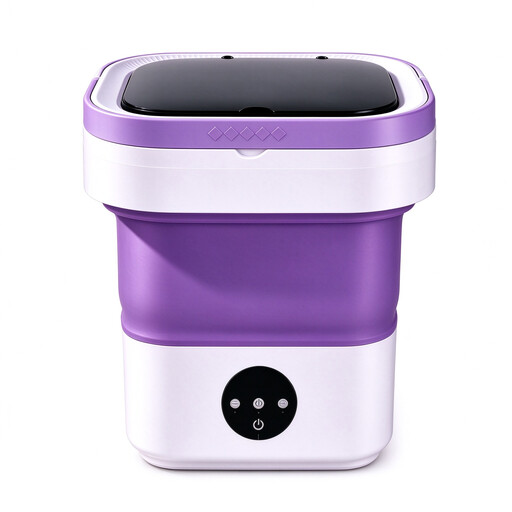 Image unavailable
A folding mini washing machine may suit small loads if you want to put it away after use.
The product name describes it as a 3-in-1 model. Check the manual for the washing, drying and connection options you need.
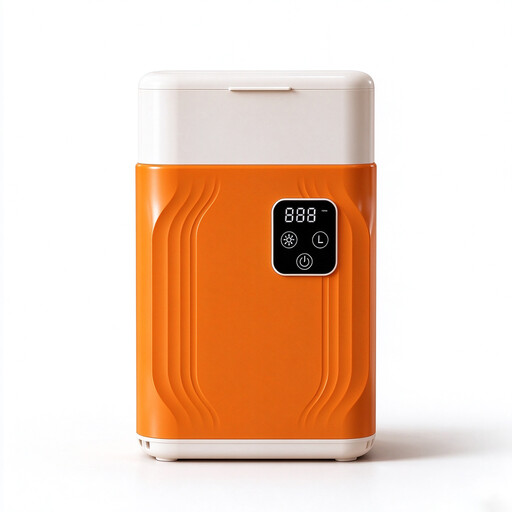 Image unavailable
This folding mini washing machine is worth considering if you want to wash small loads and be able to put the machine away.
The product name describes it as a 3-in-1 model; check which functions and connections apply to your needs.
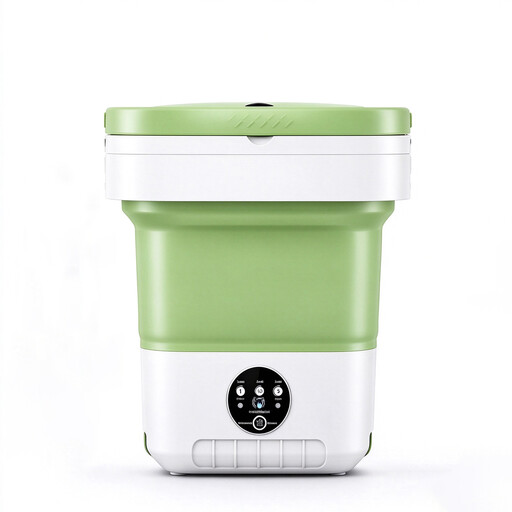 Image unavailable
A folding model with a spin basket may be worth considering if you want to wash small loads and put the machine away afterwards.
The product name lists a capacity of 12 litres and a spin basket. Check the suitable load size and whether the basket will work for your needs.
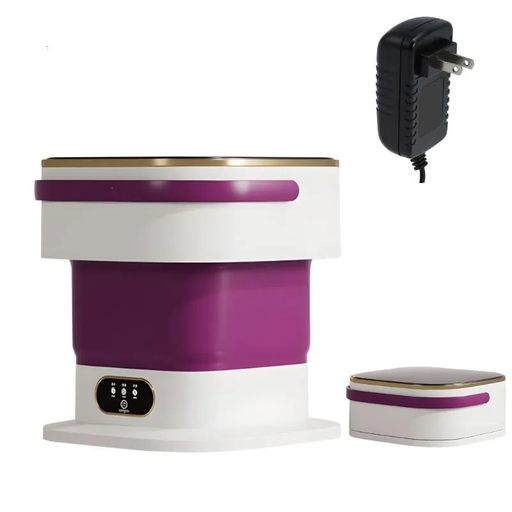 Image unavailable
This folding model is an option for small loads if you want to put the machine away after use.
The product name lists a capacity of 15 litres and a spin basket. Check the suitable load size and whether draining the machine will be practical where you plan to use it.
 Image unavailable
A shallow front-loader may suit a space where depth is limited, provided there’s enough room for the door to open at the front.
The product name lists a capacity of 7 kg and a design depth of 400 mm. Check the full installation dimensions, door clearance and the wash programme you need in the manual.
No. The Consumers’ Association explains that Eco 40-60 isn’t suitable if you need a hygienic wash at 60 °C. Check the textile care label and look in the manual for a separate programme that suits your laundry.
Measure the space and access route, and allow room to use the door and connect the hoses. The Consumers’ Association also recommends allowing for the clearance needed around the machine; follow the manual for the exact model to ensure stable positioning and correct connections.
Not automatically: your statutory rights are separate from any additional cover. The Dutch government says there is no fixed statutory warranty period in the Netherlands; check what extra rights a paid service plan actually provides.
Washing machines that fall within the relevant product category must meet EU energy-labelling requirements; the European Commission also sets out ecodesign requirements for household washing machines. Check the product category of an unusual portable appliance before assuming the same requirements apply.
When you buy a new, similar appliance in the Netherlands, the old-for-new scheme applies: the retailer must take back your old appliance. The Dutch government says this also applies to online purchases; arrange the practical handover when your new machine is delivered.