Who is this relevant for?

People with a narrow laundry space

If width or depth is limited, remember to measure the space needed for hoses and to open the door or lid. The Dutch Consumers' Association (Consumentenbond) points out that top-loaders are narrower than front-loaders.

Small households with mixed cotton laundry

Choose a drum size to suit the sorted laundry you usually wash together, not just a separate load of socks. The Dutch Consumers' Association (Consumentenbond) and Milieu Centraal recommend matching the capacity to your usual laundry.

People with specific programme or usage requirements

Check programmes against care labels, and consider energy use or noise if these matter in your home. The European Commission explains the information on the energy label, while the Dutch Consumers' Association (Consumentenbond) discusses how Eco 40-60 works.

What should you look for when buying?

Narrow top-loader

Choose this when: width is the main constraint and you can fully open the lid above the machine.

Consider: you’ll still need space above the machine; also check that the capacity suits your usual cotton wash.

Shallower front-loader

Choose this when: you have around 60 cm of width but limited depth, and there’s room in front of the machine for the door to open.

Consider: a shallower machine isn’t necessarily narrower; allow for hoses and the door opening.

Standard front-loader

Choose this when: your laundry space is large enough and the capacity you choose suits your usual sorted laundry.

Consider: a larger drum isn’t automatically more useful if you rarely fill it appropriately.

What to consider What should you check? Who is this important for?
Space and opening Measure the height, width and depth; allow for hoses, ventilation and the space needed to open the door or lid. If I have a tight alcove, I want to know whether the machine will fit and still be practical to use. Around 31% of consumers prioritise whether it will fit.
Capacity Compare the cotton capacity with a typical sorted load that you wash together. If you mainly wash small loads, you won’t want to choose a drum based on a one-off load of socks. Around 25% of consumers prioritise a suitable capacity.
Programme and care label Check whether the care label allows Eco 40-60 and whether another suitable programme is available for your laundry needs. If I need a suitable programme for my cotton laundry, I check the labels and available options. Around 19% of consumers give the greatest weight to the programme and care label.
Energy and water use Compare kWh per 100 cycles and litres per cycle on the EU energy label, alongside the capacity you need. If you consider running costs, you’ll want to compare models using the same label criteria. Around 13% of consumers put energy and water use first.
Noise and vibration Check the noise information on the EU label and make sure the machine can stand level and stable. Spin-cycle noise may matter if your laundry space is close to your living area. Around 12% of consumers prioritise noise and vibration.

Common buying mistakes

  • Confusing ‘shallow’ with ‘narrow’

    A shallower front-loader can still be around 60 cm wide. Hoses and an open door also need space.

    Measure the space available and check the external dimensions of the exact model you’re considering.

  • Choosing a drum based on a separate load of socks

    The stated capacity is the maximum for a cotton wash, not the ideal size for every load.

    Think about a typical sorted load and choose a capacity to suit it.

  • Assuming Eco 40-60 guarantees a 60 °C wash

    The programme name doesn’t mean the laundry actually reaches 60 °C. Tests by the Dutch Consumers' Association (Consumentenbond) recorded temperatures ranging from 20 to 50 °C; results can vary between machines.

    Follow the care label. If you need a hygienic wash, check whether another suitable cotton or hygiene programme is available.

Brands to consider

AEG

The AEG LTR6363A is an example of a top-loader for a space where width is a key constraint.

  • AEG lists a capacity of 6 kg and external dimensions of 903 × 397 × 599 mm. The model specifications include cotton and Eco 40-60 programmes.
  • The lid needs clear space above the machine. The Dutch Consumers' Association’s test results for top-loaders aren’t an individual test verdict on this model.

Beko

The Beko BM3WFU3741S may be worth considering if you have around 60 cm of width but limited depth.

  • Beko lists this model as 60 cm wide, 49.6 cm deep, with a maximum cotton capacity of 7 kg.
  • Beko Netherlands and the Joybuy listing differ on the energy class and colour: the manufacturer lists class A and white, while the Joybuy title says class C and silver. Check the exact model before ordering.

Bosch

The Bosch WAN2827GNL is an example of a standard front-loader for a laundry space with enough room.

  • Bosch lists a capacity of 8 kg and dimensions of 845 × 598 × 590 mm.
  • A larger capacity is only practical if it suits your usual sorted laundry; also check the full space available for installation.

Miele

The Miele WWA120 WCS 8kg Active is an example of a standard front-loader with an add-item function.

  • Miele lists an 8 kg capacity and the AddLoad function for this model.
  • These model specifications don’t prove that the machine washes better or will fit in a small laundry space. Check the full installation dimensions.

Joybuy products

This selection includes a shallow washing machine and compact mini washing machines for small loads. Compare the stated dimensions and capacity with your laundry space and usual load size.

TCL FF1006WB0 washing machine

TCL FF1006WB0 washing machine, 6 kg

An option to compare if your laundry space is limited in depth; check that the 6 kg capacity suits your usual load.

45 cm deep; energy class B; Steam Wash; Quick Wash 15 min; BLDC inverter motor.

View at Joybuy
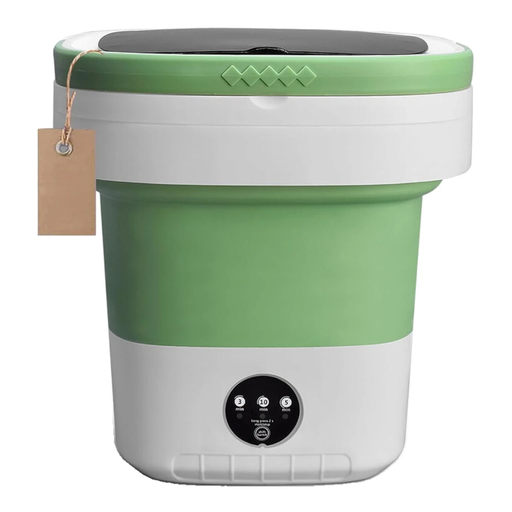
12-litre foldable mini washing machine with spin-dryer basket

12 L foldable mini washing machine with spin-dryer basket, green

Designed for small loads, including socks; compare the capacity with the load you want to wash.

12 L; foldable design; spin-dryer basket; stated noise level 50 dB.

View at Joybuy
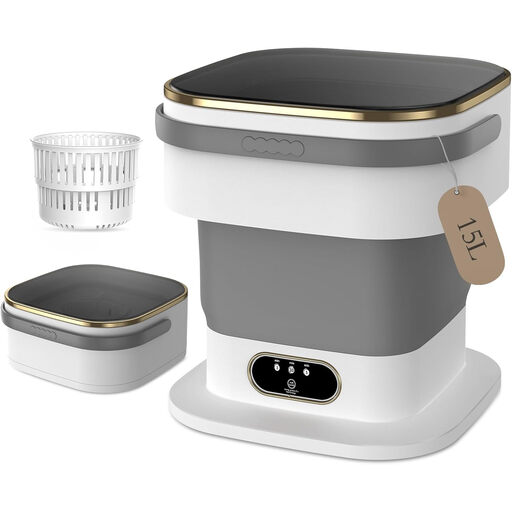
15-litre foldable mini washing machine with three wash settings and spin-dryer basket

15 L foldable mini washing machine with three wash settings, grey and white

A compact option for small loads; check that the capacity suits what you want to wash in it.

15 L; three wash settings; spin-dryer basket; foldable design.

View at Joybuy
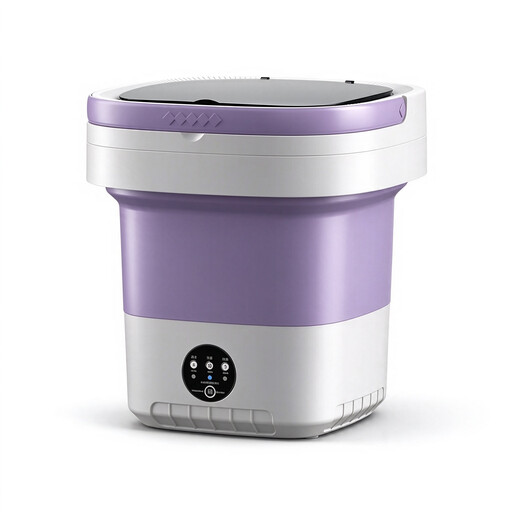
12-litre foldable mini washing machine with three wash settings, purple

12 L foldable mini washing machine with three wash settings, purple

A compact option for small items of clothing; compare the dimensions and capacity with the laundry you plan to wash.

12 L; three wash settings; foldable design.

View at Joybuy

Frequently asked questions

Can I always wash cotton socks on Eco 40-60?

No. Use Eco 40-60 for normally soiled cotton that the care label says can be washed at 40 or 60 °C. The programme name doesn’t guarantee that the machine reaches 60 °C. If you need a hygienic wash, check whether another suitable cotton or hygiene programme is available.

What should I measure before installing a machine in a small laundry space?

Measure the available height, width and depth, and allow room for hoses and an open door or lid. The Dutch Consumers' Association also recommends a stable surface and making sure the machine is level; check in advance whether delivery and installation are charged separately.

How do I compare energy and water use, and what should I do if the machine is faulty?

Compare kWh per 100 Eco 40-60 cycles and litres per cycle on the EU label, but don’t treat these figures as your personal annual cost: that also depends on how you use the machine and your tariffs. If the product is faulty, the Government of the Netherlands says your first point of contact for a solution should be the retailer.

Does the retailer have to take away my old washing machine when I buy a new one?

When a private customer buys a new, similar appliance, the Government of the Netherlands says the old-for-new scheme applies: the retailer must take the old appliance free of charge. The scheme also applies to online purchases; the government explains the alternatives if the delivery driver can’t take it away straight away.

Is there already a new general repair obligation for manufacturers in the Netherlands?

Don’t assume that the announced additional repair obligation is already in force. A Government of the Netherlands update dated 20 March 2026 described a bill that still had to go to the Council of State for advice, and then to parliament for consideration. Existing rights concerning faulty products and claims against the retailer are separate from this.
