
Someone with a narrow laundry space
You want to know whether the machine will fit in the space available and whether you can open the door or top lid.


First, measure the available width, depth and height, and check that the door or lid can open fully. Then choose a machine with a programme that suits the care labels on your dresses. According to the Consumers' Association, top-loaders are generally around 40 cm wide, compared with approximately 60 cm for a standard front-loader. However, a top-loader needs clear space above it, while a front-loader needs room in front of the door.
You want to know whether the machine will fit in the space available and whether you can open the door or top lid.
You wash machine-washable dresses with different care labels and need a programme suited to each fabric and its recommended treatment.
You want to match the load capacity to your usual wash load, without assuming that the capacity for cotton is also suitable for delicates.
First, measure the space and allow for the room needed to open the machine. Then check the programmes for your dresses and compare the capacity with your usual wash load.
| What to consider | What should you check? | Who is this important for? |
|---|---|---|
| Dimensions and opening space | Measure the width, depth and height, and allow for hoses, ventilation and the space needed to open the door or lid. | If your laundry space is narrow, you’ll want to be sure you can fit and use the machine. Around 33% of consumers say fit is their main concern when buying. |
| Programme for the fabric | Check whether the exact model offers a delicates or synthetics programme, along with suitable temperature and spin-speed settings. | If your dresses have different care labels, you’ll want to be able to choose a suitable setting for each fabric. Around 27% of consumers put fabric care first. |
| Capacity and wash load | Compare your usual laundry load with the permitted load for the programme you use. The Consumers' Association recommends using about half the stated cotton capacity for delicates or synthetics. | If you usually wash small loads, choose a capacity that suits your needs rather than looking only at the maximum capacity for cotton. Around 20% of consumers consider wash load the most important factor. |
| Energy use and programme | Compare the EU energy label for models that otherwise suit your needs, but don’t treat its figures as a measurement of every individual programme. The European Commission bases the label measurement on eco 40-60. | If you want to compare energy use, consider both the label and the programme you need for your dresses. Around 20% of consumers say energy use is their main concern when buying. |
A front-loader needs room in front of the door; a top-loader needs enough space to open its lid. Connections and hoses also take up room.
Measure the entire space and check the exact model’s external dimensions and door-opening direction. When installing the machine, also follow the instructions for hoses and ventilation.
The stated capacity is for cotton laundry. The Consumers' Association recommends a smaller load for delicates or synthetics.
Compare the number of dresses you usually wash with the permitted load for the programme you actually plan to use.
The energy label comparison is based on eco 40-60. It doesn’t directly tell you how much energy a delicates programme uses.
Use the label to compare suitable models, and follow each dress’s care label when choosing a programme.
The Consumers' Association lists both top-loading and front-loading AEG machines. Models vary in capacity and the space they need.
The Consumers' Association lists the Beko BM3WFU3741W as a 7 kg front-loader for comparison with other models.
The Consumers' Association lists the Bosch WGE02404NL as a 7 kg front-loader.
The Consumers' Association lists the Whirlpool TDLR 65241BS BE as a top-loader.
These products are for anyone considering a front-loader. Compare the stated external dimensions with your available space, and check that the programmes suit the care labels on your dresses.
 No image available
If a front-loader suits your space, compare the stated dimensions with the room you have available.
Capacity: 8 kg. Spin speed: 1600 rpm. Dimensions: 847 × 596 × 602 mm.
The product information lists PreciseWash with load detection and a CareDrum with a gentle pattern. Leave room for the door and hoses.
 No image available
Compare the stated depth with your available space, and leave room for the door and hoses.
Capacity: 8 kg. Spin speed: 1400 rpm. Dimensions: 84.7 × 59.6 × 57.2 cm.
The product information lists PreciseWash with load detection and a CareDrum with a gentle surface.
 No image available
The stated depth will help you work out whether this front-loader will fit in your available space.
Capacity: 8 kg. Spin speed: 1400 rpm. Dimensions: 847 × 596 × 577 mm.
The product information lists ProSense load detection and a ProTex drum. Leave room for the door and hoses.
No image available
Check that the stated dimensions and the space needed in front of the door suit your laundry area.
Capacity: 8 kg. Spin speed: 1600 rpm. Dimensions: 847 × 596 × 602 mm.
The product information lists PreciseWash with load detection and the MixLoad 69 programme at 30 °C.
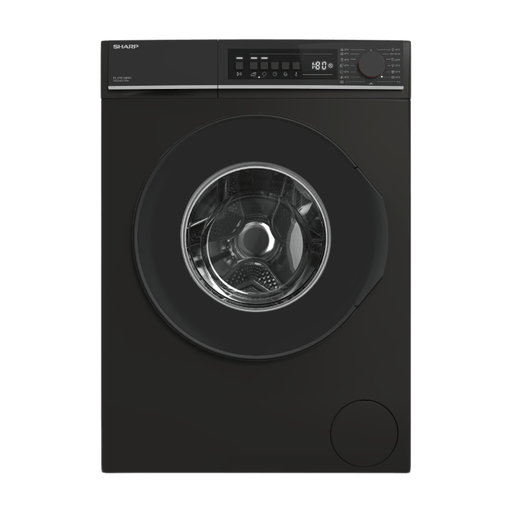 No image available
Compare the stated external dimensions with your available space and check that the model offers a programme suited to the care labels.
Capacity: 7 kg. Spin speed: 1400 rpm. Dimensions: 597 × 845 × 600 mm (W × H × D).
The product information lists 15 wash programmes.
No. Eco 40-60 is designed for normally soiled cotton that can be washed at 40 or 60 °C according to its care label. Follow the care label on each dress and, if it needs gentle treatment, choose a suitable delicates or synthetics programme.
Measure the available width, depth and height, and allow for hoses, ventilation and the route to the space. Also check how much room the front door or top lid needs to open.
The stated capacity is for cotton laundry and doesn’t automatically apply to delicates or synthetics. The Consumers' Association recommends using about half the cotton capacity for these loads; also check the permitted load for the exact model’s programme.
Not directly. The European Commission bases the EU energy label measurement for washing machines on eco 40-60, while you may need a different programme for a dress. Use the label to compare suitable models, but don’t treat its figure as a measurement of every delicates wash.
According to the Consumers' Association, washing only in cold or lukewarm water can encourage dirt to build up in the machine. It recommends running a programme at 60 °C or higher at least once a month, using laundry that can be washed at that temperature. Don’t do this with dresses whose care labels advise against it.