
Anyone with a narrow laundry space
You have limited width or depth and need to leave room for hoses and for the door or lid to open. When measuring, the Consumentenbond recommends allowing for this extra space.


First, measure the available width, depth and height, as well as the space needed to open the machine. Then choose a model with a capacity and programmes suited to your aprons and their care labels. A top-loader may work if width is the main constraint, while a slimline front-loader could suit a tight space where depth is the issue. A standard front-loader is an option if you have enough room. If you use the machine for a food business, also take into account the hygiene instructions that apply to your business.
You have limited width or depth and need to leave room for hoses and for the door or lid to open. When measuring, the Consumentenbond recommends allowing for this extra space.
You wash aprons used for food work and need to follow their care labels, as well as any hygiene instructions for your business. The NVWA outlines the food safety requirements for businesses that prepare, process or sell food.
You usually wash only a few aprons and want a capacity that suits your needs. The Consumentenbond points out that the maximum load capacity applies to cotton; the recommended load may be lower for delicate or synthetic items.
Choose this option when: width is the main constraint and there is enough clearance above the machine to open the lid. AEG Nederland lists the AEG LTR6363A as 397 mm wide; Whirlpool Nederland lists the Whirlpool TW 622S FRESHCARE BE as 40 cm wide.
Bear in mind: you need enough clearance above the machine to open the lid, so a fixed worktop above it may be impractical.
Choose this option when: depth is the main constraint, but you have about 60 cm of width and enough room in front of the door. Candy lists the CO4474TWM6/1-S as 600 × 454 × 850 mm (width × depth × height).
Bear in mind: you also need room for the hoses and the open door. A shallow cabinet does not automatically mean the machine will fit once connected.
Choose this option when: your laundry space is wide and deep enough, and you want to compare a conventional front-loader. Bosch lists the WGE02406NL as 848 × 598 × 588 mm (height × width × depth).
Bear in mind: its listed depth is greater than that of the slimline Candy front-loader mentioned above. Check how much extra space you need for connections, too.
| What to consider | What should you check? | Who is this important for? |
|---|---|---|
| Will the machine fit? | Measure the width, depth and height, allowing for hoses and the door or lid to open. | If my space is tight, I want to be sure the machine will still fit when connected and can be opened; around 36% of consumers prioritise fit. |
| Apron care instructions | Check the care label and make sure a suitable programme and the required temperature setting are available. | If I wash work aprons, I want to follow the fabric care label and any business instructions; around 29% of consumers prioritise washing their aprons appropriately. |
| Capacity per wash | Compare your usual laundry load with the capacity for the relevant programme, not just the maximum load capacity. | If I usually wash a small load, I want the capacity to suit that amount; around 21% of consumers focus mainly on the load per wash. |
| Energy use and noise | Compare the EU energy label figures for kWh per 100 cycles, water use per cycle and noise emissions. | If I wash regularly or the machine is near a living or working area, I consider energy use and noise; around 14% of consumers prioritise these factors. |
A machine may fit in an empty alcove, but once it is connected there may not be enough room for the hoses or to open the door or lid.
Measure the available space at several points and check the installation and opening dimensions for the exact model.
When working out how much room you need, allow for the hoses and the door or lid to open.
A narrow machine is not necessarily a better washer. The Consumentenbond reported that the top-loaders it tested achieved poorer washing results than a standard front-loader; this finding applies to the models tested.
Choose a top-loader to suit your available space, and assess its wash programmes and relevant independent test results separately.
According to the Consumentenbond, the maximum load capacity applies to cotton; the recommended load may be lower for delicate or synthetic items.
Check the fabric care label and the maximum load for the programme you plan to use.
A lower recommended load may mean you need to run more washes.
The LTR6363A is a top-loader worth comparing if width is the limiting factor.
The CO4474TWM6/1-S is a slimline front-loader worth comparing if depth is the main constraint.
The TW 622S FRESHCARE BE is another top-loader to compare for a narrow space.
The WGE02406NL is a standard front-loader worth comparing if your laundry space has enough room.
The selection below consists of freestanding front-loaders, including a washer-dryer. Before choosing, compare each model's exact external dimensions and required opening clearance with your laundry space.
 No image available
A freestanding front-loader to compare if you also need a drying function and it fits in your laundry space.
Wash capacity: 9 kg; drying capacity: 5 kg.
Lists 16 wash programmes, including cotton and wool, and a 14-minute quick wash programme.
 No image available
A freestanding front-loader to compare if its capacity and the available space suit your needs.
The title lists Wi-Fi with SmartThings; the product information mentions programmes for delicate items, wool, synthetics and cotton, among others.
The product information also lists a 15-minute quick programme.
 No image available
A freestanding front-loader to compare if a small-load programme suits your needs and the machine fits in the available space.
The product information lists a Mini Load programme and programmes for delicate items and wool/hand wash, among others.
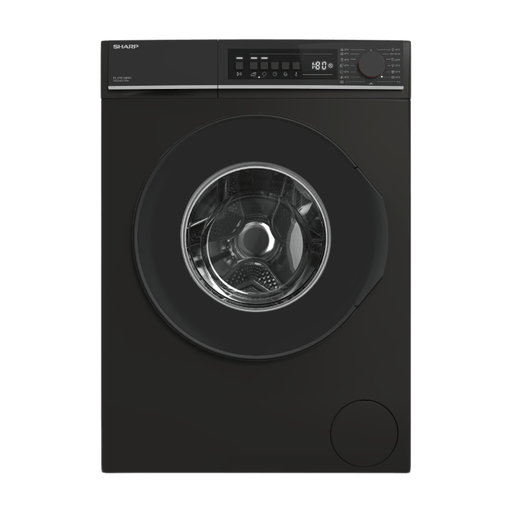 No image available
A freestanding front-loader to compare if a 7 kg capacity suits your needs and you have checked the available space.
The title lists an A energy rating and an inverter motor. The product information mentions 15 programmes, adjustable temperature and programmes for delicate items, wool/hand wash and hygiene, among others.
 No image available
A freestanding front-loader to compare if its capacity suits your laundry needs and there is enough room for the machine.
The title lists a C energy rating. The product information mentions 15 wash programmes, including programmes for cotton, wool/hand wash, synthetics and hygiene.
No. If width is the main constraint, compare top-loaders and check that the lid can open freely. If depth is the main issue and there is room in front of the machine, compare slimline front-loaders. Also measure the space needed for hoses and connections.
Check that the space has a stable floor, a suitable water supply and drain, and an earthed socket. Bosch recommends removing the transit bolts during installation; follow the instructions for your chosen model.
Choose a capacity that suits your laundry and compare figures on the EU energy label on a like-for-like basis. Milieu Centraal recommends using an eco programme for normally soiled laundry and running a 60 °C wash regularly to maintain the machine, as long as the machine's manual allows it.
No. According to ACM ConsuWijzer, there is no fixed two-year term for the Dutch statutory guarantee: with normal use, a product should last as long as you can reasonably expect it to. If a fault occurs sooner, contact the seller.
Not necessarily. The NVWA says businesses that prepare, process or sell food must follow a HACCP food safety plan; an applicable hygiene code can be used for this. The instructions for your aprons depend on the business and how it operates. This does not mean there is one universal washing temperature for all aprons.