What should you look for?
Weigh a typical cotton load and compare it with the drum capacity. Then check that the programme load, care instructions and turnaround time you need are right for your laundry.
| What to consider |
What should you check? |
Who is this most relevant to? |
| Suitable drum capacity and consumption |
Weigh a typical cotton load and compare it with the drum capacity, any automatic load adjustment and the consumption figures on the EU energy label. |
If I often run small cotton loads, I want a drum that suits how I do my laundry. Around 33% of consumers put suitable capacity and consumption first. |
| Caring for rainwear |
Check the care labels and compare the available programmes and adjustable temperatures with the washing instructions. |
If I also wash a treated outer layer, I don’t want to confuse its care instructions with those for ordinary cotton. Around 27% of consumers make caring for rainwear their top priority when choosing. |
| Quick programme |
Check the programme duration, maximum load and suitable soil level for each model in its manual. |
If I need a small load back quickly, I want to know exactly how much can go in the quick programme. Around 20% of consumers prioritise a quick turnaround. |
| Energy use when washing frequently |
Compare energy consumption per 100 Eco 40-60 cycles and water consumption on the same label basis; these figures don’t apply to every programme. |
If I wash frequently, I want to be able to compare consumption on a like-for-like basis. Around 20% of consumers put running costs first when choosing. |
The European Commission describes the EU energy label for washing machines using, among other things, the Eco 40-60 programme. Use these figures to compare machines on the same label basis, not to predict consumption for a quick or standard cotton programme.
Joybuy products
This selection includes AEG front-loaders with load adjustment, plus a foldable mini washing machine for small items of clothing. Compare the maximum load and programmes with what you actually wash.
 Image unavailable
AEG LR73R862 7000 Series, 8 kg, 1600 rpm
Suited to anyone who often washes small loads and wants to compare a programme for everyday mixed laundry.
According to the product description, PreciseWash adjusts the cycle to the weight of the load. MixLoad 69 is listed as a 69-minute programme at 30 °C.
View at Joybuy
 Image unavailable
AEG LR73S840 7000 Series, 8 kg, 1400 rpm
A front-loader worth comparing if you wash small loads and also want to look at a mixed-load programme.
According to the product description, PreciseWash adjusts the cycle to the load. MixLoad 69 is listed as a 69-minute programme at 30 °C.
View at Joybuy
 Image unavailable
AEG LF61R840 6000 Series, 8 kg, 1400 rpm
It may be worth comparing if you’re looking for a cotton programme and adjustment for smaller loads.
The product description mentions ProSense, which adjusts the cycle to the weight of the load, and lists a cotton programme.
View at Joybuy
Image unavailable
AEG LR73S862 7000 Series, 8 kg, 1600 rpm
A front-loader to compare if you often run small loads and want a programme for mixed laundry.
According to the product description, PreciseWash adjusts the cycle to the weight of the load. MixLoad 69 is listed as a 69-minute programme at 30 °C.
View at Joybuy
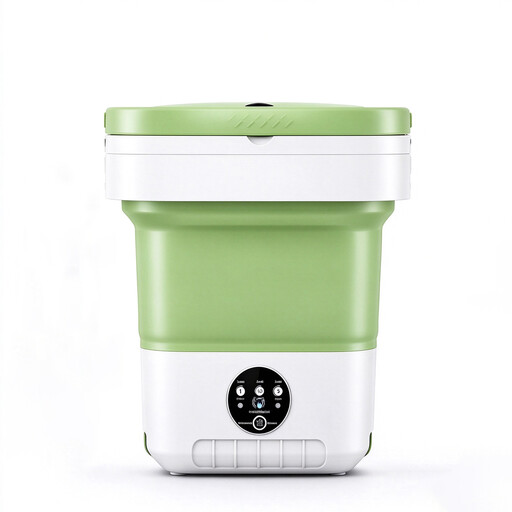 Image unavailable
Foldable mini washing machine, 12 litres
It’s described as suitable for small items of clothing; consider whether its capacity is right for your cotton laundry.
The product description lists a maximum load of 1.5 kg, a foldable design and a spin-drying basket.
View at Joybuy
Frequently asked questions
Can you wash all your rainwear together on Eco 40-60?
No, not automatically. Eco 40-60 is designed for normally soiled cotton that can be washed at 40 °C or 60 °C according to its care label. Check treated or waterproof outerwear separately for washing, detergent and drying instructions; Patagonia’s guidance applies to the technical clothing discussed by the brand.
What should you consider when installing and positioning your machine?
Measure the available width, height and depth, and check the installation dimensions and instructions for the exact model before ordering. Bosch lists external dimensions of 845 × 598 × 590 mm for the WUU28T20NL; these measurements don’t apply to all washing machines.
What do the energy label and statutory guarantee mean in the Netherlands?
The EU energy label for washing machines ranges from A to G and includes, among other things, energy consumption per 100 Eco 40-60 cycles. ACM ConsuWijzer explains that you have statutory rights in addition to any manufacturer’s guarantee; what you can reasonably expect from a product depends, among other things, on normal use.
What can you do with your old washing machine?
When you buy a new, similar machine, the retailer must take back a comparable old appliance, according to the Dutch Government. Before delivery, check how the practical handover will be arranged.


