
If you often wash small loads
You usually wash small amounts of cotton and want to avoid having a drum that’s consistently too large for your everyday loads.


Choose a drum capacity that suits the amount you usually wash in one go, and check separately that there’s enough room for your cotton sheets. A larger drum isn’t automatically better for frequent small loads. Compare the programmes and running costs too: Eco 40-60 is designed for normally soiled cotton, but it isn’t necessarily suitable if you want to wash your sheets hygienically at 60 °C and the care label allows it.
You usually wash small amounts of cotton and want to avoid having a drum that’s consistently too large for your everyday loads.
You want to be able to wash your sheets in the drum and, when the care label and circumstances call for it, choose a suitable 60 °C wash.
You compare not only the wash programme, but also the space available and the energy and water used by the programmes you run.
Start with the amount of cotton you usually wash, then check that your largest everyday load of sheets will fit in the drum. Next, see which programme suits the care label and your washing needs.
| What to consider | What to look for | Who is it important to? |
|---|---|---|
| Small cotton loads | Compare the cotton capacity with a normal, sorted wash. Also check whether washing performance data for partial loads is available for the exact model. | If I often wash small cotton loads, I want the machine to clean them properly without the drum being mostly empty each time. Around 36% of consumers put small loads at the top of their buying priorities. |
| Space and programmes for sheets | Check the drum and door opening, the care label on your sheets and the programmes available on the exact model. | If you want to wash sheets together, make sure they fit comfortably in the drum and that there’s a suitable programme for when a hygienic wash is needed. Around 29% of consumers prioritise this. |
| Running costs if you wash frequently | Compare kWh per 100 Eco 40-60 cycles and water per cycle on the energy label. Look for separate model data if you mainly use a different programme. | If I use the machine often, I want to weigh up the energy and water use of the programmes I actually run. Around 21% of consumers give this consideration priority. |
| Installation and service | Measure the height, width and depth, door swing and space for hoses. Check the connection and service terms too. | When space is tight, I want to know in advance whether the machine will fit with the door and connections in place, and what aftercare I’ll need to arrange myself. Around 14% of consumers place the greatest importance on installation and service. |
In a November 2024 test of ten large machines, the Consumentenbond found that eight machines produced unsatisfactory washing results with a 40% load. This doesn’t necessarily apply to every model, but it shows why drum size matters if you often wash small loads.
First work out the size of your everyday loads, then check that your largest usual load of sheets will fit.
A significantly underfilled drum could mean you need to run separate washes more often.
The programme name doesn’t guarantee that the water reaches 60 °C. The Consumentenbond warns that this programme isn’t suitable when bedding needs a hygienic wash.
If so, choose a suitable cotton or hygiene programme, provided the care label allows it, and check the fabric label first.
The label value is based on Eco 40-60 and doesn’t automatically show the energy use of a warm or quick cotton wash that you use frequently.
Compare energy labels on the same basis, and look for separate model data if you mainly use a different programme.
Door swing and space for hoses and connections matter too. Taking away an old appliance is also different from paid dismantling or installation.
Measure the space with the door open, and check in advance how connection, any dismantling and collection are arranged. The Dutch government says that when you buy a new appliance of a similar type, the old-for-new scheme applies to collection.
Installation or dismantling may be offered as a separate service, so check the terms.
Bosch offers, among other options, a 7 kg model and an 8 kg model to suit different everyday loads.
The BM3WFU3741S is a 7 kg front-loader worth comparing if that capacity suits most of your washes.
The 6000 ProSense LR63864 is an 8 kg model for anyone who regularly needs extra room for sheets.
The WEA128 WCS 8 kg Active combines an 8 kg capacity with a cotton programme and an extra rinse option.
The iQ300 WM14N07CNL is another 8 kg front-loader to consider alongside other larger-drum models.
The Joybuy options below have a stated capacity of 7 kg and are worth comparing if you often wash small loads. For each model, also check the programmes, the specific variant and whether there’s enough room for your sheets.
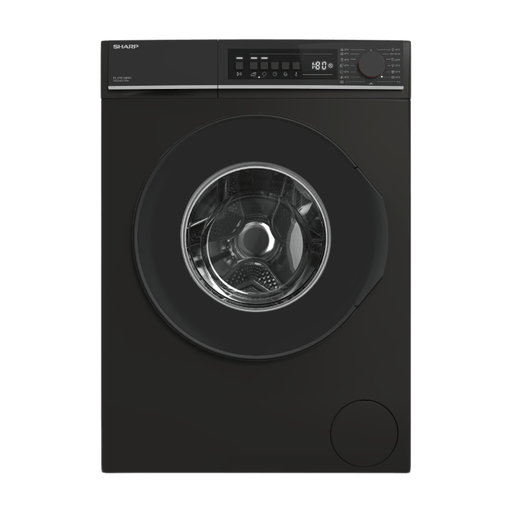 No image available
The stated capacity makes this a compact-drum option for anyone who often washes smaller loads.
The product title lists 1400 rpm, an A energy rating, an inverter motor and a black finish. The product description mentions 15 wash programmes.
 No image available
The stated capacity makes this a compact option for smaller loads; check that the drum has enough room for your sheets too.
The product title lists 1400 rpm, a C energy rating, 15 wash programmes and a silver finish. The product description mentions Cotton, Eco 40-60, Hygiene+ and a half-load option. Check the exact colour and energy rating of the variant.
 No image available
The stated capacity makes this a compact option; the product description mentions small spaces as a possible place to install it.
The product information lists a depth of 400 mm, an A-10% energy rating and One-Touch Speed Wash. The product description mentions 16 programmes.
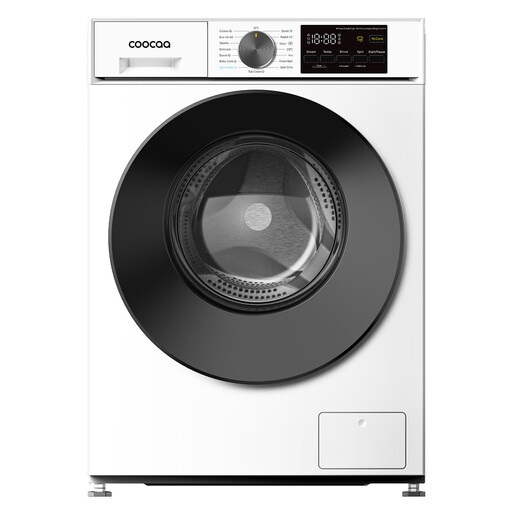 No image available
The stated capacity makes this model worth comparing if you usually wash smaller loads.
The product title lists a BLDC motor, an A-10% energy rating, Steam Wash, a 15-minute quick wash programme and 15 programmes.
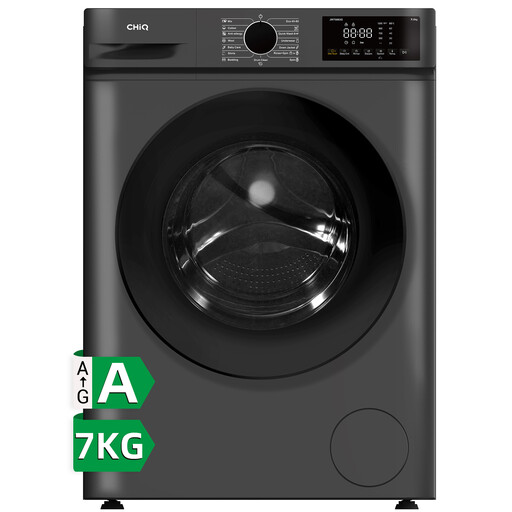 No image available
The capacity makes this a compact option; also check that the drum is practical for the sheets you usually wash.
The product title lists an A energy rating, 1200 rpm, 16 programmes, Steam and One-Touch Smart Wash, with a stated drum size of 530 mm.
No. Eco 40-60 is designed for normally soiled cotton that can be washed at 40 or 60 °C according to the care label. If a hygienic wash is needed, choose a suitable cotton or hygiene programme at 60 °C if the fabric label allows it; the Consumentenbond points out that Eco 40-60 isn’t suitable for this purpose.
Check the available space, water supply and drainage, and follow the instructions for your chosen model. Bosch recommends a stable surface and an earthed socket; remember to remove the transit bolts before first use.
For your statutory guarantee, contact the retailer. According to the Dutch government, there’s no fixed two-year statutory guarantee period in the Netherlands; what you can expect depends, among other things, on the product and normal use. Before buying, check whether a paid extended warranty genuinely offers anything extra.
Washing machines covered by the relevant EU rules must meet ecodesign requirements, including having Eco 40-60 and 20 °C programmes, and must display an energy label. The European Commission and the Dutch government set out the applicable rules; an A energy rating is a buying preference, not a legal minimum.
Yes. Under the Dutch old-for-new scheme, the shop must take back your old appliance when you buy a new one of a similar type. If your order is being delivered online, agree how and when the old appliance will be collected; paid dismantling or installation is a separate service.