
People with a narrow laundry nook
Work out whether width, depth or clearance above the machine is the limiting factor. The Consumers’ Association (Consumentenbond) also recommends allowing space for hoses and for opening the door.


First, measure the available width, depth and height, allowing for hoses and room to open the door or lid. If width is the main constraint, consider a top-loader; if depth is limited, compare slimline front-loaders. If a standard front-loader will fit, choose the drum capacity to suit your usual cotton wash and always follow the care label and fabric instructions for rainwear.
Work out whether width, depth or clearance above the machine is the limiting factor. The Consumers’ Association (Consumentenbond) also recommends allowing space for hoses and for opening the door.
Choose a drum capacity that suits your usual sorted cotton wash. The Consumers’ Association notes that the stated capacity applies to cotton washing.
Bear in mind that washing will be wet when the cycle ends, and check the care label on each garment. Patagonia Europe distinguishes between washable technical fabrics and waxed cotton, which should not go in the washing machine.
Choose this option: if you don’t have around 60 cm of width for a front-loader, but do have room to open the lid. Whirlpool lists the TW 622S FRESHCARE BE as 40 cm wide, with a capacity of 6 kg.
Bear in mind: you can’t use the top as a work surface or for stacking. The Consumers’ Association reports that the top-loaders it tested washed less effectively than a standard front-loader; this result doesn’t necessarily apply to every model.
Choose this option: if you have around 60 cm of width available but limited depth. Beko lists the BM3WFU3741W as 49.6 cm deep with a 7 kg capacity; Haier gives the HW70-BP14357TU1 a depth of 46.8 cm and a capacity of 7 kg.
Bear in mind: the stated cabinet depth isn’t the same as the space required for connections and protruding parts. Measure for these before choosing a model.
Choose this option: if the full installation space and doorway are suitable, and your usual cotton wash needs more drum space. Bosch lists the WAN2827BNL as an 8 kg model, measuring 845 × 598 × 590 mm (h × w × d).
Bear in mind: a larger drum takes up more space and isn’t automatically the right choice if you usually wash small loads.
| What to consider | What to look for | Who it matters to |
|---|---|---|
| Will the machine fit? | Measure the width, depth and height; allow for hoses and enough room to open the door or lid. | If my laundry nook is particularly narrow, I want to know whether the machine will fit and whether I can open it. Space is the main concern for around 36% of consumers. |
| Suitable drum capacity | Compare the stated cotton capacity with your usual sorted wash and check the programme instructions. | If I mainly wash everyday cotton layers, I want a drum that suits my usual load. Matching capacity to cotton loads is the main priority for around 29% of consumers. |
| Wet washing and noise | Check the spin-drying class and noise level on a comparable label basis; consider where wet washing can dry. | With limited drying space, I want to know what I can do with wet layers after washing and how noisy the spin cycle is. Drying and noise are the main concerns for around 21% of consumers. |
| Energy use and aftercare | Compare kWh per 100 Eco 40-60 cycles and water consumption on the same label basis; also check the installation terms. | If I want to understand energy use and what happens after purchase, I look at the label figures and installation arrangements. Running costs and aftercare are the main priorities for around 14% of consumers. |
A top-loader may be narrower, while a slimline front-loader can still be around 60 cm wide. The Consumers’ Association also recommends allowing for hoses and space to open the machine.
Note down the available width, depth and height separately. Then check the model dimensions and the space required for connections and opening.
The stated capacity applies to cotton washing. Technical fabrics may have different care instructions, while waxed cotton may not be machine washable; Patagonia Europe warns against putting waxed cotton in the washing machine.
Check the care label and fabric of each garment before choosing a drum or programme.
The maximum washing capacity isn’t the same as the drying capacity. The Consumers’ Association also points out that combined cotton programmes can take a long time.
Compare the stated washing and drying capacities, and check the instructions for the clothes you want to wash and dry.
The BM3WFU3741W is a slimline front-loader with a stated capacity of 7 kg, a width of 60 cm and a depth of 49.6 cm.
The X5 HW70-BP14357TU1 is a front-loader with a stated capacity of 7 kg and dimensions of 595 × 468 × 850 mm (w × d × h).
The TW 622S FRESHCARE BE top-loader is an option when width is the main constraint: its stated width is 40 cm.
The Serie 4 WAN2827BNL is an example of a standard front-loader for a laundry nook with room for a larger cabinet.
The 6000 ProSense LF628400 is a front-loader with a stated capacity of 8 kg, worth comparing if around 60 cm of width and sufficient depth are available.
This selection includes standard and slimline front-loaders for cotton washing; check that each model’s dimensions and capacity suit your laundry nook and your needs.
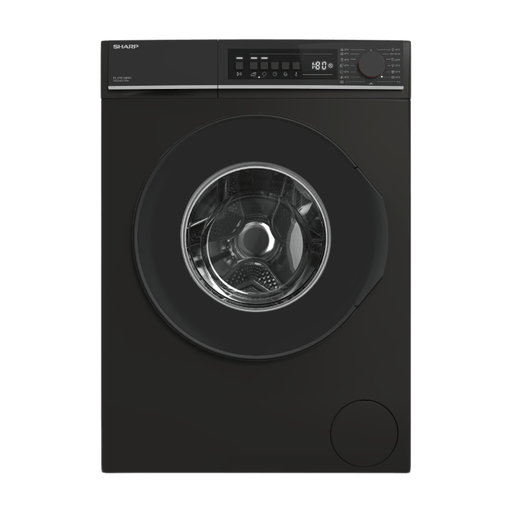 Image not available
A front-loader for anyone with enough room for the stated dimensions who usually washes cotton items.
7 kg; cotton programme; 1400 rpm; 15 programmes; energy class A; 597 × 845 × 600 mm.
 Image not available
A slimline front-loader to consider if the width works but cabinet depth is limited.
8 kg; cotton programme; 1400 rpm; 16 programmes; 850 × 595 × 475 mm.
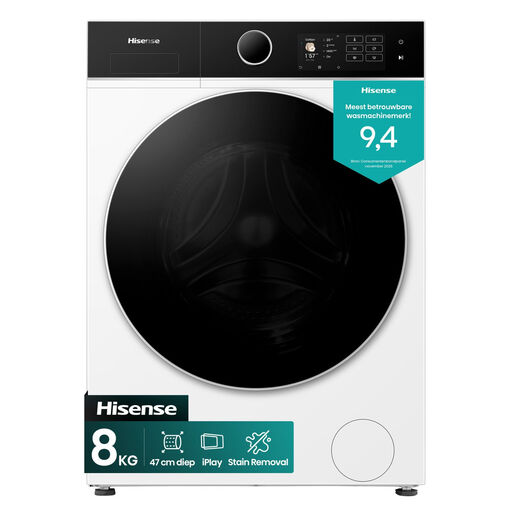 Image not available
A slimline front-loader for a laundry nook where the stated width and depth will fit.
8 kg; cotton programme; 1400 rpm; 18 programmes; 60 cm wide and 47 cm deep. The product information warns against washing thick, waterproof fabrics.
 Image not available
A standard front-loader to consider if the stated cabinet dimensions fit your available space.
8 kg; 1351 rpm; energy class A; 850 × 595 × 601 mm. The product title also mentions a steam function.
 Image not available
A front-loader for everyday cotton washing, if its capacity and dimensions suit your needs.
7 kg; cotton programme; 1400 rpm; 15 programmes. The product title lists energy class C.
Don’t decide based on the term ‘rainwear’ alone. The stated capacity applies to cotton washing; check the care label and fabric instructions for each garment. Patagonia Europe warns that waxed cotton must not go in the washing machine, while washable technical fabrics may have different care instructions.
Allow space for the hoses and for opening the door or lid. The Consumers’ Association recommends a stable surface; also check the connections and installation instructions in the manual, and ask the retailer in advance what’s included with delivery and installation.
No. The label doesn’t tell you how much energy another programme uses. The consumption figures on a washing machine label relate to Eco 40-60; the Consumers’ Association warns that you can’t automatically apply them to a short cotton programme.
You’re entitled to a product that meets the terms of your purchase. According to the Dutch government, there’s no fixed statutory warranty period in the Netherlands; what you can expect depends, among other things, on the product, its price and the information provided at the time of sale. Report a faulty product to the retailer, even if the manufacturer’s warranty has expired.