In a small laundry area, start by measuring the available width and depth, as well as the space needed to open the door or lid. A shallow front loader may fit if there is enough room in front of the machine; a top loader is an option if width is limited and the lid can open freely above it. Then choose a capacity that suits your usual cotton wash and compare the specifications for the exact model.
Who is this guide for?
People with a narrow laundry area
If you have limited floor width or space in front of the machine, you can compare a top loader with a suitable front loader. Measure the clearance above the machine too; the Consumers' Association explains why this is needed for a top loader.
People with small cotton loads
If you usually wash a modest number of T-shirts, you can choose a capacity to suit your usual cotton wash rather than automatically opting for the biggest drum. The Consumers' Association explains how capacity relates to the wash programme.
People who consider clothing care and energy use
If you want to wash T-shirts according to their care labels, compare the programmes and energy and water data for the exact model. Milieu Centraal and the European Commission outline key considerations for washing efficiently and using the Eco 40–60 programme.
What matters in a small laundry area?
Shallow front loader
Suitable when: you have around 60 cm of width, the door can open in front of the machine and depth is the main constraint. Beko lists a depth of 49,6 cm for model BM3WFU3741W.
Keep in mind: a shallow machine will not solve a lack of width or space for the open door. Also check the installation clearance and capacity for the exact model.
Top loader
Suitable when: width or space in front of the machine is limited and the lid can open freely above it. AEG lists a width of 397 mm and a capacity of 6 kg for the LTR6162K.
Keep in mind: you need to be able to reach the top. According to the Consumers' Association, you cannot place a top loader under a worktop or use its top as a storage surface.
Standard front loader
Suitable when: the full depth and door opening will fit, and the capacity suits your usual cotton wash. Bosch lists a capacity of 7 kg for the WGE02404NL.
Keep in mind: compare the stated dimensions with the available space. Also check the access route, doorway and installation clearance.
Use the table to prioritise the main checks before choosing a model.
For anyone looking for a washing machine for a small laundry area and washing cotton T-shirts, the table below sets out the main buying considerations and what to check.
| Buying consideration |
What to check before buying |
Who is this important for? |
| Will the machine fit in the laundry area? |
Measure the space and compare it with the machine’s full dimensions. Check clearance for the door, lid and connections. |
If I have limited width or space in front of the machine, I want to know whether I can still load it easily. Around 36% of consumers put physical fit first. |
| Is the capacity right for my cotton wash? |
Weigh a typical sorted load and compare it with the cotton capacity. The Consumers' Association recommends allowing around 2 kg of extra capacity. |
For small T-shirt loads, I don’t want to choose a drum that doesn’t suit what I usually wash. Around 29% of consumers give choosing the right capacity top priority. |
| How should I care for T-shirts and compare energy and water use? |
Check the care label and the programmes available on the exact model. Compare energy and water figures on the same EU label basis. Eco 40–60 is intended for normally soiled cotton that can be washed at 40 °C or 60 °C according to its care label. |
If I want to wash my T-shirts according to their care labels, I look for suitable programmes and energy and water information. Around 21% of consumers prioritise clothing care and energy use. |
| What should I know about installation and service? |
Check what delivery, installation and connection services include. Read any additional warranty terms and compare them with your statutory rights; the Dutch Government explains that there is no fixed statutory warranty period in the Netherlands. |
If I want to know in advance what installation involves and what help is available if something goes wrong, I check the service terms. Around 14% of consumers give the purchase and service top priority. |
Common mistakes when choosing
-
Calling a machine compact without measuring the door or lid
A top loader needs clearance above the lid; a front loader needs enough space for the door to open at the front.
Measure the full operating space and compare it with the dimensions and installation information for the exact model.
-
Automatically choosing the biggest drum for small T-shirt loads
A bigger drum is not automatically the right choice for your usual cotton load. Choose a capacity that suits how much you typically wash at once.
Weigh a typical sorted cotton load and compare it with the stated cotton capacity.
-
Assuming a long motor warranty covers the whole machine
An additional manufacturer's warranty has its own terms and does not replace your statutory rights against the retailer.
Check what the additional warranty covers and what the retailer will do if the machine develops a fault. The Dutch Government explains statutory guarantees in the Netherlands.
Brands to compare
AEG
The AEG LTR6162K is a top loader worth comparing if your laundry area has limited width.
- AEG lists a width of 397 mm and a capacity of 6 kg for this model.
- A top loader needs clearance above the lid; according to the Consumers' Association, it cannot be placed under a worktop.
Beko
The Beko BM3WFU3741W is a front loader worth comparing if limited depth is a key consideration.
- Beko lists a capacity of 7 kg, a machine depth of 49,6 cm, energy class A and a spin noise level of 76 dBA for this model.
- The stated machine depth alone does not tell you whether the door, connections and available space will fit in your laundry area.
Bosch
The Bosch WGE02404NL is an example of a front loader with a capacity of 7 kg.
- Bosch lists dimensions of 848 × 598 × 588 mm and a spin speed of 1400 rpm for this model.
- Check that the full machine, door movement and required connection clearance will fit in your laundry area.
Indesit
The Consumers' Association describes the BTW L60400 B as a top loader to compare with other models.
- For this specific model, the Consumers' Association lists a capacity of 6 kg, energy class C and a spin speed of 1000 rpm.
- These specifications apply to the BTW L60400 B. Don’t compare them with other models or variants without checking their details.
Washing machines for a small laundry area at Joybuy
This selection features freestanding front loaders. Compare the stated dimensions with your laundry area and check which capacity suits your usual cotton wash.
 No image available
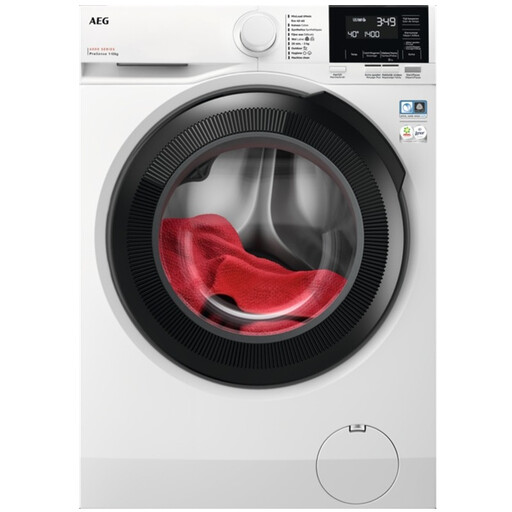
AEG LR63R144 6000 Series, 10 kg, 1400 rpm
An option if a freestanding front loader will fit in your laundry area; check the door opening and the required connection clearance.
The product description lists energy class A and 42 kWh per 100 Eco 40–60 cycles. The product title lists 10 kg and 1400 rpm.
View at Joybuy
 No image available
AEG LR73S840 7000 Series, 8 kg, 1400 rpm
An option if you’re looking for a freestanding front loader and its dimensions fit the available space; check the door movement too.
The product description lists 8 kg, 1400 rpm and a stated depth of 57,2 cm.
View at Joybuy
 No image available
AEG LF61R840 6000 Series, 8 kg, 1400 rpm
An option if a freestanding front loader will fit and you can accommodate the stated dimensions in your laundry area.
The product description lists energy class A, 47 kWh per 100 Eco 40–60 cycles and dimensions of 847 × 596 × 577 mm.
View at Joybuy
 No image available
AEG LR73S862 7000 Series, 8 kg, 1600 rpm
An option if you’re looking for a freestanding front loader and there is enough room for the stated dimensions and the door.
The product description lists 8 kg and 42 kWh per 100 Eco 40–60 cycles. The stated dimensions are 847 × 596 × 602 mm.
View at Joybuy
 No image available
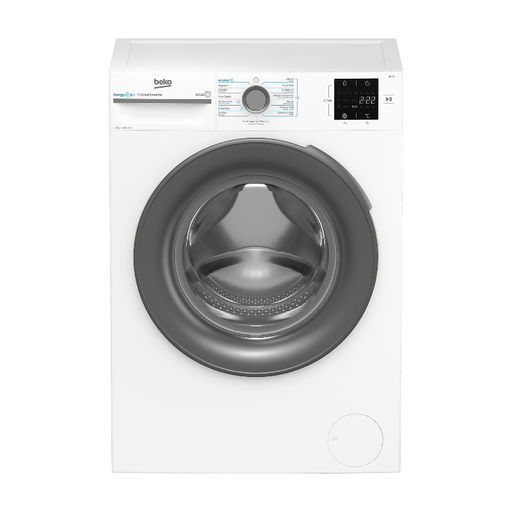
Beko BM3WFU3741S, 7 kg, 1400 rpm, silver
An option if you’re looking for a freestanding front loader; check that this model’s dimensions will fit your laundry area before choosing.
The product information lists energy class C, 15 programmes, including cotton and Eco 40–60, and a spin speed of 1400 rpm.
View at Joybuy
Frequently asked questions
How do I know whether a T-shirt can be washed on Eco 40–60?
First check the care label: Eco 40–60 is intended for normally soiled cotton that can be washed at 40 °C or 60 °C according to the label. Not every printed or mixed-fibre T-shirt will automatically meet this requirement.
What should I check before using the washing machine for the first time?
Follow the instructions for the exact model and check the installation location. The Consumers' Association recommends, among other things, a stable surface, removing the transit bolts, connecting the water supply and drain, using an earthed socket and levelling the machine.
What do the energy and water figures on the Dutch washing machine energy label tell me?
The EU energy label uses classes A to G for washing machines and includes information such as energy consumption per 100 cycles and water consumption per cycle, measured on the specified label basis. Compare models using the same figures and basis.
Do I still have rights in the Netherlands after a manufacturer's warranty expires?
Yes, you may still have statutory rights against the retailer. According to the Dutch Government, there is no fixed statutory warranty period in the Netherlands: you can expect a product to meet reasonable expectations. If a product is faulty, the retailer is your point of contact; accidental damage and normal wear and tear are not automatically covered by free repairs.
Does a washing machine in the Netherlands have to have an energy label?
Yes. The Dutch Government states that washing machines must have an energy label. Check the label details for the exact model; this requirement does not mean that every buyer has to choose a machine with class A.


