
Someone with a narrow space for a washing machine
You’ll need to check whether the width, depth and opening clearance work for a top-loader or front-loader. The Consumentenbond also recommends leaving room for hoses, the door and ventilation.


Start by measuring the space available, allowing for the hoses and the room needed to open the door or lid. A top-loader may fit if width is the main constraint and there is room above the machine; a shallower front-loader could be the answer if depth is the issue. Then match the drum capacity to your usual laundry load, and compare spin noise and consumption figures measured under the same conditions.
You’ll need to check whether the width, depth and opening clearance work for a top-loader or front-loader. The Consumentenbond also recommends leaving room for hoses, the door and ventilation.
You usually wash modest loads of T-shirts and want to choose a drum that suits the items you typically wash together. Milieu Centraal recommends choosing a drum capacity that suits your household.
You can hear the machine during the spin cycle, so you’ll want to compare noise figures and make sure it is installed securely. The Consumentenbond points out that spinning can be noisy, while Bosch recommends placing the machine on a stable surface.
Choose this option: if width is the main constraint and there is room above the machine to open the lid.
Bear in mind: the top of the machine won’t be available as a permanent worktop or stacking space; check the clearance above it too.
Choose this option: if you have around 60 cm of width available but are short on depth.
Bear in mind: the stated cabinet depth isn’t the total space required; you’ll also need room for the hoses and the open door.
Choose this option: if there is enough width and depth, and you want to compare a front-loader with a suitable drum capacity.
Bear in mind: hoses and the door swing may mean the space required is greater than the cabinet dimensions.
| What to consider | What to look for when buying | Who is this important for? |
|---|---|---|
| Dimensions and opening clearance | Measure the width, depth and height, and leave room for hoses, connections and the door or lid. Check the dimensions of the specific model. | If the machine needs to fit between walls or furniture, I also want to know whether the connections and opening will remain clear. Around 40% of consumers put the available installation space at the top of their list of concerns when buying. |
| Drum capacity and cotton washes | Match the maximum cotton load capacity to the laundry you usually wash together; follow the care label for the temperature. | I want to choose a drum that suits my usual load of T-shirts, rather than relying on the maximum capacity alone. Around 30% of consumers prioritise a suitable drum capacity. |
| Noise and vibration | Compare the spin noise level measured under the same labelling conditions, and check that the floor is firm and level. | If the machine is close to my living space, I want to know how noisy it is during the spin cycle and whether it can stand securely. Around 20% of consumers prioritise spin noise. |
| Consumption | Compare energy consumption per 100 cycles, water consumption per cycle and programme duration on the EU energy label, using the same conditions. The European Commission explains these label figures. | If consumption is my main concern, I compare the label figures and consider which programme I actually use. Around 10% of consumers prioritise consumption. |
A top-loader may be narrower, while a shallower front-loader solves a different space problem. The cabinet dimensions alone don’t tell you whether the machine will fit with its hoses connected and its door or lid open.
Measure the available space at several points and compare the full dimensions of the model, including connections and opening clearance.
The drum capacity indicates the maximum cotton load; a larger capacity doesn’t automatically mean the drum is right for your usual load. Milieu Centraal recommends choosing a drum capacity that suits your household.
Match the capacity to a typical sorted load of T-shirts and other laundry you want to wash together.
Label figures are based on set measurement conditions and don’t necessarily reflect the consumption of every programme you choose at home.
Compare the same figures on the EU energy label, and also check the programmes you actually use.
The spin cycle can be noisy, and an unstable installation can cause extra vibration.
Compare the spin noise level, check that the floor is firm and level, and make sure the machine is level.
According to AEG Netherlands, the AEG LTR6162K is a 6 kg top-loader, 397 mm wide, with a cotton programme.
Whirlpool Netherlands lists the TDLR 6261BS BE as a 6 kg top-loader measuring 40.0 cm wide and 60.0 cm deep.
According to Beko Netherlands, the BM3WFU3741W is a 7 kg front-loader with a stated cabinet depth of 49.6 cm and a cotton programme.
Bosch lists the Dutch WGE02406NL as a 7 kg front-loader measuring 848 × 598 × 588 mm.
This selection features front-loaders for anyone considering this type of machine. Compare the stated capacity and model specifications with your usual cotton laundry, and check the full dimensions before choosing a space for it.
 No image available
As a front-loader, this model needs clear space in front of the door.
The product name lists an 8 kg capacity, 1600 rpm and Energy Class A.
 No image available
As a front-loader, this model needs space in front of the door.
The product name lists an 8 kg capacity, 1400 rpm and Energy Class A.
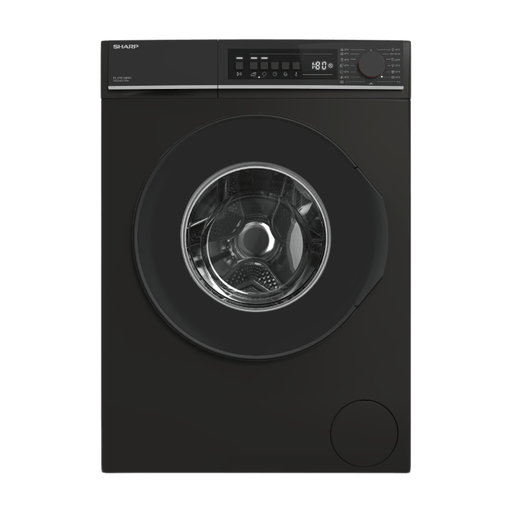 No image available
As a front-loader, this model needs clear space in front of the door.
The product name lists a 7 kg capacity, 1400 rpm and Energy Class A.
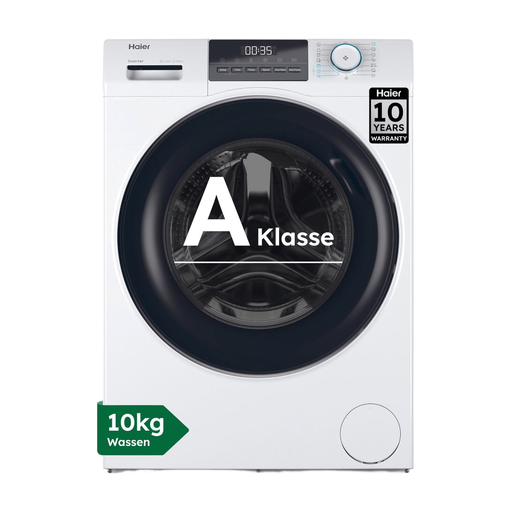 No image available
As a front-loader, this model needs space in front of the door.
The product name lists a 10 kg capacity, 1400 rpm and 70 dB.
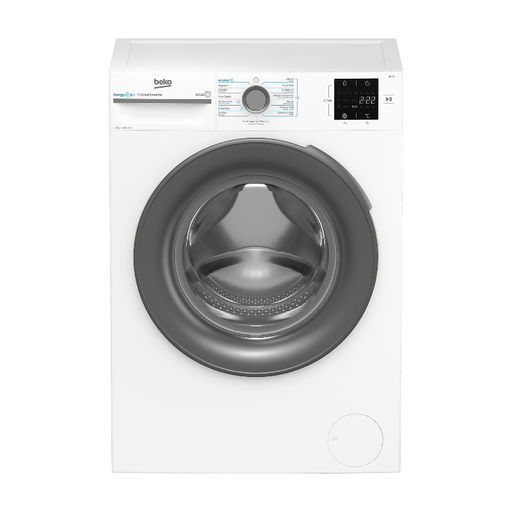 No image available
As a front-loader, this model needs clear space in front of the door.
The product name lists a 7 kg capacity, 1400 rpm, Energy Class C and 15 wash programmes.
Measure the available width, height and depth at several points, and leave room for hoses, connections and opening the door or lid. ‘Narrow’ can refer to a smaller width or depth, so check the dimensions of the specific model. The Consumentenbond also mentions allowing space for hoses, the door and ventilation.
First, follow the care labels on your T-shirts and check the washing machine manual. Choose the cotton programme if it is suitable for the clothes and the load, and follow the stated temperature and other washing instructions.
Follow the installation instructions for your chosen model. Bosch recommends, among other things, a stable surface, accessible water supply and drainage, an earthed socket, removing the transit bolts and checking for leaks after connection. These are Bosch installation instructions, not a general legal installation requirement established here.
Compare the figures on the EU energy label under the same conditions: energy consumption per 100 cycles, water consumption per cycle and programme duration. The European Commission explains these label figures; they are not a personalised calculation of consumption or costs for every programme at home.
According to the Dutch government, statutory warranty in the Netherlands has no fixed duration; what you can expect from a washing machine depends partly on the product and normal use. If a product is faulty, contact the seller. When you buy a new washing machine, the shop must take back a similar old appliance, according to the Dutch government; this old-for-new arrangement also applies to online purchases.