
People with a narrow space for a washing machine
Your choice mainly depends on the width of the alcove and the room needed to open a front door or top lid. Consumentenbond describes top-loaders as narrower than standard front-loaders.


First, measure the space where the machine will go and the room needed to open the door or lid. Then choose a drum that suits your usual laundry loads. A top-loader can be a good option if width is the main constraint, while a slimline front-loader may work if you have enough width and space in front of the door. Also compare spin noise, the water-safety features and the consumption figures for the programmes you actually use.
Your choice mainly depends on the width of the alcove and the room needed to open a front door or top lid. Consumentenbond describes top-loaders as narrower than standard front-loaders.
You wash shorts with a small amount of other laundry and want a drum and programme that suit your usual loads and the care labels.
You pay extra attention to spin noise, a stable installation and the potential consequences of a leak in a home with rooms below or next door.
Measure the space and the room needed to open the machine before comparing models. Then work out which drum size suits your usual loads and compare the features that matter in your home.
| What to consider | What should you check? | Who should pay most attention? |
|---|---|---|
| Will the machine fit? | Measure the width, height and depth, allowing for hoses and the room needed to open it. For a top-loader, check that the lid can open freely; a front-loader needs space in front of the door. | If the alcove is narrow, I want to be sure the machine will fit and can open fully. Around 36% of consumers give the available space top priority. |
| Suitable load capacity | Consider how much laundry you usually wash together and check the load limit for your chosen programme. Follow the shorts’ care label for the right temperature and treatment. | If I mainly wash smaller loads of cotton, I want a drum and programme that suit that routine. Around 29% of consumers give suitable small loads top priority. |
| Noise and water-safety features | Compare spin noise on the EU label and check which water-safety features the exact model has. Also make sure the machine is stable and level. | If spinning could be disruptive at home or a leak could cause damage elsewhere, I want to take these points into account. Around 21% of consumers give noise or the risk of leaks top priority. |
| Energy use and programmes | Compare kWh per 100 eco cycles, water consumption and programme duration on the same label basis. The EU energy label is based on eco 40-60 and does not automatically show the consumption of other programmes. | If I mainly want to keep an eye on energy and water use, I want to compare figures for programmes that suit my routine. Around 14% of consumers give consumption top priority. |
A slimline front-loader can still be around 60 cm wide, while a top-loader needs clear space above the machine.
Measure the full space where the machine will go, as well as the room needed for the door or lid, before choosing a model based on a description such as ‘compact’.
A large drum is not necessarily the best fit for your usual small loads. The energy label is based on eco 40-60 and does not automatically show the consumption of other programmes.
Compare the capacity with your usual loads and check the label on the same basis. For other programmes, consult the documentation for the exact model.
Different safety components can respond to different problems, and a feature on its own is no substitute for correct installation.
Check which safety components the exact model has and follow the installation instructions. Consumentenbond lists water-safety features and correct connection as separate considerations.
The AEG LTR87ULM is an example of a top-loader for a space where width is the main constraint.
The Whirlpool TDLR 6261BS BE is an example of a top-loader for a laundry space where width is limited.
The Beko B1W764BB BE is an example of a front-loader for a space where depth is limited but there is enough width.
Bosch offers two different options here: a standard front-loader and a washer-dryer.
These product options are intended as a reference when looking for a drum that suits smaller loads. Check the dimensions, the programme you need and the space available for each model.
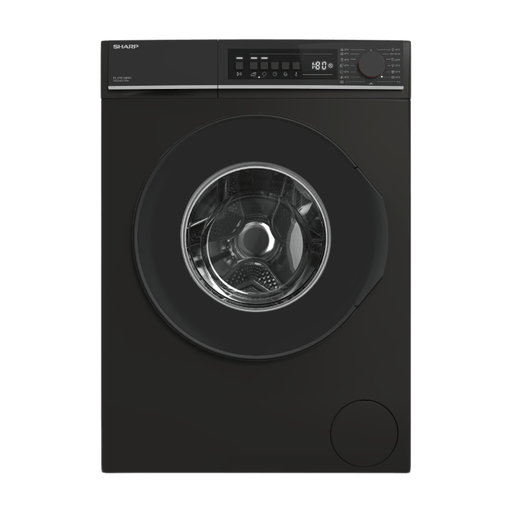 No image available
The listed 7 kg capacity may suit you if you wash small loads with other laundry.
Load capacity: 7 kg.
Energy class: A.
Spin speed: 1400 rpm.
Inverter motor; colour: black.
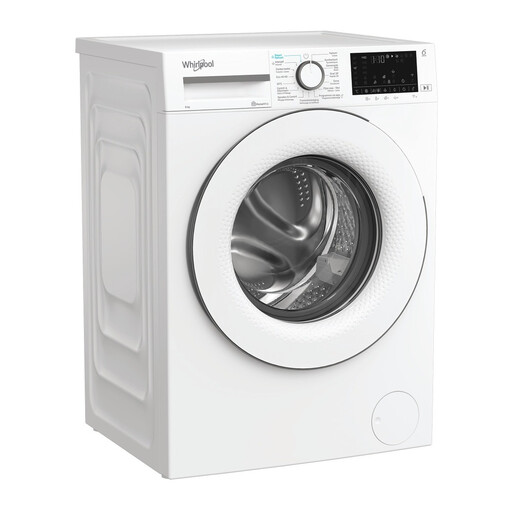 No image available
The listed cottons programmes may suit cotton laundry; check your clothes’ care labels for the right treatment.
Load capacity: 7 kg.
Energy consumption: 42 kWh per 100 cycles on the energy label.
Spin noise: 76 dB(A).
Spin speed: 1200 rpm.
The product information lists Water Stop and cottons programmes.
 No image available
The listed depth may be useful when space is limited; also check the clearance needed for connections.
Load capacity: 7 kg.
Depth: 440 mm.
Water consumption: 37 L per cycle.
Spin speed: 1200 rpm.
The product information lists a 15-minute quick wash programme for lightly soiled clothes.
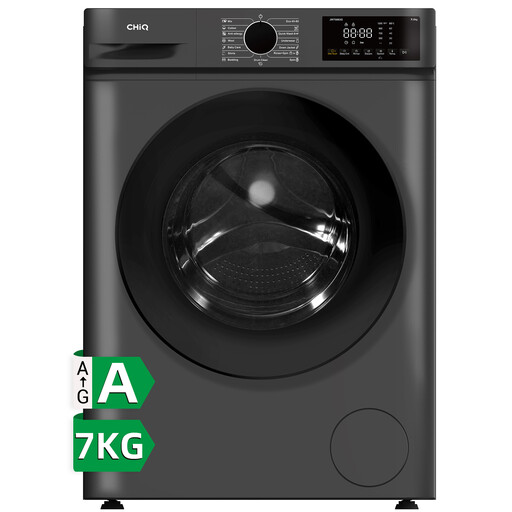 No image available
The listed capacity and programmes may suit smaller loads; check that your chosen programme is right for the care label.
Load capacity: 7 kg.
Depth: 47 cm.
Energy class: A.
Spin speed: 1200 rpm.
The product information lists a 15-minute programme.
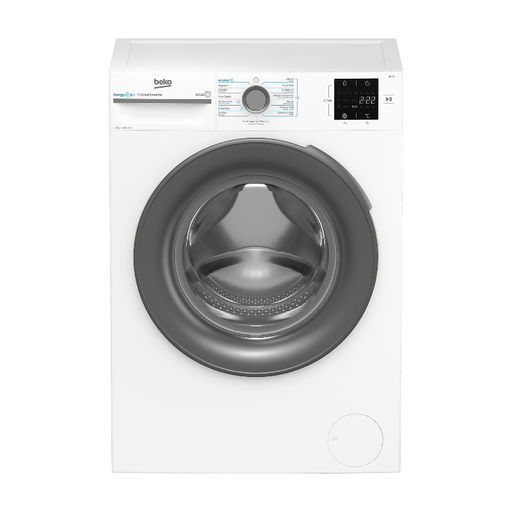 No image available
The product information lists a cottons programme and options for smaller loads; check which setting is right for your laundry.
Load capacity: 7 kg.
Energy class: C.
Spin speed: 1400 rpm.
Programmes: Cottons and Mini/Mini14; the information also lists a half-load option.
Colour: silver.
Check the care label first: the wash tub symbol shows the maximum temperature, and any bars underneath indicate how gentle the programme should be. Then choose a suitable cottons programme. Use eco 40-60 only if the label allows washing at 40 or 60 degrees.
Check the space and connections against the model’s manual. Remove the transit bolts, connect the water supply and drain, use an earthed socket, and adjust the feet so the machine is level on a stable surface.
No. According to the Rijksoverheid, there is no fixed period for statutory warranty in the Netherlands. What you can expect from a product depends, among other things, on the product, its price and the information provided. If a product is faulty, contact the seller; a manufacturer’s warranty is an extra.
When you buy a new, similar appliance, the shop must take your old one free of charge, according to the Rijksoverheid. This also applies to online purchases. Arrange when and how the old appliance will be handed over when your new one is delivered.
No. The consumption comparison on the energy label is based on eco 40-60 and does not show how much energy another programme uses. For that, consult the documentation for the exact model.