
Anyone with a narrow laundry space
You want to know whether the machine, hoses and open door or lid will all fit in the space available. The Consumentenbond advises measuring the space needed for the hoses and to open the machine, too.


First, measure the full space available for the machine and work out how much sorted laundry you usually wash with your socks. Choose the drum size to suit that typical load, not just the socks. A front-loading machine will work if there’s room for the door to open; a top-loader can be a good option when width is limited, provided the lid can open freely; and a washer-dryer is worth considering if you also want to dry clothes in the machine but don’t have room for two appliances. Then compare noise, water protection and consumption using the same label criteria, as recommended by the Consumentenbond, Milieu Centraal and the European Commission.
You want to know whether the machine, hoses and open door or lid will all fit in the space available. The Consumentenbond advises measuring the space needed for the hoses and to open the machine, too.
You wash socks with a suitable load of sorted laundry and want to choose a drum size that matches what you usually wash. The Consumentenbond recommends sorting and weighing your laundry when working out the right capacity.
Your machine is close to your living space or neighbours, so spin noise, vibrations and a stable installation are especially important. The Consumentenbond points out that decibel levels aren’t the only factor affecting how loud a machine seems.
First, measure the available space, then choose a capacity to suit a typical load of sorted laundry. Next, check which drying function, noise levels and water protection are right for your space and how you use the machine.
Choose this if: there’s enough width and depth, and the door at the front can open freely; remember to allow room for the hoses, too. The Consumentenbond gives around 60 cm as a typical width.
Trade-off: a front-loader needs space in front of the machine, and its stated capacity is for cotton laundry. So choose a load size that suits what you normally wash.
Choose this if: width is the main constraint and there’s enough space above the machine to open the lid. The Consumentenbond gives around 40 cm as a typical width for top-loaders.
Trade-off: you can’t use the top as a work surface or install the machine under a fixed worktop. The Consumentenbond reports that the top-loaders it tested washed less effectively than a standard front-loader; this isn’t a statement about every individual model.
Choose this if: you want to wash and machine-dry your clothes but don’t have room for two appliances.
Trade-off: drying capacity is lower than washing capacity. The Consumentenbond advises checking both capacities separately; Bosch, for example, lists 8 kg for washing and 5 kg for washing and drying for the WNA13401NL.
| What to consider | What should you check? | Who is this important for? |
|---|---|---|
| Will the machine fit and open? | Measure the width, height and depth; also check the space needed for the hoses and the door or lid to open. | If the space is tight, you’ll want to be sure the machine can still be opened and connected once it’s in place. Around 29% of consumers are mainly concerned about the available space and opening the machine. |
| Is the capacity right for small cotton loads? | Weigh a typical load of sorted laundry and compare it with the stated capacity for cotton. | If you usually wash socks with a modest amount of other laundry, you’ll want a drum size to suit. The right capacity is a priority for around 23% of consumers. |
| How much noise and vibration does it make? | Compare the spin noise on the energy label and follow the installation instructions to ensure the machine is stable and level. | If the machine is close to your living space, you’ll want to take noise and vibration into account. Noise during washing is the main concern for around 18% of consumers. |
| What water protection does it have? | Check the protection features of the exact model and whether the inlet and drain hoses fit your existing connections. | If a leak could have serious consequences where you plan to install the machine, you’ll want to know what protection the model actually offers. Around 18% of consumers are mainly concerned about water protection and connections. |
| Does the machine also need to dry clothes? | Compare the maximum washing load with the drying load, and check the label information for washing and washing plus drying. | If you don’t have room for a separate tumble dryer, you’ll want to know whether one appliance can also dry your laundry. For around 12% of consumers, having washing and drying in one appliance is the main consideration. |
A machine may fit in the alcove but still be difficult to use if there isn’t enough room for the hoses, door or top lid.
Measure the full space needed to use the machine and check the installation dimensions for the exact model before ordering.
Choosing the wrong size could mean extra installation work or leave you unable to install the machine in a usable position.
The stated capacity is for cotton laundry. If you choose a capacity without considering your usual sorted load, you may find yourself only partly filling the drum most of the time.
Sort and weigh a typical load, and consider what other laundry you want to wash at the same time. Milieu Centraal recommends washing with a full drum.
With a washer-dryer, the maximum drying load may be lower than the washing load. The Consumentenbond points out that this means you can dry less laundry than you can wash.
Compare both capacities and check the label information for washing only and for washing plus drying.
A smaller drying load may mean you need to run an extra drying cycle.
Hose protection, overflow protection and a base sensor respond to different problems. One feature name doesn’t automatically tell you what other protection is included.
Check which protection features are built into each model and consider the consequences of a leak where you plan to install it.
Whirlpool offers top-loaders for narrow spaces; check for each model whether the lid can open freely above the machine.
Bosch offers front-loaders and washer-dryers, giving you models to compare for different space and drying needs.
The Beko B1W764BB BE is a front-loader to consider if the available depth is a major constraint.
Candy offers front-loaders with a range of appliance depths; check the dimensions and capacity of the model you’re considering.
This Joybuy selection consists of front-loaders. Focus on comparing the stated depth and capacity with the space available and the amount of laundry you usually wash.
 No image available
The stated depth makes this model worth considering if space in front of or behind the machine is limited; remember to allow room for the hoses, too.
6 kg capacity; stated depth: 45 cm; BLDC inverter motor; 15-minute wash; Auto Weight; energy class B.
 No image available
Consider this model if you need to factor in depth and wash other laundry with your socks; compare its capacity with your usual load.
8 kg capacity; depth: 57,7 cm; 75 dB during spinning; energy class A; ProSense; ProSteam.
 No image available
The stated depth may be a factor if space is limited; also check the room needed for the hoses and the full installation dimensions.
8 kg capacity; depth: 57,7 cm; 75 dB during spinning; energy class A; ProSense; Inverter Motor+.
 No image available
The listed Mini Load programme may be useful if you want to wash small loads; compare the capacity with any other laundry you’ll be washing with them, too.
9 kg capacity; Mini Load programme; 69 dB during spinning; dimensions: 845 × 598 × 590 mm.
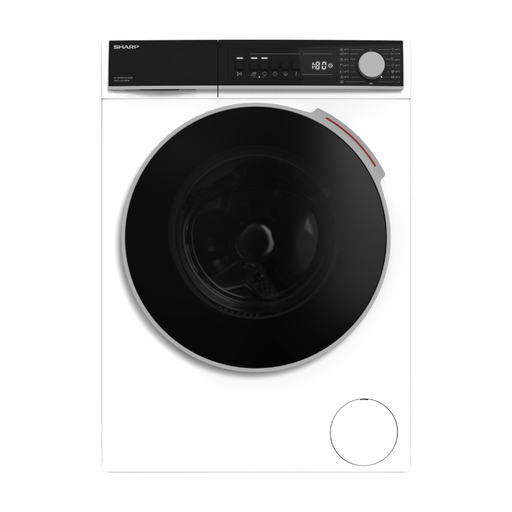 No image available
The product information lists a 12-minute programme for lightly soiled laundry; check that the programme instructions are suitable for the care labels on your socks.
9 kg capacity; 12-minute SuperJet programme; 36 litres of water per cycle; title lists AquaStop and energy class A.
Check what water protection the exact model offers; the name of a protection feature alone doesn’t tell you which types of leak it covers.
It depends on what you usually wash at the same time. The stated capacity is for cotton laundry, so sort and weigh a typical load, including other laundry, before choosing a capacity. The Consumentenbond suggests 5 or 6 kg as a guide for a one- or two-person household, but your own laundry load is what matters most.
Allow room for the hoses, follow the installation manual and place the machine on a stable surface, levelling it according to the instructions. Check what water protection the model you choose has: hose protection and a base sensor serve different purposes. If you’re installing the machine in a bathroom, take particular care with the electrical connection.
Always follow the care label on the socks and the machine’s manual. Milieu Centraal recommends washing normal loads in a full, suitably filled drum using the eco programme. Washing at a lower temperature, such as 30 °C, uses less energy than washing at 40 or 60 °C. In some situations where hygiene is a concern, 60 °C may be a better choice.
Compare the energy use per 100 cycles, water use per cycle and spin noise on the EU energy label. Ask the retailer separately what delivery, connection and removal of your old machine include; installation services aren’t always included.
Yes. According to ACM ConsuWijzer, your statutory guarantee applies alongside any commercial guarantee. If the washing machine develops a fault sooner than you could reasonably expect under normal use, the retailer is responsible for providing an appropriate solution free of charge. There isn’t one fixed statutory guarantee period for every washing machine.