
Someone with a narrow space for a washing machine
You want to check whether the machine, its door or lid, and the connections will all fit in the available space. The Consumentenbond also recommends allowing room for hoses, the door and ventilation.


First, measure the entire space where the machine will go, then check the care labels on your dresses. These will tell you which programmes and settings you need. A top-loading machine may suit a narrow space if there’s room above it for the lid to open. If depth is the main constraint, a shallower front-loader could be an option, provided there’s enough room for the door.
You want to check whether the machine, its door or lid, and the connections will all fit in the available space. The Consumentenbond also recommends allowing room for hoses, the door and ventilation.
You want to be able to match the programme, temperature and spin speed to each dress’s care label. The Consumentenbond recommends following garment care labels.
You’ll want to consider spin noise and vibration, and check what water protection the machine has. The Consumentenbond describes various forms of leak protection.
Suitable for: a space where around 60 cm of width isn’t available, but the lid can open fully above the machine.
Keep in mind: you’ll need access to the top, so a top-loader generally won’t fit under a worktop.
Suitable for: a space with room for around 60 cm of width and the front door, but limited depth.
Keep in mind: the stated cabinet depth isn’t the full installation depth. You’ll also need to allow room for hoses, the door and ventilation.
Suitable for: a space that can accommodate the machine, the open door and the connections.
Keep in mind: check the exact dimensions and water protection of the model you’re considering.
| What to consider | What should you check? | Who is this important for? |
|---|---|---|
| Space and clearance | Measure the height, width and depth, as well as the space needed for hoses, the door or lid, and ventilation. Compare these with the dimensions and installation instructions for the exact model. | If the alcove is tight, you’ll want to make sure the machine is still usable with the door or lid open. Space is the top purchase priority for around 36% of consumers. |
| Wash programmes | Compare your dresses’ care labels with the available programmes and adjustable temperature and spin settings. | If your dresses have different care instructions, you’ll want to be able to wash each one according to its own label. Programmes and settings are the top priority for around 29% of consumers. |
| Noise and water protection | Compare the spin noise level on the energy label and check what type of water protection the model has. | If the machine is close to your living or sleeping area, noise and the risk of leaks may be important factors. These are the top purchase priority for around 21% of consumers. |
| Load capacity and energy use | Choose a load capacity that suits the size of your usual wash. Compare label figures on the same basis; they don’t show the energy use of every delicate wash. | If you usually wash small loads, you’ll want a drum suited to that amount. Load capacity and energy use are the top priority for around 14% of consumers. |
Hoses, the door or the lid may make installation impossible, even if the machine’s external dimensions seem to fit in the space.
Measure the full installation and opening space, and check the installation diagram for the exact model. The Consumentenbond also highlights the need to allow room for hoses, the door and ventilation.
The care label tells you how the garment should be treated. A delicate programme doesn’t automatically make every dress suitable for machine washing.
Before washing a dress, compare its care label with the available programmes, temperatures and spin settings.
The energy-use figures on the label are based on the eco 40-60 programme. They don’t directly reflect a delicate programme or the size of your usual load. Energielabel.nl explains how these figures are measured.
Compare label figures only on the same basis, and choose a drum capacity that suits your usual wash.
Water protection can vary between models, and a leak in a flat may affect areas beyond the place where the machine is installed.
Check the water protection on the exact model and have the machine and connections installed according to the manual. The Consumentenbond describes various forms of water protection.
The Whirlpool TDLR 6261BS BE, available in the Netherlands, is a top-loader worth considering if width is your main constraint.
The AEG LTR87ULM, available in the Netherlands, is a top-loader for a space with around 40 cm of width.
The Beko BM3WFU3741W is a front-loader worth comparing if the width works but space is limited in depth.
The Bosch WGE02404NL is a front-loader worth considering if you have room for a deeper machine.
This selection includes front-loaders with a range of stated depths and load capacities. Compare the dimensions with your available space, and the programmes with your dresses’ care labels.
 No image available
An option to compare if you’re looking for a front-loader and its stated depth fits your available space.
9 kg; 1400 rpm; depth 55 cm; energy class A.
The programme list includes Delicate/Silk and Wool. Check that these settings suit your dresses’ care labels.
 No image available
Compare this front-loader if a 7 kg capacity suits the size of your usual wash.
7 kg; 1400 rpm; energy class C; 15 wash programmes.
The programme list includes Delicates, Wool and HandWash. Check the settings against the care label.
 No image available
A front-loader to compare if its stated depth of 45 cm fits the available installation space.
6 kg; depth 45 cm; energy class B.
Check the full installation space, including connections and door clearance, against the model specifications.
 No image available
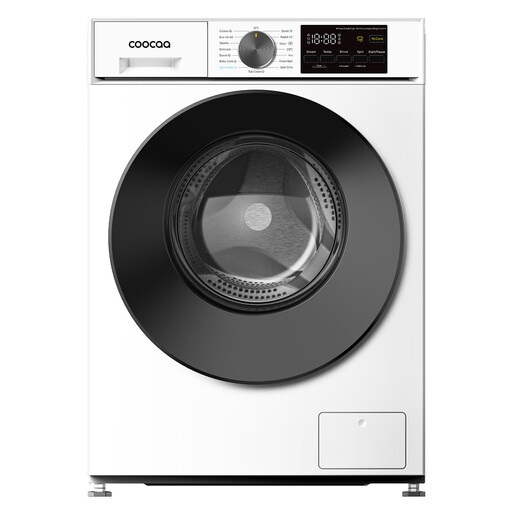
Compare this front-loader if its stated depth and 7 kg capacity suit your space and usual load.
7 kg; dimensions 595 × 440 × 850 mm.
The specifications list an adjustable temperature range from cold to 90 °C. Check the care labels before choosing a temperature.
 No image available
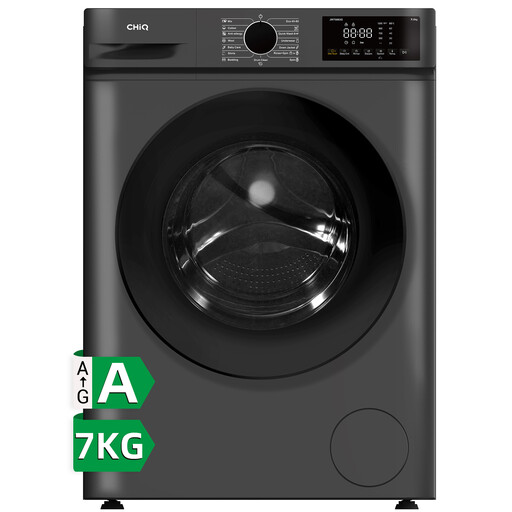
Compare this front-loader if its stated depth fits your available space and a 7 kg capacity suits your load.
7 kg; depth 47 cm; 1200 rpm; 16 programmes; energy class A.
Check which programmes suit your dresses’ care labels, and allow room for the connections and door.
No. Check the care label on each dress and choose the programme, temperature and spin speed accordingly. The fact that a machine has a delicate programme doesn’t automatically mean every garment can be treated this way; the Consumentenbond recommends following the care label.
Make sure the machine is on a stable, level surface, remove the transit bolts, and connect the water supply, drain and earthed socket according to the model manual. Level the machine and follow the manufacturer’s installation instructions.
If a product is faulty, contact the retailer first to find a solution under your applicable statutory rights. According to the Rijksoverheid, when you buy a new, similar machine, a shop must take away your old one free of charge. This also applies to online purchases.
The figures are based on the standardised eco 40-60 programme, so they don’t show the actual energy use of every delicate wash. The energy label includes details such as energy class, energy use per 100 cycles, water use per cycle and spin noise level. Energielabel.nl explains how the figures are measured.