First, measure the width and depth, and allow enough room to open the door or lid. Then choose a drum capacity that suits your usual laundry loads. The Netherlands Nutrition Centre advises washing used tea towels at 60 °C, so check that the exact model has a suitable programme and consult the care label. The name eco 40-60 does not mean that every wash actually runs at 60 °C.
Who is this buying guide for?
Someone with a narrow space for laundry
The available width or doorway will determine whether a top-loader or front-loader will fit. Also measure the space needed to open the machine. The Consumers' Association points out that you need to allow for the door and hoses, among other things.
Someone washing small loads and tea towels
You regularly wash used tea towels, but also want a drum capacity that suits the rest of your everyday laundry. The Netherlands Nutrition Centre advises washing used tea towels at 60 °C.
Someone with a noisy laundry area
Your machine is close to your living space or neighbours. So you’ll want to compare the stated spin noise level and check that the machine can be installed securely.
What should you look for?
Measure the space and the clearance needed before comparing models. Then check the washing programmes and choose a load capacity that suits your usual laundry.
Top-loader
Best suited when: width is limited and there’s enough clearance above the machine to open the lid fully.
Keep in mind: a top-loader needs space above it and usually has a smaller capacity. The Consumers' Association gives a width of around 40 cm for top-loaders, compared with around 60 cm for standard front-loaders (20 May 2026).
Shallow front-loader
Best suited when: you have around 60 cm of width, but depth or clearance is limited.
Keep in mind: a shallower machine isn’t necessarily narrower. Allow space for the hoses and the open door, too.
Standard front-loader
Best suited when: there’s enough room for the machine, connections and an open door, and you also wash other laundry.
Keep in mind: a larger drum isn’t automatically more practical if you usually only fill it part-way. Milieu Centraal advises choosing a drum capacity that suits your household.
| What to consider |
What should you check? |
Who is this important for? |
| Installation and access |
Measure the height, width and depth. Allow for the hoses and enough room to open the door or lid. |
If the alcove is narrow, I also want to know whether the machine can be connected and opened. Around 31% of consumers put installation and access first. |
| Washing used tea towels |
Check whether the exact model has a suitable dedicated programme at 60 °C, and consult the care label. The Netherlands Nutrition Centre advises washing used tea towels at 60 °C. |
What matters to me is being able to wash used tea towels in line with the advice. Around 31% of consumers give suitable washing of used tea towels their highest priority. |
| Noise and vibration |
Compare the stated spin noise level on the same labelling basis and follow the installation instructions. |
If the machine is close to my living space, I want to know its stated spin noise level. Around 19% of consumers focus mainly on noise and vibration. |
| Load capacity and consumption |
Choose a rated load capacity that suits your usual laundry. Compare kWh per 100 cycles and water per cycle on the same EU label basis. |
I want a drum that suits my usual laundry, along with consumption figures I can compare. Around 19% of consumers put load capacity and consumption first. |
Common buying mistakes
-
Assuming ‘slim’ means narrow
For a front-loader, ‘slim’ may refer to its depth. A top-loader, meanwhile, needs clearance above the lid.
Compare all the external dimensions with your measurements, allowing room for connections and to open the door or lid.
-
Assuming eco 40-60 guarantees a 60 °C wash
The programme name doesn’t mean that every load is actually washed at 60 °C. The Netherlands Nutrition Centre advises washing used tea towels at 60 °C. The European Commission describes eco 40-60 as a programme for normally soiled cotton that can be washed at 40 °C or 60 °C.
Check the programme details for the exact model and the care label.
-
Looking only at capacity and the energy label
A drum that doesn’t suit your usual laundry can be impractical. EU label consumption is based on a set cycle and doesn’t automatically reflect consumption for a separate programme at 60 °C.
Choose a load capacity to suit your usual load and compare label figures under the same conditions.
-
Checking water protection and installation only after buying
A washing machine is often close to other living areas. Water protection and installation requirements can vary from model to model.
Check the water protection features and follow the installation instructions for the exact model.
Brands to consider
AEG
AEG Netherlands lists the LTR6162K as a top-loader with a 6 kg load capacity. This may be worth considering if width is the deciding factor.
- AEG describes ProSense as a feature that weighs the load. This is a manufacturer specification.
- A top-loader needs clearance above the machine. Check the exact model’s dimensions and washing programmes.
Beko
Beko Netherlands lists the BM3WFU3741W as a front-loader with a stated depth of 49.6 cm. This may be useful if depth is the main constraint.
- The product specifications also give a spin noise level of 76 dBA.
- The stated width is 60 cm. Beko’s EnergySpin savings claims are made by the manufacturer and don’t, by themselves, show consumption for a specific 60 °C wash.
Bosch
Bosch Netherlands lists the WGE02406NL as a standard 7 kg front-loader, with stated dimensions of 848 × 598 × 588 mm (h × w × d).
- The product page lists energy class A and an option for smaller loads as product specifications.
- It isn’t as narrow as a top-loader. Check whether a programme on the exact model suits your laundry needs.
Washing machines at Joybuy
This Joybuy selection consists of front-loaders. Check the space required for installation and whether the programme on the exact model is suitable for the tea towels you want to wash.
 Image unavailable
AEG LR73R862 7000 Series, 8 kg, 1600 rpm, energy class A
A front-loader to compare if you wash other laundry as well as tea towels. Check that its dimensions suit your space.
The product name lists 8 kg, 1600 rpm and energy class A. Check the washing programmes on this exact model before using it for tea towels.
View at Joybuy
 Image unavailable
AEG LF61R840 6000 Series, 8 kg, 1400 rpm, energy class A
A front-loader to compare with other models if you also want to wash everyday laundry. Measure the space available before choosing a model.
The product name lists 8 kg, 1400 rpm and energy class A. Check the dimensions and programme instructions for this exact model.
View at Joybuy
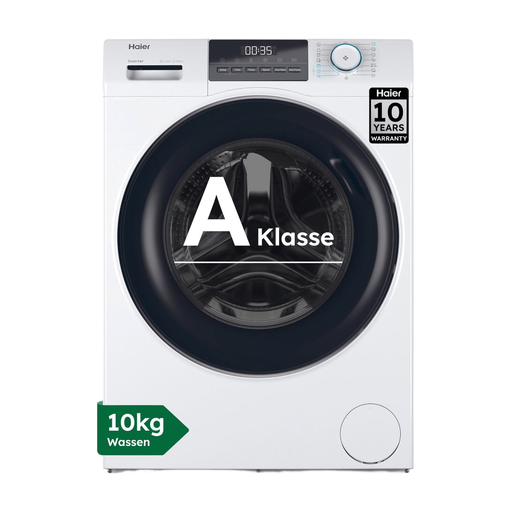 Image unavailable
Haier HW100-BP14929A i-Pro 1, 10 kg, 1400 rpm
Compare this front-loader if you’re looking for a machine for larger everyday laundry loads. Check that the capacity suits your household.
The product name lists 10 kg and 1400 rpm. Check the dimensions and programmes for washing tea towels.
View at Joybuy
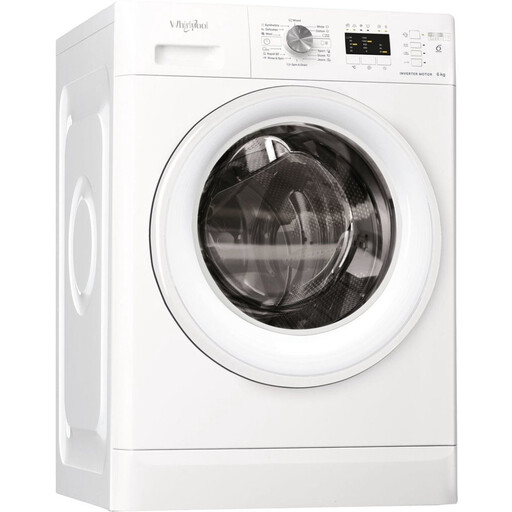 Image unavailable
Whirlpool FFL 6238 W EE, 6 kg, 1200 rpm
A front-loader to compare if a 6 kg load capacity suits your usual laundry. Check that the stated capacity is right for your household.
The product name lists 6 kg and 1200 rpm. Check the dimensions and the programme for the wash you need.
View at Joybuy
 Image unavailable
TCL FF1006WB0, 6 kg, 45 cm deep, energy class B
This front-loader is worth comparing if depth is the main constraint. Measure the width and space for connections, too.
The product name lists 6 kg, a depth of 45 cm and energy class B. Check the programme instructions for the wash you need.
View at Joybuy
Frequently asked questions
Can I simply choose eco 40-60 for used tea towels?
Don’t rely on the programme name alone. The Netherlands Nutrition Centre advises washing used tea towels at 60 °C. The European Commission describes eco 40-60 as a programme for normally soiled cotton that can be washed at 40 °C or 60 °C; it doesn’t guarantee that every load actually reaches 60 °C. Check the exact programme and the care label.
What should I check when installing a washing machine in a small flat?
Allow space for the hoses and to open the door or lid. Follow the installation instructions for the exact model to ensure it’s stable and level, and check what water protection features it has.
How can I keep used tea towels fresh?
Let damp towels dry, and wash used tea towels at 60 °C in line with the Netherlands Nutrition Centre’s advice. Also follow the washing instructions on the care label.
Does the legal guarantee in the Netherlands always last exactly two years?
No. The Dutch government says there is no fixed statutory guarantee period in the Netherlands. What you can expect from a product depends on factors including the product itself and how it’s used.
Is a newly announced repair requirement already law?
Don’t assume it’s already in force. A Dutch government announcement dated 20 March 2026 described a bill that had been sent to the Council of State for advice at the time. The existing statutory guarantee is a separate matter.


