
A housemate who needs peace and quiet
You share a laundry room and want to avoid disturbing others during the spin cycle. Compare the noise level of the specific model and make sure it can be installed securely.


Start with a machine that fits the space allocated to you and can handle a typical load of cotton T-shirts. Then compare the spin noise and energy and water consumption of the specific model. A larger drum isn’t necessarily useful for smaller personal washes, and a low noise rating is no substitute for stable installation.
You share a laundry room and want to avoid disturbing others during the spin cycle. Compare the noise level of the specific model and make sure it can be installed securely.
You mainly wash your own cotton clothes and want to choose a drum size that suits the amount of laundry you usually wash.
You have an allocated space with limited depth, a narrow doorway or restricted access to connections, and want to check in advance that the machine will actually fit.
Start with the space available and the amount of cotton laundry you usually wash. Then assess the noise, vibrations and energy and water consumption of the specific model.
| What to consider | What to look for | Who should prioritise this? |
|---|---|---|
| Noise and vibrations | Compare the spin noise shown on the EU energy label and check that the machine can stand securely; Bosch recommends placing it on a stable surface. | If I share a laundry room, I want to work out whether the spin cycle will disturb others and avoid the machine vibrating on an unstable floor. Around 33% of consumers put peace and noise at the top of their list when buying. |
| Suitable drum capacity | Weigh a typical sorted load and compare it with the drum capacity. Consumentenbond and Milieu Centraal recommend choosing a drum size that suits your household and laundry habits. | I want to wash my own cotton T-shirts without usually choosing a drum that’s much larger than my normal load. Around 27% of consumers give the right drum capacity for cotton laundry top priority. |
| Space and connections | Measure the space for the machine, the access route and the clearance needed for the door and hoses. Also check the connection points against the installation instructions. | If the allocated space is tight, I want to know in advance whether the machine, door and hoses will fit, and whether the connections are accessible. Around 20% of consumers prioritise installation space and connections. |
| Consumption and running costs | Compare kWh per 100 eco 40-60 cycles and water use per cycle on the same label basis. The EU energy label doesn’t automatically show the consumption of other programmes. | If I wash often, I want to compare consumption using the same programme and take my own washing habits into account. Around 20% of consumers give energy, water and purchase costs top priority. |
Sharing a laundry room doesn’t automatically mean that everyone does their washing together. For cotton, it’s important to choose a drum that suits the load you usually wash.
Weigh a typical personal load and agree separate arrangements if you really do want to wash collectively. Consumentenbond recommends filling the drum for cotton washes.
The EU energy label shows the spin noise, but it can’t predict how a machine will behave on your floor. The installation and surface also make a difference.
Compare the label rating and follow the installation instructions for the specific model. Bosch recommends a stable surface and removing the transit bolts.
The energy label uses eco 40-60 as its basis for comparison; that figure doesn’t directly tell you how much another or shorter programme will use.
Compare labels on the same basis and check the manual if you usually use a different programme. The European Commission explains the basis for washing machine labels; Energielabel.nl clarifies that the label’s consumption figure doesn’t apply to every programme.
A machine might fit on paper but still need extra room for hoses, connections and the door to open.
Measure the allocated space and access route, and discuss connections or any changes in advance with the person responsible for the shared space.
The Beko BM3WFT3841B1 is an 8 kg front-loading model we researched, with a stated depth of 54,6 cm and a cotton programme. It can be a useful point of comparison if depth is a key consideration.
The Bosch Serie 4 WAN2827GNL is an 8 kg front-loading model we researched, with stated dimensions of 845 × 598 × 590 mm. Compare these measurements with the space available in your shared laundry room.
The AEG LR87BADEN is a model we researched with a 10 kg capacity and a stated maximum depth of 660 mm. Consider this larger drum only if it suits the way you wash, such as doing shared or accumulated loads.
These washing machines from Joybuy are worth comparing for their drum capacity, available depth and suitability for washing cotton clothes.
 No image available
An option to compare if depth is limited and you mainly wash your own cotton laundry.
The product information lists a depth of 475 mm, spin noise of 72 dB and consumption of 42 kWh per 100 cycles. Compare these figures with the space available and how you’ll use the machine; a noise rating alone can’t predict vibrations on your floor.
8 kg capacity; 1400 rpm; 16 wash programmes.
 No image available
This front-loading model is worth comparing if you’re looking for a machine with a cotton programme and the space available can accommodate its stated dimensions.
The product information lists a depth of 54,6 cm and spin noise of 76 dB(A). Also measure the space needed for the door and hoses, and make sure the machine is installed securely.
8 kg capacity; 1400 rpm; energy class A.
 No image available
An option to compare if you’re looking for a smaller capacity and have limited depth; also check the space needed for the door and connections.
The product title lists a depth of 45 cm, a 15-minute quick wash cycle and energy class B.
6 kg capacity.
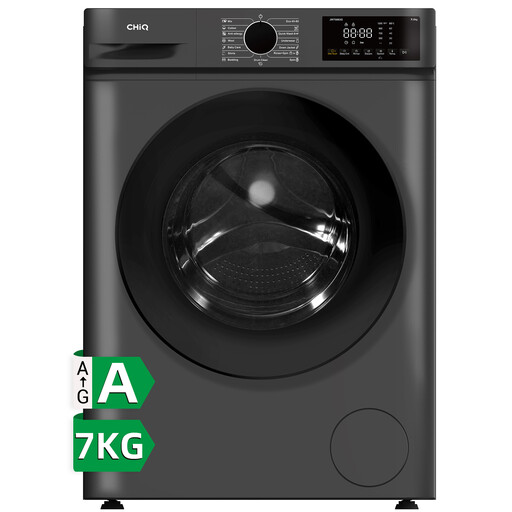 No image available
Compare this model with the space allocated to you if you’re considering a 7 kg washing machine. Remember to allow extra room for connections and for the door to open.
The product information lists a depth of 47 cm. The product title states 1200 rpm and 16 programmes.
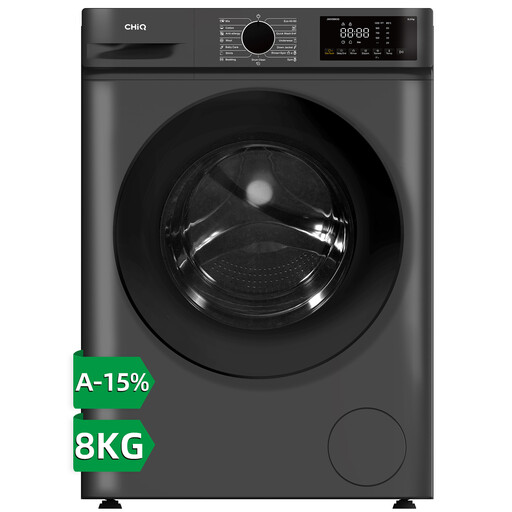 No image available
Compare the capacity with the amount of laundry you usually wash, and check that the machine will fit in the allocated space with enough room to use it.
The product information lists a depth of 601 mm and spin noise of 69 dB(A). This noise rating alone doesn’t tell you how securely the machine will stand on your floor.
8 kg capacity; 1400 rpm; 16 programmes.
Only if the care label allows washing at 40 °C or 60 °C and the clothes are normally soiled. For other care labels or levels of soiling, check the manual to find a suitable programme. The name eco 40-60 doesn’t mean that every cycle literally reaches 40 °C or 60 °C.
Follow the manual for your chosen model. Bosch recommends a stable surface, accessible water and drain connections, an earthed socket and removal of the transit bolts. Once connected, also check for leaks. Agree in advance how the shared space will be used.
Agree who will clean the machine and follow its maintenance instructions. Milieu Centraal recommends running a 60 °C wash regularly to help reduce residue and unpleasant smells.
No. According to ACM ConsuWijzer, the legal guarantee doesn’t have a fixed two-year limit: when used normally, a product must last as long as you could reasonably expect. The retailer is your point of contact if the product breaks down too soon; what you can expect depends on the circumstances.
Don’t assume that you’re allowed to install a connection yourself. Check the arrangements for using the space and discuss any changes with the responsible party. The Dutch government distinguishes between minor, easily reversible changes in rented homes and renovations that require permission; this general guidance doesn’t necessarily determine what’s allowed in your shared laundry room.