
Renters short on depth
If a front-loader fits widthways, make sure you also measure its depth, the space for hoses and the clearance needed to open the door. The Consumentenbond points out that ‘slim’ can refer to either width or depth.


First, choose a machine that fits the space available and lets you select a regular cotton programme at 60 °C, if the towels’ care label allows it. A shallow front-loader may be a better fit where depth is limited; a top-loader can be a good option if there isn’t enough width or space in front of the machine, as long as there’s room to open the lid above it. Measure the space needed for connections and opening the machine too, and check the manual for the exact model: according to the Consumentenbond, Eco 40-60 is not suitable for dishcloths that need to be hygienically clean.
If a front-loader fits widthways, make sure you also measure its depth, the space for hoses and the clearance needed to open the door. The Consumentenbond points out that ‘slim’ can refer to either width or depth.
A top-loader may fit if there’s little room beside or in front of the machine, provided there’s enough clearance above it to open the lid. The Consumentenbond notes that a top-loader can’t go under a fixed worktop.
If you wash kitchen towels with other laundry, you can choose a capacity to suit your whole laundry routine. Milieu Centraal recommends choosing a drum size that suits your household; the energy label also gives details of water consumption and spin noise.
Choose this option: if a front-loader fits widthways but you’re short on depth and there’s room for the door to open forwards. Haier lists the HW70-BP14357TU1’s dimensions as 595 × 468 × 850 mm (width × depth × height).
Keep in mind: the stated depth doesn’t automatically include the space needed for hoses and operation. Check that the exact model also has a suitable cotton programme at 60 °C.
Choose this option: if width or space in front of the machine is limited and there’s enough clearance above it. AEG lists the LTR6162K as 397 mm wide, with a capacity of 6 kg.
Keep in mind: a top-loader won’t fit under a fixed worktop. The Consumentenbond reports that the top-loaders it tested wash less effectively than standard front-loaders; this test finding doesn’t automatically apply to every individual model.
Choose this option: if there’s enough room for both the machine and your shared laundry. Bosch lists the WGE02404NL as having a capacity of 7 kg and dimensions of 848 × 598 × 588 mm (height × width × depth).
Keep in mind: its greater depth may make it unsuitable for a compact rented home. Choose a drum size based on all the laundry you plan to wash together, not just the towels.
Start with the wash programme and the space available for installation. Then compare capacity, consumption and noise for shared use.
| What to consider | What should you check? | Who is this important for? |
|---|---|---|
| Washing shared towels | Check the care label and whether the exact model has a regular cotton programme at 60 °C. The Consumentenbond advises against using Eco 40-60 for dishcloths that need to be hygienically clean. | If I want a wash programme for shared kitchen towels that’s suitable for their care label, I make that my priority; around 36% of consumers put washing the towels first. |
| Fit and access | Measure the width, depth and height, as well as the space needed for connections and to open the door or lid. Check whether it’s a front- or top-loader. | If there’s little room to spare in an alcove, I want to know that both the machine and its door or lid will really fit; around 29% of consumers give fit and access top priority. |
| Capacity, consumption and noise | Choose a capacity to suit all the laundry you plan to wash. Compare the energy label’s consumption per 100 Eco 40-60 cycles, water consumption and spin noise; these figures aren’t an estimate of the cost of a regular 60 °C programme. | If housemates also combine their everyday laundry, I want a suitable drum size and a clear picture of label consumption and noise; around 21% of consumers prioritise these aspects of shared use. |
| Connections and rented homes | Check the water supply, drainage, electrical connection, installation instructions and whether any work on the property is needed. Ask the retailer what delivery and installation services are included. | If I need to connect the machine in a rented home, I want to know in advance whether the space can be used without alterations; around 14% of consumers start by considering connections and rental requirements. |
The Consumentenbond advises against using this programme for dishcloths that need to be hygienically clean. The programme name doesn’t confirm that the wash is carried out at 60 °C.
Check whether the model has a regular cotton programme that can be set to 60 °C, and follow the towels’ care label.
Hoses and the space needed to open a door or top lid also need to be taken into account. A top-loader also can’t be installed under a fixed worktop.
Measure the whole space and check the installation instructions for the exact model before you order.
Check the full model number and the specifications for the exact version so you can assess the right dimensions, capacity and programmes.
Compare the product details with the manufacturer’s information for that model, and check that the required 60 °C programme is available before you buy.
Haier lists the HW70-BP14357TU1 as a 7 kg front-loader with an appliance depth of 468 mm, which may be useful where depth is limited.
AEG lists the LTR6162K as a 6 kg top-loader, 397 mm wide. It may suit a narrow space where there’s room above the machine.
According to Bosch, the WGE02404NL is a 7 kg front-loader with an appliance depth of 588 mm; allow extra space for connections and use.
Beko lists the BM3WFU3741S as a 7 kg front-loader with a depth of 49,6 cm, which may be relevant if depth is limited.
Whirlpool lists the TW 622S FRESHCARE BE as a 40 cm-wide top-loader, which may be useful when space is tight.
This selection includes front-loaders for shared laundry and compact washing needs. For each model, check the space required and whether its programme is suitable for your kitchen towels’ care label.
 Image unavailable
A front-loader for anyone who wants to wash kitchen towels with their everyday laundry.
The product title lists 8 kg, 1400 rpm and Energy Class A-40%. Check the full installation space required and whether the exact model has a suitable cotton programme at 60 °C.
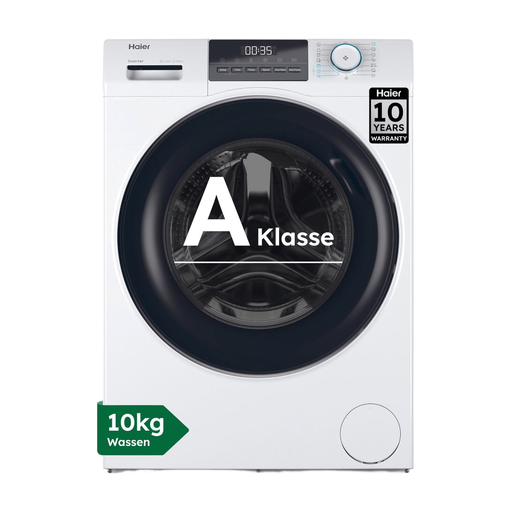 Image unavailable
The product listing describes a front-loader for household laundry; its larger capacity may be useful if you also combine other laundry loads.
The title lists 10 kg and 1400 rpm. Check the dimensions for the exact model and whether a regular cotton programme can be set to 60 °C.
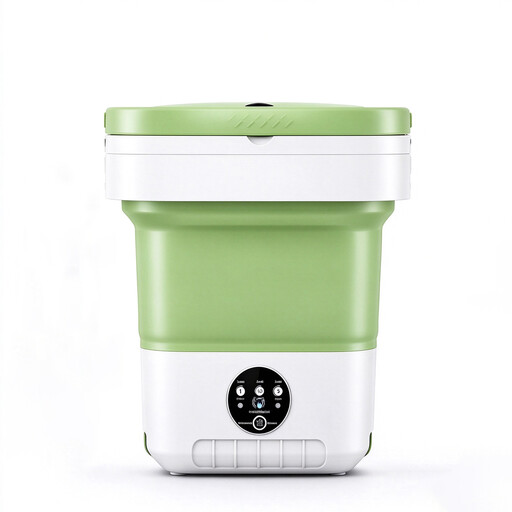 Image unavailable
The product listing describes a portable machine for small, separate loads; this is a different use from washing a shared household load.
The title lists 12 litres and a spin basket. The product information gives a maximum load of 1,5 kg and says it’s for small items of clothing. For kitchen towels, check that the exact programme and capacity suit the care label and the load.
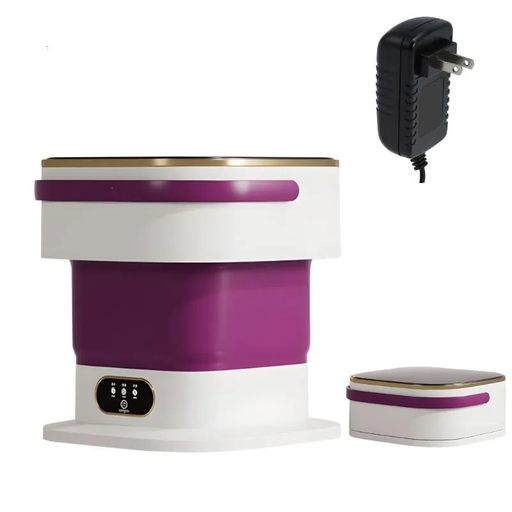 Image unavailable
The product listing describes a portable machine for small, separate loads; don’t consider it a replacement for your full shared laundry routine.
The title lists 15 litres and a spin basket. The product information gives a maximum load of 1,9 kg and says it’s for small items of clothing. For kitchen towels, check that the exact programme and capacity suit the care label and the load.
 Image unavailable
A front-loader for anyone looking for a machine for shared household laundry who has limited depth available.
The product title lists 7 kg and a 400 mm slim design. Check the full appliance dimensions and the space needed for connections; the slim-design description doesn’t confirm the installation depth required. Also check whether the exact model has a regular cotton programme at 60 °C.
No. The Consumentenbond advises against using Eco 40-60 for dishcloths that need to be hygienically clean. Choose a regular cotton programme that can be set to 60 °C, and check that the towels’ care label allows this temperature.
Voedingscentrum advises changing dishcloths daily and washing used cloths at 60 °C. Hang wet cloths up to dry.
According to the Dutch Government, you don’t need your landlord’s permission for a change that can be reversed without significant cost. Whether new pipework or a different connection falls into this category depends on the work involved; discuss it with your landlord beforehand.
Check that the space is sturdy and level, and that the water supply, drainage and electrical connection are suitable. Follow the instructions for removing transit bolts and levelling the machine, and ask the retailer in advance which delivery and installation services are included.
According to the Dutch Government, if a product is faulty, the seller must provide an appropriate solution. The Dutch Government says there is no fixed statutory guarantee period in the Netherlands; a manufacturer’s guarantee or an extended guarantee doesn’t replace your statutory rights.