What should you look for when choosing?
First decide whether the machine will mainly wash kitchen textiles or also regularly handle shared household laundry. Then choose the drum capacity and check that the required programme and the machine’s dimensions suit your needs.
Drum mainly for kitchen textiles
A good fit if: housemates wash their clothes separately and there’s usually only a small amount of kitchen laundry at a time.
Bear in mind: there’s less room to include other shared laundry in the same wash.
Drum for shared laundry
A good fit if: the same machine also regularly handles towels or other laundry from several housemates.
Bear in mind: extra capacity offers little benefit if the drum is usually only partly full.
| Consideration |
What should you check? |
Who is this important for? |
| Washing at 60°C |
Check the care label on the towels and whether the manual for the exact machine code lists a standard cotton programme that can be set to 60°C. Don’t confuse this with Eco 40-60. |
I want to be able to wash used kitchen towels according to the care advice, rather than relying on the programme name alone. That’s why around 36% of consumers prioritise a cotton programme with a selectable 60°C setting. |
| Shared costs |
Compare energy and water use on the same label basis. If you often wash at 60°C, look separately for figures for that programme and agree how housemates will split the costs. |
If we’re paying together, I want to be able to share the costs without treating the Eco label as a measure of every wash. Around 29% of consumers prioritise shared purchase and running costs. |
| Drum capacity |
Choose a capacity that suits your usual shared load, rather than basing it only on the amount of kitchen laundry. |
I want to know whether the same machine will also suit the laundry we regularly wash together, without automatically choosing more drum space than we use. Around 21% of consumers prioritise a capacity that meets their needs. |
| Space and noise |
Measure the space and compare the height, width and depth of the exact model. Also check the spin noise level shown on the energy label. |
If the machine will be in a limited space or near living areas, I want to know in advance whether it will fit and how its noise level is rated. Around 14% of consumers prioritise space or noise. |
Washing machines at Joybuy
This Joybuy selection includes freestanding front-loaders with capacities of 7 and 8 kg. Check each model to see whether 60°C can be selected for a suitable cotton programme.
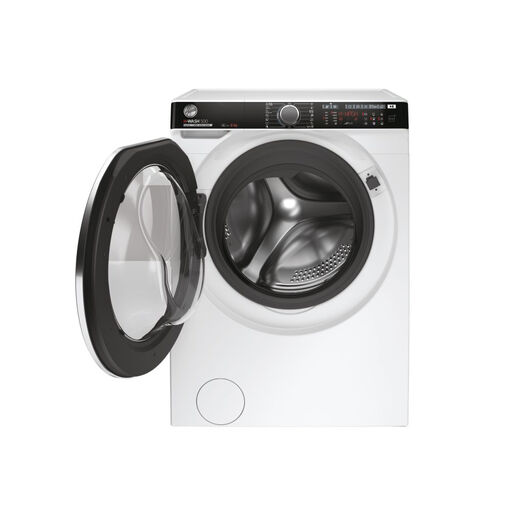 Image unavailable
HWP 48AMBC7/1-S front-loading washing machine
Could suit you if the machine will also regularly handle shared household laundry; for kitchen towels, check the suitable programme and temperature.
The product name lists 8 kg and 1400 RPM. The product description mentions 16 programmes and a Hygiene programme that maintains 60°C for more than 20 minutes; check that this is suitable for the towels’ care label.
View at Joybuy
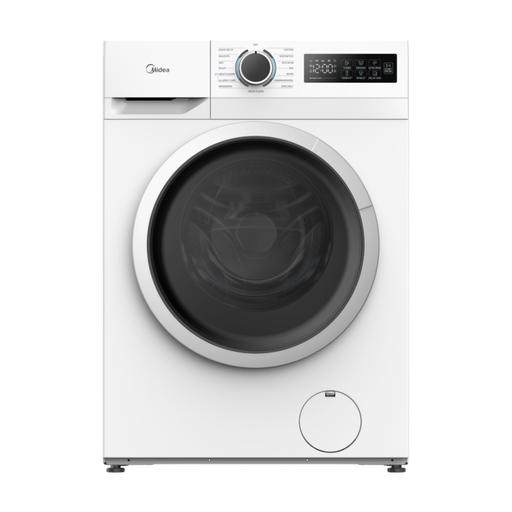 Image unavailable
Midea MF110W80BA10/W-NL washing machine
The capacity could suit you if the same machine will also handle other housemates’ laundry; check the temperature setting for kitchen towels against the exact model code.
The product name lists 8 kg and 1400 RPM. The product description mentions cotton, wool and Eco programmes, among others.
View at Joybuy
 Image unavailable
Beko BM3WFU3741S freestanding washing machine
Could suit a typical load of kitchen textiles; check whether the 60°C setting you need is available on the programme you plan to use for the towels.
The product name lists 7 kg, 1400 rpm and 15 programmes. The product description mentions cotton and Hygiene+ programmes.
View at Joybuy
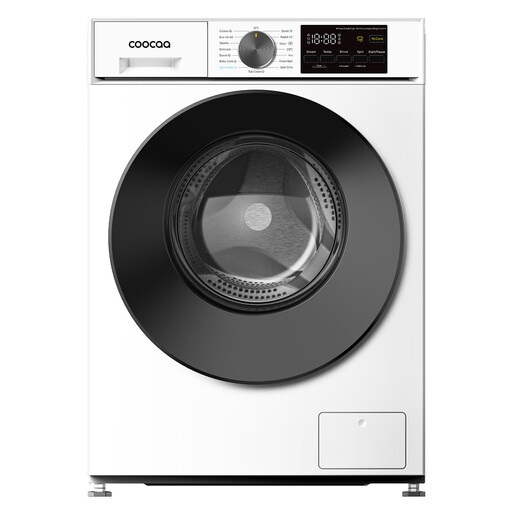 Image unavailable
Coocaa Galaxy A3 Series F702A3AВC0
The 7kg capacity could suit a household that also does other everyday laundry. Check whether the temperature setting you need can be used with a suitable programme for the towels.
The product name lists 7 kg and 15 programmes. The specifications list a 60°C temperature setting, but do not confirm that it can be combined with a cotton programme.
View at Joybuy
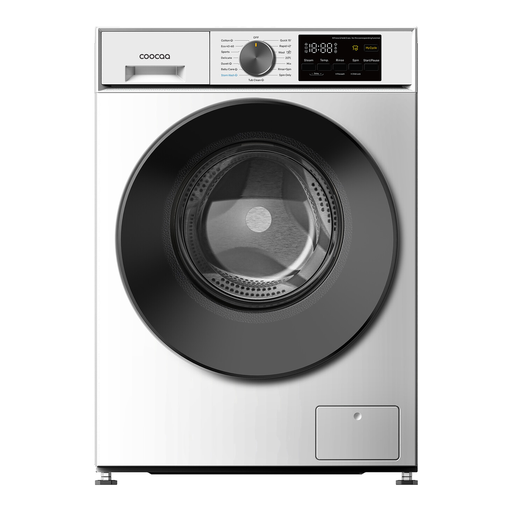 Image unavailable
Coocaa Galaxy A3 Series F802A3ABC0
The 8kg capacity could suit you if the machine will also regularly handle larger shared loads. Check separately whether 60°C is available on a suitable programme for the towels.
The product name lists 8 kg and 15 programmes. The specifications list a 60°C temperature setting, but do not confirm that it can be combined with a cotton programme.
View at Joybuy
Frequently asked questions
Is Eco 40-60 the same as washing at 60°C?
No. In machines tested by the Consumers’ Association, temperatures measured during Eco 40-60 ranged from 20 to 50°C. The association does not recommend the programme for washing-up cloths that need to be washed hygienically. For towels whose care label allows 60°C, choose a suitable cotton programme at that temperature and check the machine manual.
How should you store and wash used shared towels?
The Netherlands Nutrition Centre advises changing washing-up cloths daily, washing used kitchen towels at 60°C and hanging wet cloths up to dry. Check the textile care label too.
What costs should housemates discuss before buying?
Agree who will buy the machine and how you’ll split the running costs. Also ask about any delivery and installation charges before you complete the purchase; according to the Dutch Government, the seller must disclose additional costs.
How long is the statutory guarantee on a washing machine in the Netherlands?
There is no fixed statutory guarantee period in the Netherlands. According to the Dutch Government, the remedy for a faulty product depends on what you could reasonably expect from it; the seller must provide a solution. Any additional guarantee is separate from this.


