What should you look for when choosing?
Start with the size of your typical load, then compare the wash programmes, noise, energy and water use, and the space available for installation.
| What to consider |
What to look for |
Who is this important for? |
| Washing pillowcases |
Follow the care label and check which programmes and temperatures are suitable. |
If I want to wash pillowcases without overlooking the fabric or care label, I look at the programme and temperature. Around 26% of consumers give suitable washing for pillowcases and any hygiene needs top priority. |
| Drum capacity |
Weigh a typical load and decide whether you wash your bedding together. |
If we regularly combine bedding, I want enough space without choosing a drum that is often too large for our usual washes. Around 21% of consumers put having enough capacity for a combined load first. |
| Noise |
Compare the spin noise figures on the same label basis and check where the machine will go. |
If bedrooms are close to the laundry room, I want to know how noisy the machine is and whether it will stand securely. Around 21% of consumers give reducing noise disturbance for housemates top priority. |
| Energy and water use |
Compare energy use per 100 Eco 40-60 cycles and water use per cycle on the EU energy label. |
If I want to compare the energy and water use of a shared machine, I look at the figures on the energy label. Around 16% of consumers put being able to take shared usage into account first. |
| Placement and connections |
Measure the machine, access routes and installation space; also check the existing connections and the model's manual. |
If the shared laundry room is cramped, I want to know in advance whether the machine will fit through the access routes and in the space available. Around 16% of consumers give suitable placement and connections top priority. |
Washing machines at Joybuy
This selection includes front-loading machines with capacities from 7 to 11 kg, plus a foldable mini washing machine for small loads. Choose according to the washing you usually do; according to the Dutch Consumers' Association, a large drum only makes sense if you can fill it.
 No image available
Samsung WW90DG6U25LE, 9 kg, white
The stated capacity may suit larger loads that housemates regularly wash together; only choose this size if you can usually fill the drum properly.
Capacity: 9 kg.
Maximum spin speed: 1400 rpm; stated spin noise level: 72 dB.
Energy use: 44 kWh per 100 cycles.
Dimensions: 600 × 550 × 850 mm. The description mentions Wi-Fi control, Quick 15 and Hygienic Steam.
Joybuy
 No image available
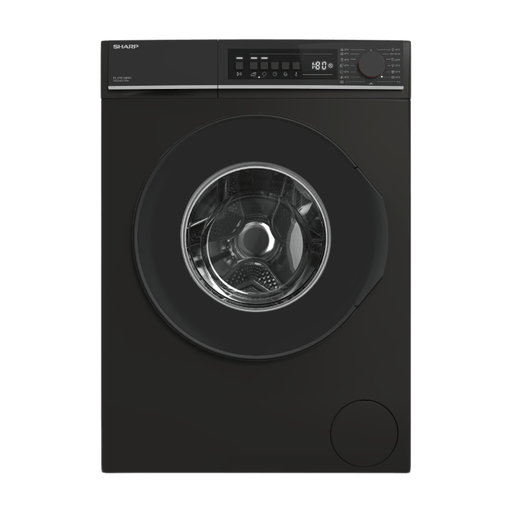
SHARP ESNFB714BBNACB, 7 kg, black
The stated capacity may suit smaller typical loads or separate washes; compare it with the amount you actually wash.
Capacity: 7 kg.
Maximum spin speed: 1400 rpm; stated spin noise level: 77 dB(A).
Energy class: A. The description lists 15 wash programmes, including programmes for delicate fabrics, wool and hand washing.
The product description also mentions a remaining-time display and child lock.
Joybuy
 No image available
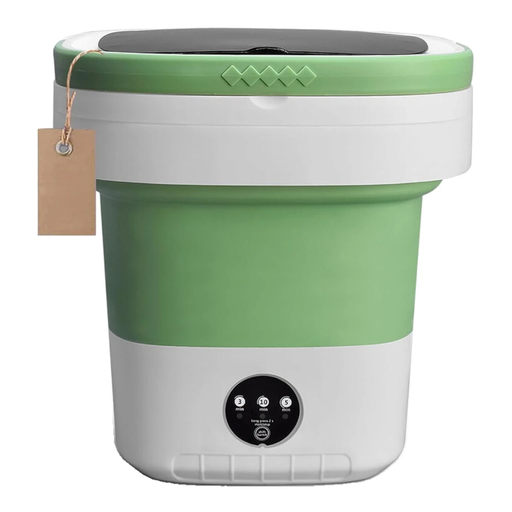
Foldable mini washing machine, 12 litres
The description positions this machine for small loads. Check specifically whether a pillowcase will fit and whether the programme is suitable for its care label.
Capacity: 12 litres. The description mentions a foldable design and a separate spin-drying basket.
Joybuy
 No image available
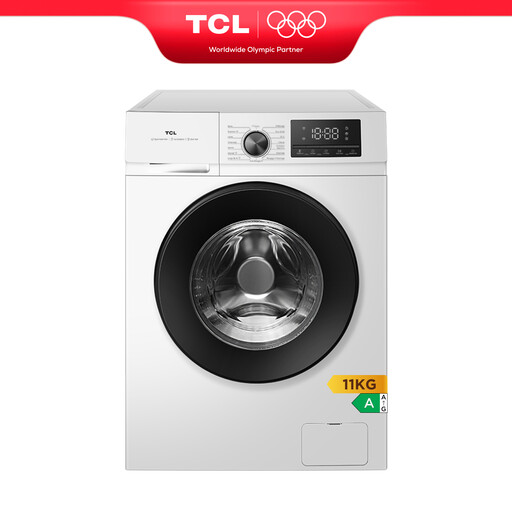
TCL FF2411WA2NL, 11 kg
The stated capacity may suit larger combined loads if housemates regularly wash together; consider whether you can usually fill the drum.
Capacity: 11 kg; maximum spin speed: 1400 rpm.
The description lists 16 programmes, including Eco 40-60, Bedding and Delicate.
Also mentioned: Quick Wash 15 min, a delayed end time of 0–24 hours and the option to add laundry during a cycle.
Joybuy
 No image available
Midea MF110W80BA10/W-NL, 8 kg, white
The stated capacity may suit housemates who regularly wash medium-sized loads together; choose the drum size to match your usual washes.
Capacity: 8 kg; maximum spin speed: 1400 rpm.
The description lists 16 programmes, including Bedding, and a stated spin noise level of 72 dB.
Also mentioned: AquaStop, a delayed end time of 0–24 hours and the option to add laundry during a programme.
Joybuy
Frequently asked questions
Should pillowcases always be washed at 60 °C?
No. Check the care label first, and take the level of soiling and any specific hygiene needs into account. Milieu Centraal says 60 °C can sometimes be advisable, for example in the case of a contagious illness or a house dust mite allergy; it is not a standard setting for all pillowcases.
Does the Eco 40-60 programme always wash at 60 °C?
No. The European Commission describes Eco 40-60 as a programme for normally soiled cotton that can be washed at 40 °C or 60 °C according to its care label. Don't assume the programme name means a set washing temperature or hygiene result.
What should I check before using the washing machine in a shared space?
Check the model's manual, its dimensions, that it is installed on a stable, level surface, and the existing water, drainage and electrical connections. Also check in advance which installation work is included with your chosen delivery service; if you have any concerns about an electrical connection, get them resolved first.
What energy label must a new washing machine have in the Netherlands?
A new domestic washing machine offered for sale in the Netherlands must have the applicable EU energy label; this does not mean every model has to be class A. The European Commission states that the scale for washing machines has run from A to G since 1 March 2021; the Dutch government also describes the energy label as mandatory for household appliances.
Who should I contact if a washing machine we bought together breaks down too soon?
For a consumer purchase, ACM ConsuWijzer says the seller must put things right free of charge if the product breaks down too soon under normal use and does not meet what you could reasonably expect. There is no automatic statutory two-year warranty period for every washing machine. If you buy one together, agree who will be the purchaser and main point of contact.


