What should you look for when buying?
First, weigh a typical sorted towel load and compare it with the machine’s stated capacity for cotton. Then check the available space, programmes and consumption figures on a like-for-like basis.
| What to consider |
What to look for |
Who is this important for? |
| Capacity |
Compare a typical towel load with the machine’s stated capacity for cotton; the Dutch Consumers' Association makes clear that the stated capacity applies to cotton washes. |
If we usually wash towels together, we want the machine to handle our usual load without choosing more capacity than we need. Around 29% of consumers give the right capacity their highest priority. |
| Wash programmes |
Check which cotton programmes are suitable for the care label and whether a programme you want to use has a lower maximum load. |
If we mainly want to know which programme suits our towels, we check the care label and load size. Around 24% of consumers put programme choice and washing results first. |
| Noise and scheduling |
Compare spin-cycle noise levels using the same label information, and check programme duration and any delay-start options. |
If housemates do their washing at different times, or the machine is close to a living room or bedroom, we want to weigh up noise and scheduling. Around 18% of consumers consider this their main concern. |
| Consumption |
Compare energy labels and the stated electricity and water consumption on a like-for-like basis, and consider these alongside the load you usually wash. |
If we share the machine frequently, we want to keep an eye on ongoing electricity and water use. Around 17% of consumers put this at the top of their list. |
| Available space |
Measure the height, width and depth, and allow room for connections, ventilation and opening the door or lid. |
If space is limited, we want to be sure the machine will fit and be easy to load. Around 12% of consumers give available space their highest priority. |
Washing machines on Joybuy
These freestanding washing machines are suited to shared cotton loads. Compare the stated capacity with the size of the towel load you usually wash.
 Image unavailable
Samsung WW90DG6U25LE, 9 kg, 1400 rpm, energy class A
The stated capacity may suit housemates who regularly wash larger cotton loads together.
The product name lists AI Ecobubble™, SuperSpeed and Wi-Fi (SmartThings). SuperSpeed is specified for 5 kg of laundry, not the full nominal capacity.
View on Joybuy
 Image unavailable
Candy GD 48B9-S, 8 kg, 1351 rpm, energy class A
A stated capacity of 8 kg gives you a useful point of comparison if you want to match a shared towel wash to the size of your actual load.
The product name lists a steam function.
View on Joybuy
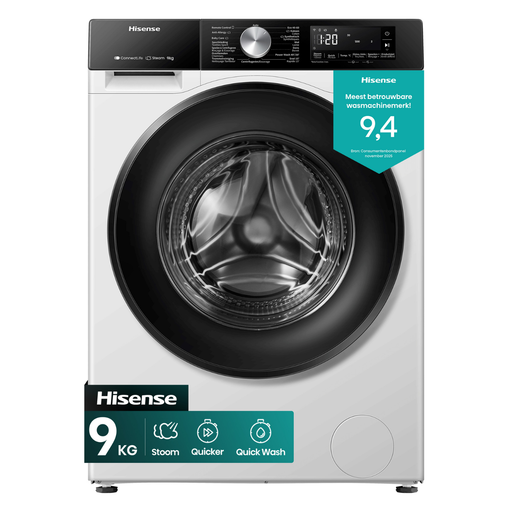 Image unavailable
Hisense WF3S9045BW3/BLX, 9 kg, 1400 rpm, energy class A
The stated capacity may be useful if you regularly wash several towels together.
The product name lists a spin speed of 1400 rpm and energy class A. Compare its consumption and spin-cycle noise with the labels of other models.
View on Joybuy
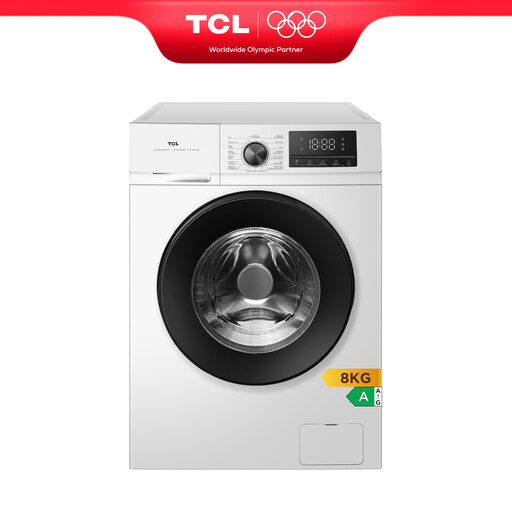 Image unavailable
TCL FF2408WA2, 8 kg, 1400 rpm, energy class A
The stated capacity of 8 kg can help you compare this model with the size of your usual shared towel load.
The product name lists a BLDC motor and Steam Wash. Check which programmes and load sizes are suitable for your fabrics on the exact model.
View on Joybuy
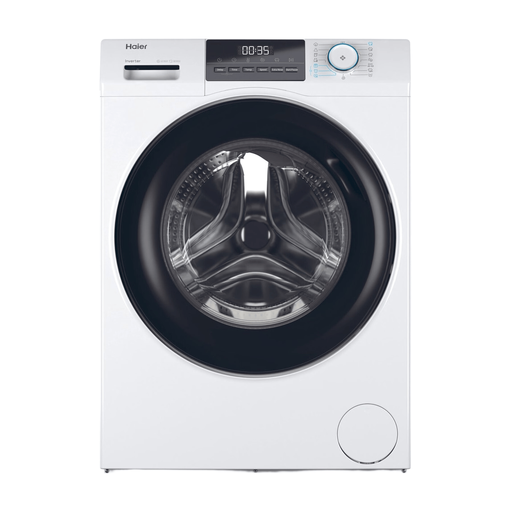 Image unavailable
Haier HW90-BP14929A-S i-Pro 1, 9 kg, 1400 rpm, energy class A
The stated capacity may suit households where housemates often build up a larger shared cotton load.
The product name lists a capacity of 9 kg, a spin speed of 1400 rpm and energy class A. Compare the labels and capacity with your usual load before choosing a model.
View on Joybuy
Frequently asked questions
Does a machine for bath towels always need to be able to run a 60 °C wash?
No, don’t make 60 °C a fixed requirement for every towel wash. Follow the care label and consider what the laundry actually needs. The Dutch Consumers' Association explains that Eco 40-60 is intended for normally soiled cotton that can be washed at 40 or 60 °C according to the label; the name doesn’t mean the wash reaches 60 °C.
What should you measure before installing a washing machine in a shared house?
Measure the height, width and depth of the installation space, and check there’s room for hoses, ventilation and opening the door or top lid. The Dutch Consumers' Association highlights the need for this extra space. Follow the machine’s instructions when installing it.
Who can help if a washing machine you’ve bought is faulty?
If a product is faulty, the seller must offer a solution. According to the Dutch government, there is no fixed statutory warranty period in the Netherlands: what you can expect from a product depends, among other things, on the product itself and the information provided at the time of purchase. The manufacturer’s warranty is in addition to your statutory rights.
Which information on the energy label is useful when comparing models?
Compare the energy labels and the information they give about the energy and water use of the specific machines. The Dutch government states that washing machines must have an energy label, and that the ratings for these appliances run from A to G.


