
Washing uniforms made from different fabrics
You want to tackle stains without ignoring the care instructions for different fabrics. GINETEX and the Consumentenbond recommend following the care labels.


Start with the uniform care labels and the sorted load you usually wash together. Then choose the drum capacity and programmes. Milieu Centraal and the Consumentenbond recommend choosing a capacity that suits your usual loads. In a shared household, also compare spin noise, available space, water protection and the energy label figures: a larger or faster machine isn’t automatically better for small or delicate loads.
You want to tackle stains without ignoring the care instructions for different fabrics. GINETEX and the Consumentenbond recommend following the care labels.
You want the drum and programmes to suit the sorted loads that several people wash together. Milieu Centraal and the Consumentenbond recommend matching the capacity to your usual laundry loads.
You’re particularly concerned about noise and vibrations during the spin cycle. The Consumentenbond points out that this stage can be especially noisy.
Start with the uniform care labels and the sorted loads you usually wash together. Then consider the impact of noise, energy and water use, and where the machine will go.
| What to consider | What to look for | Who is this most important for? |
|---|---|---|
| Washing uniforms according to the care label | Check the permitted temperature and suitable programme for cotton, synthetic or delicate fabrics. Follow the garment care label (GINETEX; Consumentenbond). | When I wash uniform items made from different fabrics, I want to be able to choose the right programme for each garment. Around 31% of consumers prioritise following the care label. |
| Capacity and wash duration | Weigh a typical sorted load and check the load size and duration for each programme. The maximum capacity doesn’t necessarily apply to delicate laundry (Consumentenbond). | When several housemates use the machine, I want to be able to plan loads without choosing a drum that’s too large for our usual laundry. Around 25% of consumers prioritise shared washing capacity. |
| Noise and vibrations | Compare spin noise on the same label basis and check that the floor is firm and level (Consumentenbond). | If the laundry room is close to a bedroom or living space, I want to minimise disruption during the spin cycle. Around 19% of consumers prioritise keeping the home peaceful. |
| Energy and water use | Compare kWh per 100 cycles and water use based on the eco 40-60 programme; other programmes may use different amounts (European Commission). | Anyone who does laundry frequently will want to consider energy and water use, without assuming the label figures apply to every uniform programme. Around 13% of consumers prioritise running costs. |
| Suitable placement and water protection | Measure the available space and check the dimensions and water protection features of the exact model. These features vary between machines (Consumentenbond). | If the laundry area is cramped or a leak could affect housemates, I want to know whether the machine will fit and what protection it has. Around 12% of consumers give placement and limiting the risk of leaks top priority. |
The stated maximum applies to cotton; programmes for delicate or synthetic garments may have a lower load limit. A full drum may therefore not be suitable for the care a uniform needs.
Weigh a typical sorted load and check the maximum load for the programme that matches the care label.
The comparable energy and water figures on the label are for eco 40-60. They don’t automatically apply to a quick uniform programme or another setting.
Compare label figures on the same basis, then check which programmes are suitable for the uniform care labels.
The spin cycle is usually the noisiest part; where the machine is installed can also cause extra vibrations (Consumentenbond).
Compare the stated spin noise and, before installation, check that the floor is firm and level and that the machine is level.
One water protection feature may address a different problem from another, so don’t assume every model offers the same protection.
Check the water protection features of the exact model and consider the potential impact of a leak where you plan to install it.
The WAN2827BNL is a front-loading machine with a stated capacity of 8 kg, offering a useful benchmark for sorted loads.
The BM3WFT3841W is an 8 kg front-loading machine with programmes for synthetic and delicate laundry, as well as a quick programme.
The F4X5009THB is a front-loading machine with a stated capacity of 9 kg, suited to households that regularly wash larger sorted loads.
The LTR87ULM top-loader is an alternative if you have limited width available.
The Joybuy options below are front-loading machines with stated capacities for sorted laundry in a shared household. Check the care label for each uniform and the permitted load size for each programme.
 No image available
An option to consider if you’re looking for a front-loader with a programme for delicate fabrics and a capacity of 8 kg.
Stated specifications: 1400 rpm, 47 kWh per 100 eco cycles and a depth of 57.7 cm. The description mentions a ProTex drum and an Anti Allergy Vapour programme.
 No image available
An option if you need programmes for delicate, woollen or synthetic laundry as well as cotton.
Stated specifications: 8 kg, 1400 rpm, 47 kWh per 100 cycles and 76 dB(A) during the spin cycle. The description lists 16 programmes, including a 15-minute programme for lightly soiled laundry, and dimensions of 84.5 × 60 × 54.6 cm.
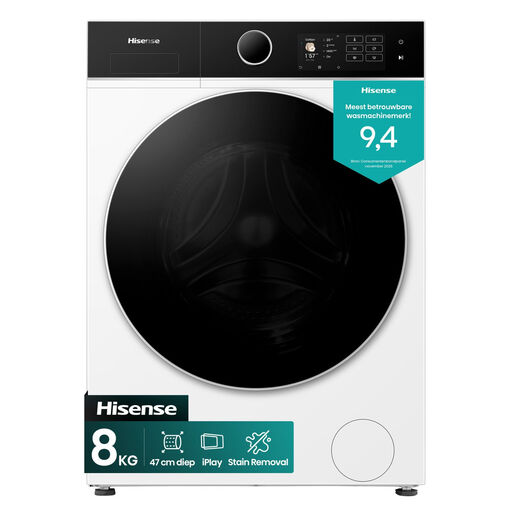 No image available
An option to consider if you’re looking for a front-loader with a stated depth of 47 cm.
Stated specifications: 8 kg capacity and energy rating A(-30%). The description mentions a steam function, Power Wash and Quicker Wash.
 No image available
An option if you need programmes for synthetic or delicate fabrics, as well as a quick programme for lightly soiled laundry.
Stated specifications: 8 kg, 1400 rpm, 47 kWh per 100 cycles and 76 dB(A) during the spin cycle. The programme range includes wool/hand wash and a 14-minute programme for lightly soiled laundry.
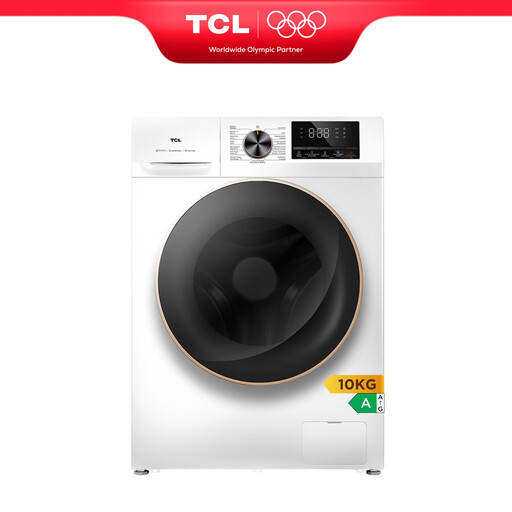 No image available
An option to consider if you regularly wash larger sorted loads together; the capacity is only useful if it suits your usual load sizes.
Stated specifications: 10 kg, 1200 rpm, 51 kWh per 100 cycles and 72 dB during the spin cycle. The description mentions a Quick 15’ programme, a steam wash function, a child lock and a delayed end time of up to 24 hours.
No. Check the care label for each garment. The European Commission describes eco 40-60 as a programme for normally soiled cotton laundry that can be washed at 40 °C or 60 °C according to its care label. Uniform items with gentler care instructions need a suitable alternative programme.
Measure the available space and check the floor, water supply, drain and earthed socket. Remove the transit bolts before use and level the machine according to the instructions.
Sort laundry according to the garment care labels, use the right amount of detergent and select the appropriate programme. Milieu Centraal recommends running a 60 °C wash once a month to maintain the machine and remove detergent and dirt residues. Don’t use a uniform for this if its care label doesn’t allow that temperature.
Compare energy label figures on the same programme basis, bearing in mind that they don’t automatically apply to every uniform programme. The European Commission lists energy use, water use, programme duration and noise among the information shown on washing machine labels.
In the Netherlands, faulty products are covered by the statutory legal guarantee, which has no fixed statutory time limit. The Dutch Government states that the seller must provide an appropriate solution.