
Family with soiled school clothes
You want to wash clothes made from different fabrics, with visible stains. Check the care labels and choose suitable programmes; the Consumers’ Association recommends following the care label.


Choose the drum capacity to suit your usual loads, and check that the programmes are suitable for both the care label and how soiled the clothes are. According to the Consumers’ Association, a quick programme is intended for a small, lightly soiled load; a full programme is often more suitable for a more thorough wash. Also measure the space available and compare energy labels on a like-for-like basis.
You want to wash clothes made from different fabrics, with visible stains. Check the care labels and choose suitable programmes; the Consumers’ Association recommends following the care label.
Sometimes you need a few lightly soiled items washed quickly. Check how much laundry each quick programme can take; the Consumers’ Association describes quick programmes as being for small, not very dirty loads.
You alternate between small loads and the usual family wash. Milieu Centraal recommends choosing a drum capacity that suits the amount of laundry you usually wash.
First, work out what drum capacity suits your usual loads. Then compare the programmes for your fabrics and loads: the Consumers’ Association points out that a quick programme may be less effective at washing, rinsing and spinning than a full programme.
| Key consideration | What should you check? | Who is this important for? |
|---|---|---|
| Cleaning and fabric type | Check the programmes for cotton, synthetics and delicates, and follow the care label. | If I wash school clothes made from different fabrics and with varying levels of soiling, I want to choose a suitable programme. Around 33% of consumers prioritise careful washing that is suitable for the fabric. |
| Small, urgent load | Check both the programme duration and the maximum load for the quick programme. | When I need a few lightly soiled items quickly, I check whether the programme is suitable. Around 27% of consumers prioritise speed for a small load. |
| Drum capacity | Compare the drum capacity with your usual loads and check the limit for each programme. | If I alternate between small and larger washes, I look for a capacity that suits the laundry I usually wash. Around 20% of consumers prioritise choosing a suitable drum capacity. |
| Consumption and installation | Compare energy labels on a like-for-like basis and measure the available space, including connections and door clearance. | If the machine runs often or the space is tight, I want to take both the label information and the dimensions into account. Around 20% of consumers start by looking at consumption and a suitable installation space. |
Programmes for synthetics or mixed fabrics may have a lower maximum load than the drum capacity.
Check the manual for your chosen model to find out which programmes are suitable for the school clothes you want to wash.
According to the Consumers’ Association, quick programmes may be less effective at washing, rinsing and spinning than full programmes.
Use a quick programme when the load is small and lightly soiled, and the care label allows it. Also check the programme’s load limit.
The EU energy label compares consumption using the eco 40-60 programme; this figure does not necessarily tell you how much another programme uses.
Compare label figures with one another and check other programmes separately if you use them often.
Taking away a similar old appliance does not automatically mean that connecting the new machine is included.
Before you order, check separately what is included for delivery to the installation space, connection and collection of the old appliance.
The BM3WFT3841W is a front-loading machine with an 8 kg capacity and programmes for different fabrics.
The Serie 2 WGE03408NL is a front-loading machine with an 8 kg capacity; its dimensions can help you decide whether it will fit in your chosen space.
The LF628600 has an 8 kg capacity and ProSense load-sensing technology, a feature worth considering if your loads vary.
The WW90DG6U85LEU3 has a 9 kg capacity and is worth comparing if it suits your usual laundry loads and available space.
The WEC395 WPS PWash&Steam&8kg is a front-loading machine with an 8 kg capacity and QuickPowerWash.
This selection includes front-loading machines for changing family laundry loads, with models whose product names mention quick programmes or specific wash functions. Check which load sizes and fabrics are suitable for each programme on each model.
 No image available
Worth considering if you alternate between larger family loads and smaller washes.
The product name lists 9 kg, 1400 rpm, AI Ecobubble™, SuperSpeed, Wi-Fi with SmartThings, 6000 Series and energy class A.
 No image available
The listed features may be useful to compare if you wash loads of different sizes and mixed fabrics.
The product name lists ProSteam, PreciseWash, an inverter motor and energy class A.
 No image available
A model to compare if you’re looking for a front-loading machine for loads of varying sizes.
The product name lists 16 wash programmes and a maximum spin speed of 1400 rpm.
 No image available
Worth comparing if you alternate between different fabrics and smaller loads.
The product name lists EnergySpin, a ProSmart inverter motor and energy class A.
 No image available
The listed Quick Wash option may be worth considering if you also want to compare machines for small, lightly soiled loads.
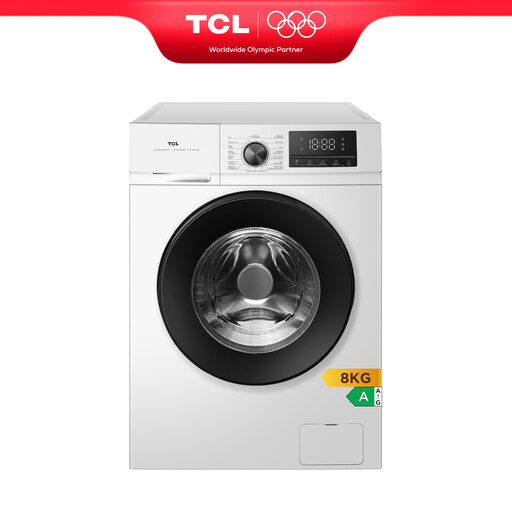
The product name lists a BLDC motor, steam wash, Quick Wash 15mn, Child Lock, Honeycomb Drum and energy class A.
No. According to the Consumers’ Association, a quick programme is intended for a small amount of not very dirty laundry and may be less effective at washing, rinsing and spinning than a full programme. Follow the care label and check the maximum load.
Choose a capacity to suit your usual loads, rather than basing your decision only on an occasional seasonal wash. Milieu Centraal recommends choosing a drum capacity that suits the amount of laundry in your household; also check the limits for the programmes you use.
No. The European Commission describes the EU energy label for household washing machines as using a scale from A to G. Class A is the most efficient on that scale, but it is not a general legal requirement when buying a machine. Compare label figures on a like-for-like basis.
Measure the installation space and check the manual to see how much room is needed for the door and connections. Follow the model-specific instructions for stable positioning and connection; water protection can help reduce the risk of water damage.
No. According to the Dutch Government, the Netherlands has no fixed statutory warranty period; you are entitled to a product that is fit for purpose, depending on what you can reasonably expect. The retailer is your point of contact for your statutory rights; a manufacturer’s warranty is separate.