Choose a drum capacity that suits the size of your usual wash, then check whether a short programme is suitable for the load size and temperature your pillowcases need. A quick programme is not automatically suitable for a full drum. If you need to wash at 60 °C for a specific hygiene reason, both the care label and the programme you choose must allow that temperature. Compare energy use on the EU energy label, which is based on eco 40-60, but bear in mind that these figures do not show the consumption of every individual programme.
Who is this guide for?
Busy family laundry-doer
You want to wash pillowcases with other suitable laundry after a busy school week and are looking for a drum and programme that suit your usual load. The Consumentenbond highlights capacity and suitable programmes as factors to consider when choosing.
Small-load laundry-doer
You often wash small loads and want to choose a drum capacity that suits what you usually collect. The Consumentenbond and Milieu Centraal identify capacity and laundry habits as relevant considerations.
Laundry-doer with hygiene concerns
For a specific reason, such as a dust mite allergy, you want to check whether your pillowcases can be washed at 60 °C and whether the machine has a suitable programme. Milieu Centraal recommends 60 °C in certain situations; the care label remains the guide for your textiles.
What should you look for when choosing?
The Consumentenbond and Milieu Centraal highlight factors such as load size, programmes and consumption. What matters most to you depends on your usual laundry and the care labels on your pillowcases.
| Buying concern |
What to look for |
Who is this important to? |
| Getting the washing done on time |
Check the programme duration, maximum load and temperature of the short programme in the manual. |
When I have little time after a busy week, I want to know whether the short programme can handle my load. Around 33% of consumers put time at the top of their list of buying concerns. |
| Suitable drum capacity |
Estimate the size of your usual total load and check the drum capacity and available space for the machine. |
I want to wash pillowcases with my usual weekly laundry without always using a large drum for a small load. Around 27% of consumers prioritise a suitable drum capacity. |
| Washing to meet a hygiene need |
Read the care label and check whether there is a suitable programme that can actually be set to 60 °C; do not assume this from the name eco 40-60. |
If I want to wash at 60 °C for a specific hygiene reason, the textiles must be able to withstand that temperature. Around 20% of consumers prioritise having a suitable wash option. |
| Electricity and water consumption |
Compare kWh per 100 eco 40-60 cycles and litres per cycle on the same basis. |
For regular washing, I want to compare energy and water consumption fairly on the same basis. Around 13% of consumers prioritise running costs. |
| Noise and where to place the machine |
Check the noise level and noise class on the label, and measure the space where the machine will go. |
If the machine is close to a living or sleeping area, I want to take noise and practical placement into account. Around 7% of consumers prioritise a suitable, quiet location. |
Common pitfalls when choosing
-
Assuming a quick programme can handle a full drum
The programme name does not tell you how much laundry you can load or what temperature the programme uses.
Check the manual for the load limit and settings of the specific short programme you want to use.
-
Assuming eco 40-60 guarantees a 60 °C wash
The programme name does not guarantee that the wash will run at 60 °C. The textiles must also be able to withstand the selected temperature.
If you have a specific hygiene need, check the care label and choose a separate programme that is suitable for a 60 °C wash.
-
Choosing a large drum for just a few pillowcases
The rated capacity does not tell you whether the machine suits the amount of laundry you usually collect. A large drum that is often only partly full is not automatically the more energy-efficient choice.
Choose the drum capacity based on the size of your usual total load, not just the highest number of kilograms.
-
Looking only at the energy label rating or the manufacturer's guarantee
The washing machine figures on the energy label are based on eco 40-60 and do not necessarily tell you about every other programme. A manufacturer's commercial guarantee is also not the same as your statutory rights.
Compare the energy label figures separately from the programmes you use. Check the guarantee terms and your statutory rights separately too; ACM ConsuWijzer explains the seller’s legal responsibilities.
Brands and models to consider
Beko
The BM3WFU3741S is a 7 kg front-loading washing machine to consider if your usual load is relatively small.
- Beko lists a 7 kg capacity and a maximum spin speed of 1400 rpm for this model.
- Check the permitted load and settings for each programme; the model specifications do not prove a particular washing result for your pillowcases.
Bosch
The Serie 4 WAN2809XNL offers an 8 kg option if you wash pillowcases with a regular medium-sized load.
- Bosch lists an 8 kg capacity and a maximum spin speed of 1400 rpm for this model.
- Check the programme load limits and dimensions; capacity alone says nothing about how clean your laundry will be.
Samsung
The WW90DG6U25LEU3 is a 9 kg model with Samsung's SuperSpeed feature, worth considering if you are weighing up larger loads against time.
- Samsung lists a 9 kg capacity and SuperSpeed for this model.
- The model specifications do not confirm that every full load of pillowcases will be washed quickly or at your preferred temperature; check the programme requirements.
AEG
The 8 kg LR73844 from the 7000 ProSteam range is a model to consider if steam functions are important to you.
- AEG lists an 8 kg capacity and a ProSteam function for this model.
- Freshening up with steam is not the same as washing used pillowcases on a suitable programme; check the specific wash programme.
Miele
The WWE380 WCS is an 8 kg front-loading washing machine with QuickPowerWash and SteamCare functions listed by Miele.
- Miele lists an 8 kg capacity and the QuickPowerWash and SteamCare functions for this model.
- The function names do not prove that a particular temperature, load size or hygiene result will be achieved for your pillowcases.
Washing machines at Joybuy
The models below range from 8 to 10 kg and can help you weigh up a medium or larger weekly load. Before relying on a short programme, check the permitted load and temperature for each model.
 No image available
Samsung WW90DG6U25LE, 9 kg
Suitable if you want to wash pillowcases with a larger weekly load and are considering a short programme.
The product information lists a 9 kg capacity, SuperSpeed for 5 kg in 39 minutes and Quick 15 for small or lightly soiled loads. Check the permitted load and temperature for each programme.
Joybuy
 No image available
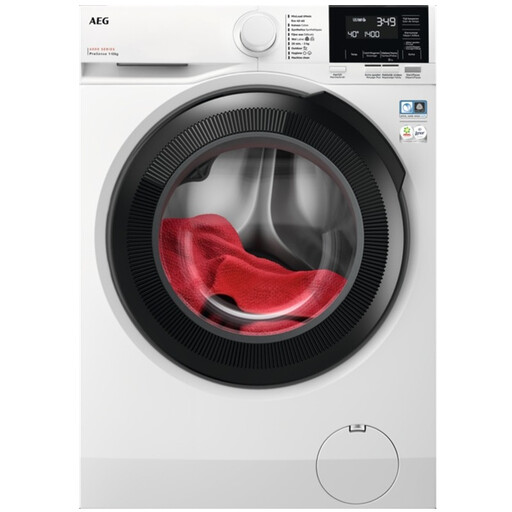
AEG LR63R144 6000 Series, 10 kg
Worth considering if you want to handle a larger usual weekly load and are looking for a function that can shorten programme times.
The product information lists a 10 kg capacity, ProSense load detection, TimeSave Plus and a maximum spin speed of 1400 rpm. Check the settings and load limit of the programme you want to use.
Joybuy
 No image available
AEG LR73S862 7000 Series, 8 kg
Suitable if you want to wash pillowcases with a regular medium-sized load.
The product information lists an 8 kg capacity, a maximum spin speed of 1600 rpm and MixLoad 69 for mixed fabrics at 30 °C. It does not list a 60 °C wash; check which settings are suitable for your pillowcases.
Joybuy
 No image available
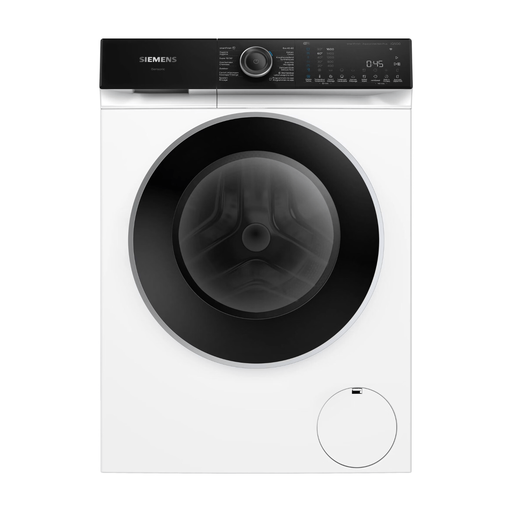
Siemens WG56H206FG iQ500, 10 kg, NL/FR control panel
An option if you want to wash a larger weekly load in one go and are considering short programmes.
The product information lists a 10 kg capacity, a maximum spin speed of 1600 rpm and Super Quick programmes of 15 and 30 minutes. Check the maximum load and temperature for each programme.
Joybuy
 No image available
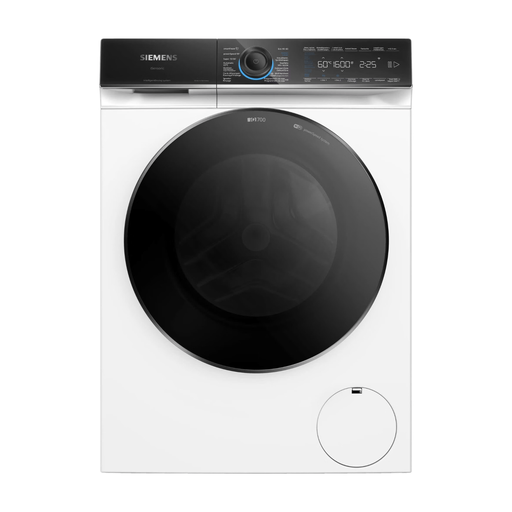
Siemens WG56B2AWFG iQ700, 10 kg, NL/FR control panel
Suitable if you want to handle a larger weekly wash and are considering several short programme options.
The product information lists a 10 kg capacity and SpeedPack XL with 15, 30 and 59-minute programmes. Check the permitted load and temperature for your pillowcases.
Joybuy
Frequently asked questions
Do pillowcases need to be washed at 60 °C after every school week?
No, not simply because the school week has ended. Milieu Centraal recommends 60 °C in some cases, including an infectious illness or a dust mite allergy. Always check the care label: it shows the maximum temperature and how gentle the programme should be.
Is eco 40-60 the same as washing at 60 °C?
No, the name eco 40-60 does not guarantee that a standard cycle will run at 60 °C. The European Commission describes it as a programme for normally soiled cotton that can be washed at 40 or 60 °C according to the care label. If you need an actual 60 °C wash and the label allows it, check whether the machine has a suitable separate programme.
What should you look for in a short wash programme?
Check the programme duration, maximum load and temperature in the manual. A short cycle is not automatically suitable for a full drum or every type of pillowcase; follow the care label too.
How do you compare washing machine consumption and guarantees in the Netherlands?
Compare washing machine figures on the mandatory EU energy label on the same basis: consumption is based on eco 40-60 and does not cover every programme. ACM ConsuWijzer says that, under the law, the seller must repair a fault free of charge if it occurs too soon during normal use; a commercial guarantee does not determine your statutory rights.
What should you check before connecting a new washing machine?
Follow the manual for your specific model and remove the transit bolts from a new machine. AEG Support highlights this check for a new appliance. If a machine unexpectedly fails to spin, that alone does not identify the cause, so follow the model instructions.


