
For washing mixed seasonal loads
When the seasons change, you wash pillowcases with other suitable, sorted laundry. A drum that also suits your usual load helps you avoid choosing a machine based on a temporary peak.


Choose a drum capacity that suits your usual sorted laundry, not just the extra washing you do when the seasons change. The Dutch Consumers’ Association and Milieu Centraal both stress that capacity should match your regular load. If you have a dust mite allergy, washing pillowcases at 60 °C may be relevant if the care label allows it. Also measure the available space and compare consumption figures on the same labelling basis.
When the seasons change, you wash pillowcases with other suitable, sorted laundry. A drum that also suits your usual load helps you avoid choosing a machine based on a temporary peak.
You want to wash your bedding in line with advice on dust mites. Check whether your pillowcases can be washed at 60 °C; this temperature is not a general requirement for everyone.
You need to consider the space for the machine, the doorway and the connections. A top-loader may work if space in front of the machine is limited. If you also want to dry your laundry electrically, a washer-dryer could be an option.
| Feature to consider | What should you check? | Who is it important for? |
|---|---|---|
| Capacity | Compare the load capacity with your usual sorted laundry. The stated capacity applies to cotton; the recommended load may be lower for delicate or synthetic fabrics. | If you want to wash both everyday laundry and seasonal loads, look for a drum that suits your regular washes. Around 36% of consumers are mainly concerned with finding the right capacity. |
| Care label and temperature | Read the fabric care label and check the manual to see whether the model has a suitable programme. The name ‘eco 40-60’ does not necessarily mean the programme always washes at 60 °C. | If you want to wash pillowcases carefully or follow advice for a dust mite allergy, the permitted temperature is key. Around 29% of consumers prioritise fabric care and the temperature needed for washing. |
| Dimensions and positioning | Measure the width, height and depth, allowing for hoses, ventilation and space for the door. If you’re considering a top-loader, check that there’s enough room above the appliance, too. | If the space is tight, you’ll want the machine and the clearance it needs to fit. Around 21% of consumers say the machine’s shape and the available space are their main buying concerns. |
| Consumption | Compare energy consumption per 100 cycles and water consumption per cycle using the same programme basis. Assess drying separately from washing when comparing a washer-dryer. | If you want to factor in ongoing consumption, you need comparable label values and should consider the programmes you use. Around 14% of consumers are mainly concerned about consumption when buying. |
A larger capacity won’t automatically be the right choice if your regular washes are consistently small. Load detection doesn’t necessarily adjust consumption in exact proportion for a smaller load.
First, choose a capacity that suits your usual sorted laundry. Then consider whether you can split the extra seasonal washing into suitable loads.
The European Commission describes the eco 40-60 programme as being for normally soiled cotton laundry that can be washed at 40 °C or 60 °C according to its care label. So the programme name alone doesn’t mean your particular laundry will be washed at a fixed temperature of 60 °C.
If the advice for dust mite allergies applies to you, check the fabric care label and consult the manual to find a suitable programme for that laundry.
Drying capacity may be lower than washing capacity. The Dutch Consumers’ Association also points out that a standard washer-dryer may use more energy when drying than a new, efficient heat pump tumble dryer.
Compare the washing and drying capacities separately, and decide whether the space saved is worth the impact on the drying process.
If you can’t dry a full wash load in one go, you may need to split it into separate drying loads, which will take more time.
The AEG 6000 ProSense LF628400 is a front-loader with an 8 kg capacity, worth comparing if you’re looking for a medium-sized load and automatic load adjustment.
The Bosch Serie 4 WAN28274NL is an 8 kg front-loader. Its stated external dimensions are 845 × 598 × 590 mm, which are worth checking if space is tight.
The Samsung WW80CGC04AAEEN is an 8 kg Ecobubble front-loader, with a stated depth of 550 mm and an A energy rating.
The Miele WEA135 WCS 8kg Active is a W1 front-loader with a delicates programme and an extra rinse cycle.
This Joybuy selection includes freestanding front-loaders for everyday and seasonal laundry, plus a washer-dryer for anyone who wants to dry their washing in the same appliance.
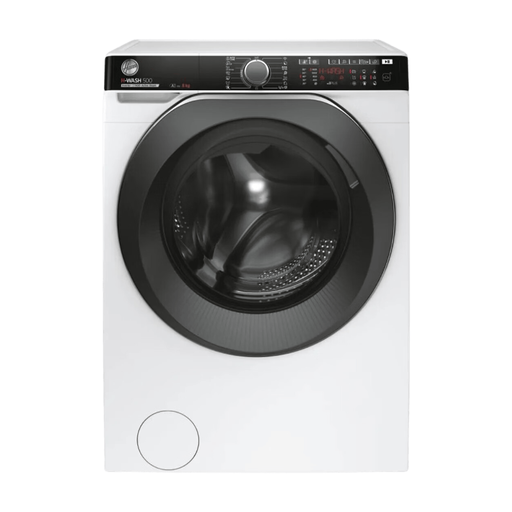 No image available
The stated 8 kg capacity is worth considering if you want to combine seasonal laundry with other suitable washing.
The product description lists 1400 rpm, an Auto Care programme that adjusts settings to the load and fabric type, and a hygiene cycle that stays at 60 °C for more than 20 minutes.
 No image available
The product description lists bedding and Allergy Care programmes. Check that the programme is suitable for the care label on your pillowcases.
The description lists 1400 rpm, 16 programmes, 42 kWh per 100 cycles and 48 litres of water per cycle.
 No image available
The capacity and mixed-load programme may suit you if you want to combine everyday and seasonal laundry.
The product description lists 15 programmes, including Hygiene+, a maximum spin speed of 1400 rpm and OptiSense load adjustment.
 No image available
This washer-dryer is designed for anyone who wants to wash and dry laundry in one appliance.
The stated washing capacity is 10 kg and the drying capacity is 6 kg. The product description also lists a 60-minute wash-and-dry programme. Larger wash loads may need to be dried separately.
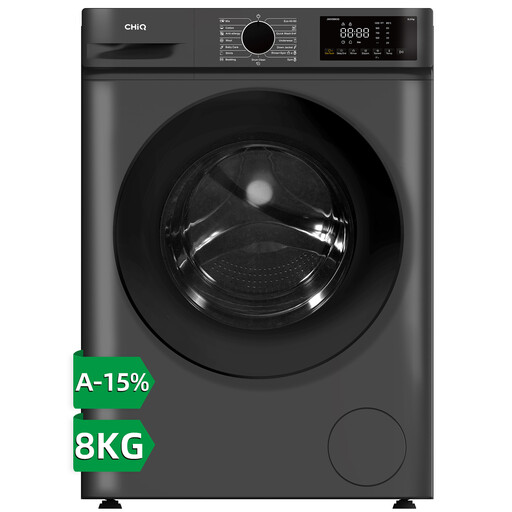 No image available
The stated 8 kg capacity gives you a starting point for comparing the machine with your usual sorted laundry and seasonal load.
The product description lists a cabinet depth of 52 cm, 1400 rpm and 16 programmes.
No, not all pillowcases need to be washed at 60 °C. For a dust mite allergy, Thuisarts recommends washing pillowcases at this temperature; first check that the fabric care label allows it.
Choose a capacity that suits your usual sorted laundry, not just one seasonal peak. The Dutch Consumers’ Association says that the stated capacity applies to cotton; for other fabrics, take the recommended load into account.
No, the programme name alone doesn’t guarantee a fixed washing temperature of 60 °C. The European Commission describes the programme as being for normally soiled cotton laundry that can be washed at 40 °C or 60 °C according to its care label. Check the label and the manual for your laundry.
Compare the washing and drying capacities separately, as the drying capacity may be lower. If your wash load exceeds the drying capacity, you may need to dry it in several loads. Also factor in drying consumption and the time required.
Measure the space for the machine, allowing for hoses, ventilation and the room needed to open the door. The Dutch Consumers’ Association points out that the delivery route matters too. If you’re choosing a top-loader, also check that the lid can open fully.