
For anyone with a narrow laundry space
Width is your main constraint. Check that the machine will fit and that there’s enough room to open the lid. The dimensions published by AEG and Whirlpool give you specific models to compare for this situation.


Start by checking the care label on your picnic blanket, then measure the available width and depth, as well as the space needed to open and connect the machine. A shallow front-loader suits a laundry area with enough width but limited depth; a slim top-loader is worth considering when width is the main constraint and there’s room above the lid. The kilogram capacity alone won’t tell you whether a large blanket will fit in the drum: check the loading opening, drum and programme settings too.
Width is your main constraint. Check that the machine will fit and that there’s enough room to open the lid. The dimensions published by AEG and Whirlpool give you specific models to compare for this situation.
You have enough width, but need to measure the appliance depth, connections and space for the door to open carefully. The Consumers’ Association and Bosch point out that the stated appliance dimensions don’t include all the space needed for connections; Candy publishes dimensions for a shallow front-loader.
Your choice depends on the care label, the blanket’s dimensions and its volume – not just its kilogram capacity. GINETEX explains the maximum temperature shown by the wash symbol; also check the specific cleaning instructions for your blanket.
When to choose it: when you have enough width but limited depth in your laundry space.
Bear in mind: allow for hoses, connections and enough room to open the door.
When to choose it: when limited width is the main constraint and you can open the lid freely.
Bear in mind: the space above the machine and the loading opening are important when washing a large, folded blanket.
When to choose it: only if your laundry space and usual washing loads justify a larger machine.
Bear in mind: a higher maximum load capacity doesn’t prove that a bulky blanket will fit through the opening.
| What to consider | What should you check? | Who should give this more weight? |
|---|---|---|
| Limited width | Compare the external width and check that you can use the lid and controls without obstruction. | If the gap between cupboards is narrow, I want to know whether the machine will fit and whether I can open the lid; around 29% of consumers say limited width is their top priority. |
| Limited depth | Measure the full installation space and allow for hoses and an open door. | If the width is fine but the alcove is shallow, I also want to leave room for connections and the door; around 29% of consumers prioritise a shallow depth. |
| Fit and wash programme | Read the care label and compare the blanket with the loading opening, drum and programme settings. | If I want to wash a large or delicate blanket, I’ll start with the care label and drum, not just the kilogram capacity; around 24% of consumers say blanket and programme suitability is their top priority. |
| Consumption and aftercare | Compare energy labels on a like-for-like basis and check the connections and aftercare terms. | Before buying, I want to check that installation is practical and that the consumption information and aftercare suit the way I’ll use the machine; around 18% of consumers prioritise running costs and aftercare. |
The maximum load capacity won’t tell you whether a large or stiff blanket will fit through the opening. Some programmes may also have a lower load limit.
Check the care label and compare the blanket’s dimensions and volume with the loading opening, drum and programme instructions for the exact model.
A front-loader needs space for the door to open; with a top-loader, the lid must be able to open freely. Hoses and connections also take up space.
Measure the full installation space and check where the door or lid can open, and whether the water inlet and drain will remain accessible.
Beko lists energy class A for the Beko BM3WFU3741S, while the Joybuy listing gives class C in the title and class A in the description.
For this listing, ask for the product information sheet and confirmation of the exact version before taking the energy class into account.
The CO4474TWM6/1-S is a front-loader to compare if you have enough width but limited depth.
The LTR6363A is a top-loader to compare if available width is your main constraint.
The TW 6521S SENSE WASH BE is another top-loader to compare when width is limited.
The BM3WFU3741S is a front-loader to compare if you’re looking for a stated depth that differs between models.
The Serie 4 WAN2809XNL is a useful model to compare if you have room for a front-loader and a typical washing load.
This selection from Joybuy includes front-loaders with different stated capacities, a model with a listed shallow depth and a compact mini washing machine. Whether a specific picnic blanket will fit also depends on its care label, the loading opening and the drum.
 No image available
A front-loader to consider if there’s enough room for the machine and the door; check separately whether the blanket will fit.
Stated capacity: 8 kg. Spin speed: 1600 rpm.
No image available
A front-loader to consider if there’s enough room for the machine and the door; check separately whether the blanket will fit.
Stated capacity: 8 kg. Spin speed: 1600 rpm.
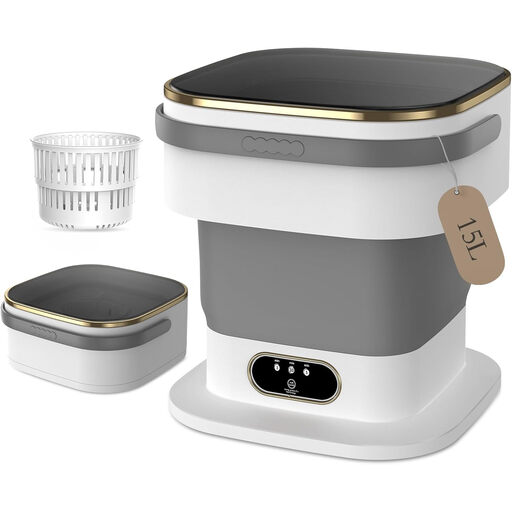 No image available
The product description says this model is designed for small loads; don’t assume that a bulky picnic blanket will fit.
Stated capacity: 15 L. Three wash modes and a spin-dryer basket.
 No image available
This shallow front-loader is an option if depth is limited, provided the connections and door opening fit your laundry space.
Stated depth: 45 cm. Capacity: 6 kg. Energy class B.
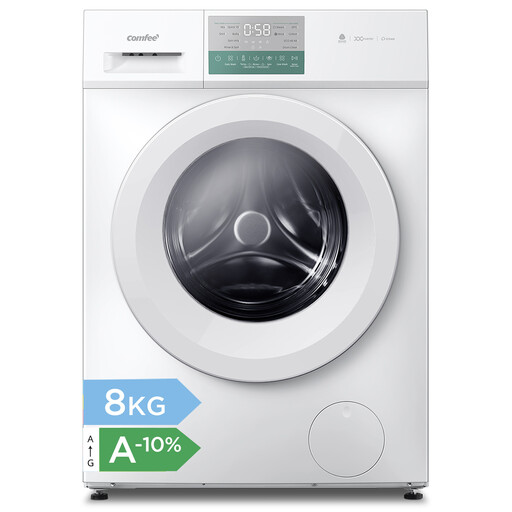 No image available
A freestanding machine to consider only if it fits your available space and the dimensions of your blanket.
Stated capacity: 8 kg.
No. The European Commission describes eco 40–60 as being for normally soiled cotton that can be washed at 40 or 60 °C according to its care label. That doesn’t automatically make the programme suitable for another material or a lined blanket; follow the blanket’s care label.
No. The maximum load capacity applies to a cotton wash and won’t tell you whether the blanket will fit through the loading opening. Also check the drum volume and the load recommendations for the programme you need.
Measure the available space and check that the door or lid can open freely. Then follow the model’s manual for a stable surface, accessible water inlet and drain, suitable hose lengths and an earthed socket. Bosch also advises removing the transit bolts.
No. The European Commission explains that the energy and water figures on a washing machine label are based on the eco 40–60 programme. They don’t tell you how much the programme your blanket needs, according to its care label, will use.
No. According to ACM ConsuWijzer, if a product is faulty, you may have a legal guarantee claim against the seller under the applicable conditions, even if you haven’t bought an extended warranty. Washing machines don’t automatically come with one fixed statutory guarantee period.