What should you look for when washing small loads of napkins?
Your usual laundry load, the type of stain, energy and water use, and the care label all call for different checks. The Consumentenbond and Milieu Centraal recommend choosing a machine to suit the loads you usually wash.
| What to consider |
What to look for |
Who is this important for? |
| Small loads |
Weigh a typical dry load and check the load adjustment feature and programme limit. |
If I often wash just a few napkins, I want to know whether the drum and programme suit such a small load. This is the top priority for around 36% of consumers. |
| Food stains |
Check the care label and permitted temperature; see whether the quick programme is intended only for lightly soiled fabrics. |
When there are visible stains, I want to choose a programme based on the fabric and how soiled it is, even if that takes longer. Stain removal is the top priority for around 29% of consumers. |
| Energy and water use when washing frequently |
Compare energy labels on the same eco 40-60 basis and look up programme information for the laundry you wash often. |
If I regularly run small loads, I want to take electricity, water and detergent into account without applying the label figures to every programme. Around 21% of consumers prioritise running costs. |
| Different fabrics |
Check which fabrics, temperature, spin speed and maximum load apply to the special programme. |
If my napkins are made from different or delicate fabrics, I want to be able to follow the care label, even if the programme takes a smaller load. This is the top priority for around 14% of consumers. |
Joybuy products for small loads
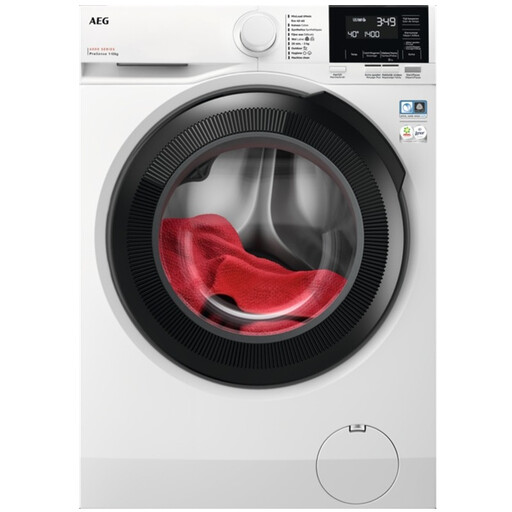
These Joybuy products are AEG front-loading washing machines with load adjustment features. Also compare the stated drum capacity and programme information with the amount and type of napkin laundry you usually have.
 No image available
AEG LR63R144, 10 kg, 1400 rpm
The product information lists ProSense load adjustment, making this model worth comparing if you wash loads of different sizes.
The product title lists a capacity of 10 kg and 1400 rpm. If you mainly wash small loads of napkins, it is worth weighing this capacity against the amount of other suitable laundry you can add.
View at Joybuy
 No image available
AEG LR73R862, 8 kg, 1600 rpm
The product information lists PreciseWash load adjustment and a MixLoad programme; compare the programme details with your usual load.
The product title lists 8 kg and 1600 rpm. According to the product information, the MixLoad programme takes 69 minutes at 30 °C.
View at Joybuy
 No image available
AEG LR73S840, 8 kg, 1400 rpm
The product information lists PreciseWash load adjustment and a MixLoad programme for mixed laundry.
The product title lists a capacity of 8 kg and 1400 rpm. Check the manual to see what load is suitable for the programme you want to use for napkins.
View at Joybuy
 No image available
AEG LF61R840, 8 kg
The product information lists ProSense load adjustment, a feature worth comparing if you regularly wash loads of different sizes.
The product title lists a capacity of 8 kg. The product information also mentions an Anti Allergy Vapour programme; check the manual for the permitted load.
View at Joybuy
No image available
AEG LR73S862, 8 kg, 1600 rpm
The product information lists PreciseWash load adjustment and a MixLoad programme for mixed everyday laundry.
The product title lists 8 kg and 1600 rpm. According to the product information, MixLoad takes 69 minutes at 30 °C.
View at Joybuy
Frequently asked questions
Can I use a quick programme for any stained napkin?
No, not based on the programme name alone. AEG describes a 20-minute programme for up to 3 kg of lightly soiled cotton or synthetic fabrics. Check the care label, type of stain and manual for your model.
What does the Dutch energy label tell me about quick washes?
The mandatory energy label includes information such as energy and water use, but label comparisons are based on eco 40-60. It does not show how much every quick programme uses; check the specific model’s programme information for that.
What should I know about installation and maintenance?
Follow your model’s manual to ensure the machine is positioned securely and connected correctly, and remove the transit bolts before use. Bosch lists an earthed socket and access to the water inlet and drain as things to consider. The Consumentenbond also recommends adjusting the detergent dose to suit the wash and regularly cleaning the detergent drawer, door seal and filter.
How does a washing machine guarantee work in the Netherlands?
According to the Dutch government, a product must meet what you could reasonably expect from it, and the retailer must provide a solution if the product is faulty. There is no fixed statutory two-year guarantee period in the Netherlands; what you can expect depends, among other things, on the product and normal use. A manufacturer’s guarantee is separate from these statutory rights.
Does the retailer have to take away my old washing machine?
For a private purchase of a new, similar appliance, the Dutch government says the old-for-new scheme applies: the retailer must take the old appliance free of charge, including for an online purchase. This scheme does not apply to equipment owned by businesses. Agree in advance how the old appliance will be returned or collected.


