
Someone washing shared kitchen towels
You want to be able to wash used tea towels and kitchen towels separately, following the Voedingscentrum’s advice to wash them at 60 °C.


First, choose a washing machine whose manual confirms a separate 60 °C programme suitable for your kitchen towels and their care labels; the Voedingscentrum advises washing used kitchen towels at 60 °C. Then check the drum capacity for your usual sorted laundry and measure the available space. Eco 40-60 does not mean the water reaches 60 °C, so the energy label does not tell you how much energy a separate hot towel wash uses.
You want to be able to wash used tea towels and kitchen towels separately, following the Voedingscentrum’s advice to wash them at 60 °C.
You’re looking for a drum and programmes that suit your usual laundry, with room for larger loads when changing over your wardrobe. Consumentenbond points out that the stated capacity applies to cotton, and that a lower load may be recommended for delicates and synthetics.
You want to consider the dimensions, space for connections and the programmes you’ll actually use. Energielabel.nl explains that the label does not show the energy use of every individual wash programme.
First, check that the manual for the exact model describes a suitable 60 °C programme and that your towels’ care labels allow that temperature. Then consider your usual clothing load and where the machine will go.
| What to consider | What should you check? | Who is this important for? |
|---|---|---|
| Washing kitchen towels | Check the care label and look in the manual for the exact model for a separately selectable 60 °C programme. A programme name such as ‘Hygiene’ does not, by itself, confirm the temperature. | If I want to wash shared kitchen towels in line with the care advice, I’ll look for confirmation of both the temperature and the right setting; around 33% of consumers put towel hygiene first when choosing a washing machine. |
| Drum capacity | Weigh a typical sorted load and check the permitted load for each programme. The stated capacity applies to cotton; the limit may be lower for delicates or synthetics, according to Consumentenbond. | If you mostly wash everyday clothes but sometimes have a larger seasonal load, you’ll want a capacity that suits both situations; around 27% of consumers prioritise a suitable capacity for clothing loads. |
| Running costs | Compare EU energy labels on a like-for-like basis, but don’t treat them as a measure of the energy used for a separate 60 °C wash. Also check the purchase terms. | If I want to weigh up costs against the programmes I really use, I’ll look beyond the label rating alone; around 27% of consumers put running costs first. |
| Fitting and connecting the machine | Measure the route in and the space where the machine will go, allowing for the machine’s dimensions, door opening and hoses. Consumentenbond recommends taking this space into account when choosing and installing a machine. | If you have a narrow alcove or doorway, you’ll want to know in advance whether the machine will fit through and can be positioned for use; around 13% of consumers prioritise fitting the machine into their space. |
Energielabel.nl states that the temperature of Eco 40-60 does not exceed 40 °C. The Voedingscentrum advises washing used kitchen towels at 60 °C, so don’t rely on the programme name alone.
Check the temperature setting in the manual for the exact model and compare it with the towels’ care labels.
A programme that doesn’t meet your washing needs may mean you need a different setting or approach.
The stated capacity applies to cotton; a lower load may be recommended for delicates and synthetics. A larger drum isn’t automatically better for small, regular loads.
Weigh your usual sorted laundry and compare the load limits of the programmes you use.
If you usually wash small loads, the capacity you choose may be less suited to your everyday needs.
The route in, depth, space for the door and room for the hoses all affect whether the machine will fit and can be connected.
Measure the full route and the space where the machine will go before choosing a model.
Choosing the wrong size can make installation difficult or impossible.
Samsung’s Dutch support information identifies the WW90DG6U25LE as a 6000 Series model with a 9 kg capacity.
Beko lists the B3WM4841W2 as a freestanding 8 kg front-loading washing machine with programmes including Cotton, Hygiene+ and Drum Clean.
Bosch lists the Serie 6 WUU28T20NL as a front-loading washing machine with an 8 kg capacity.
According to its Dutch product information, the Siemens iQ300 WM14N27TNL is a front-loading washing machine with an 8 kg capacity.
Miele describes the W1 WWE380 WCS PWash&Steam&8kg as a front-loading washing machine with an 8 kg capacity, SteamCare and QuickPowerWash.
These models are aimed at clothing loads around the change of season. For kitchen towels, always check separately that the programme and load are suitable for the temperature you want and the care label.
 No image available
The capacity is useful to compare with your usual clothing loads; check the load limit for each programme.
Stated capacity: 9 kg. Stated spin speed: 1400 rpm.
Before choosing this model for kitchen towels, check the manual to see whether the exact version has a suitable, separately selectable 60 °C programme.
 No image available
The 8 kg capacity and listed programmes can help you compare machines for sorted clothing loads.
The product information lists 16 programmes, including Cotton, Wool, Bedding and Extra Rinse, and a spin speed of 1400 rpm.
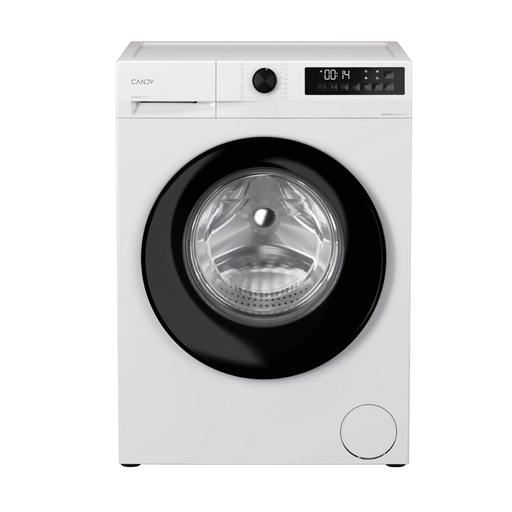 No image available
The stated capacity is a useful point of comparison for larger clothing loads; also consider your usual laundry and the load limit for each programme.
The product information lists 16 wash programmes and a spin speed of 1351 rpm.
 No image available
The 7 kg capacity gives you a starting point for comparing machines for your sorted clothing loads. Check the load limit for the programme you choose.
The product information lists a Baby Care programme at 60 °C. Don’t assume this programme is suitable for kitchen towels without checking the manual.
The product name mentions a 400 mm design and a quick-wash function.
 No image available
The stated capacity and listed clothing programmes are useful to compare with your usual sorted laundry.
The product information lists programmes for Cotton, Synthetics and Delicates, among others, as well as an Extra Rinse function.
No. According to Energielabel.nl, the temperature of Eco 40-60 does not exceed 40 °C. The Voedingscentrum advises washing used kitchen towels at 60 °C, so check for a separate programme and read the towels’ care labels.
No, not based on the name alone. Check the manual for the exact model to find out what temperature the programme uses and what load is permitted.
Compare the stated capacity with your usual laundry and check the load limit for each programme. According to Consumentenbond, the maximum stated capacity applies to cotton; a lower load may be recommended for delicates and synthetics.
Measure the route in and the space where the machine will go, allowing for its height, width and depth, the door opening and room for the hoses. Follow the manual for the model you choose when installing it. Consumentenbond also points out that transit bolts are needed to secure the drum during transport.
For a private purchase of a new, similar appliance, the Dutch government’s old-for-new scheme requires the retailer to take away the old appliance free of charge. The government also describes alternatives if collection isn’t possible at the time of delivery.