What should you look for when choosing?
Start by considering how many towels you usually wash in one load and how long you have until the next changeover. Then compare consumption figures on the same label basis, and check that the programmes and water protection suit your usage and installation location.
| Factor to consider |
What should you check? |
Who is this important for? |
| Capacity and turnaround time |
Check the permitted load and the duration of the programme you want to use; the maximum drum capacity does not necessarily apply to a short programme. |
If I have lots of towels to wash back-to-back on a changeover day, I want to know how much will fit in the machine on each selected programme and how long it will take. Around 33% of consumers prioritise capacity and turnaround time. |
| Size and consumption |
Compare the load capacity and consumption figures on the same label basis. Milieu Centraal recommends filling the drum properly; the EU label gives household washing machine figures based on Eco 40–60. |
With occupancy levels that vary, I want a drum suited to the smaller loads I wash often, without overlooking consumption on peak days. Around 27% of consumers prioritise a suitable size and consumption. |
| Programme and washing performance |
Check which programme is suitable for the fabric care label and whether there is a dedicated programme for a particular need for hot washing. Consumentenbond stresses that Eco 40–60 does not automatically mean a washing temperature of 60 °C. |
If my towels have different care instructions or there is a specific hygiene requirement, I want to choose a suitable programme. Around 20% of consumers prioritise programmes and washing performance. |
| Installation and water protection |
Check the protection on the exact model, its dimensions and its connections. Also find out what is included in delivery and installation. |
If the machine is somewhere a leak could affect other rooms, I want to know in advance what protection the model offers and how installation is arranged. Around 20% of consumers prioritise installation, risk of water damage and service. |
Washing machines at Joybuy
These washing machines are suited to towel loads during busy changeovers and come in a range of drum sizes. Compare the load capacity and programme time for the programme you plan to use; these may differ from the machine’s maximum capacity.
 No image available
Samsung WW90DG6U25LE, 9 kg
An option to compare if you regularly collect larger towel loads and need programmes with a shorter running time.
Capacity: 9 kg. Spin speed: 1400 rpm. The SuperSpeed programme is specified for 5 kg in 39 minutes; this programme load is smaller than the maximum drum capacity.
Joybuy
 No image available
Bosch WGB2440BFG Serie 8, 9 kg
An option to compare if you wash larger loads but also want to consider a programme for smaller washes.
Capacity: 9 kg. Spin speed: 1400 rpm. The product information lists Mini Load, short programme options and AquaStop. Check the permitted load for the short programme you choose.
Joybuy
 No image available
Midea MF110W80BA10/W-NL, 8 kg
An option to compare if your usual towel loads are better suited to an 8 kg drum.
Capacity: 8 kg. Spin speed: 1400 rpm. The product information lists Quick 15, AquaStop and 42 kWh per 100 cycles.
Joybuy
 No image available
Candy GD 48B9-S, 8 kg
An option to compare if you are considering an 8 kg drum and want to explore a range of programme times.
Capacity: 8 kg. Spin speed: 1351 rpm. The product information lists 33 kWh per 100 Eco 40–60 cycles, 40 litres of water per cycle and quick programmes ranging from 14 to 59 minutes.
Joybuy
 No image available
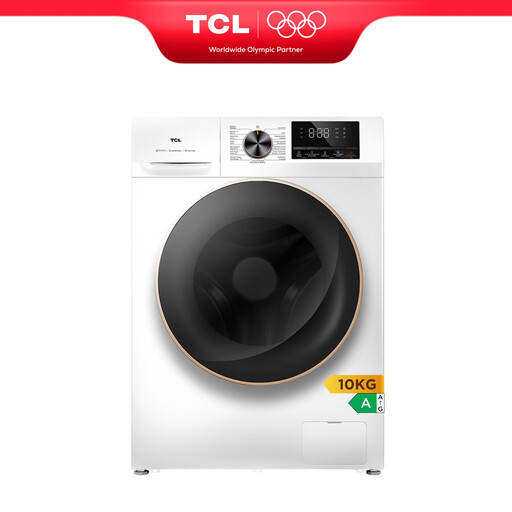
TCL FP1210WA0, 10 kg
An option to compare for larger towel loads, with a short programme for lightly soiled everyday laundry.
Capacity: 10 kg. Spin speed: 1200 rpm. The product information lists Quick 15 for lightly soiled everyday laundry and a delay end time of up to 24 hours.
Joybuy
Frequently asked questions
Do guests’ towels always need to be washed at 60 °C?
No, that is not automatically necessary. Milieu Centraal says towels can generally be cleaned at a lower temperature too; follow the care label and choose a suitable programme if there is a specific hygiene requirement. Consumentenbond notes that Eco 40–60 does not guarantee the machine will wash at 60 °C.
How do I compare the energy labels of two washing machines?
Compare the energy class, electricity consumption per 100 cycles and water consumption on the same label basis. For household washing machines, the EU label is based on Eco 40–60; consumption on a shorter or hotter programme may differ. Milieu Centraal also recommends considering the load capacity, as a large machine needs to be properly filled to maintain the benefit per kilo.
What should I check before connecting the washing machine?
Measure the installation space and the route to it, and check the water supply, waste outlet and floor. Find out what water protection the exact model has and check in advance whether installation is included with delivery; Consumentenbond points out that installation terms can vary.
Are installation and an extended warranty always necessary?
Not always. Check whether installation is included with delivery and compare the terms for the service you need. For a consumer purchase in the Netherlands, you are entitled to a product that meets reasonable expectations; Rijksoverheid makes clear that an additional manufacturer’s or retailer’s warranty is different from your rights if there is a problem with the product. For a business purchase, check the applicable sales and service terms.
Which energy label is required for household washing machines in the Netherlands?
The relevant EU energy label is compulsory for household washing machines offered for sale in the Netherlands. The European Commission describes the A to G scale, which has applied since 1 March 2021. This does not mean every machine has to be in energy class A.


